
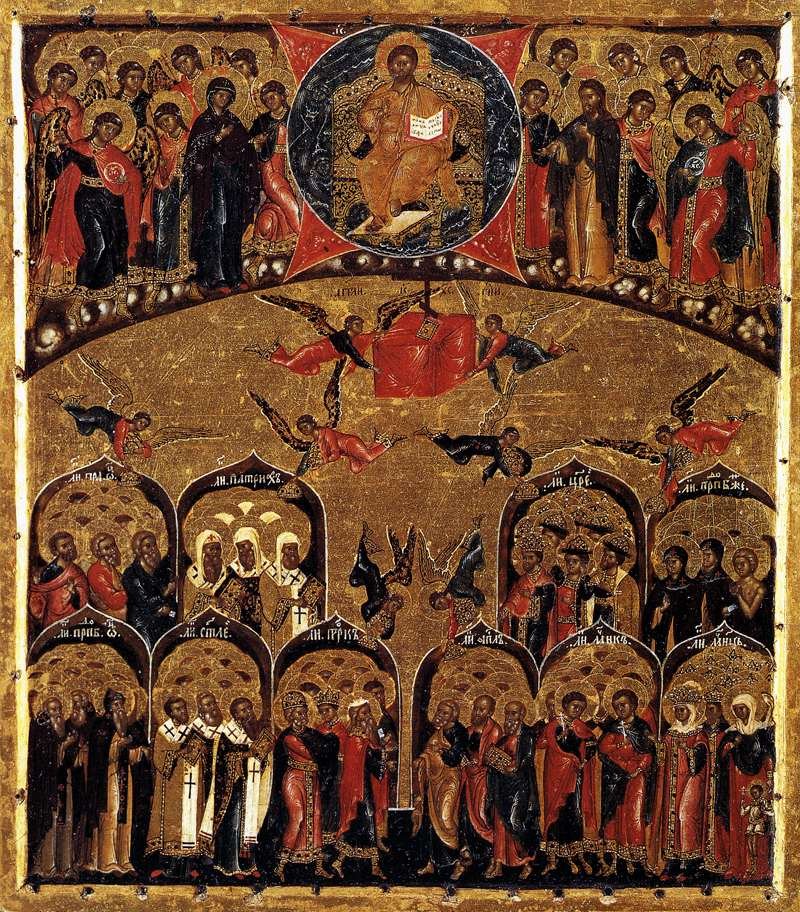
The saints are the people who lived the Gospel to the very end, and the Church sets them before us so that we have someone by whom to direct our lives. In the life of a saint we see what faith in Christ looks like when a man works it out with his whole being, in real human circumstances, with temptations, with falls and with risings. That is why the saints are landmarks for Christians: people we look to in order to know where we are going and how the road is walked.
Landmarks in every field
Every field in which man seeks perfection has its landmarks. Whoever wants to understand epic poetry comes, sooner or later, to Homer and Virgil. In painting there are a few masters by whom whole generations of painters were formed. A child who dreams of becoming a great footballer follows one particular player, learns his moves and tries to have his bearing on the pitch.
These landmarks are few. For ancient literature we can count them on our fingers. In more recent times, after printing appeared, the number of those who write grew enormously, but those who truly remain models are still few. The same happens in painting and in every art.
A man can stand towards such a field in two ways. He can admire it from a distance, like an ordinary man who enjoys a beautiful book or a painting, without setting himself anything more. Or he can wish to enter that field himself and become someone there. Then admiration is no longer enough. He must choose a master, learn from him and follow him to the point of imitation, until the master’s way of working becomes his own.
This comparison has a limit. The master of an art hands on his skill, and the apprentice acquires it by practice. In the Christian life, the virtues are not acquired by man’s effort alone. They grow out of the working of God’s grace, received and worked by man with his own will. The saint does not give us a technique. He shows us how he allowed himself to be worked upon by grace.
The multitude of the saints
For Christians, the landmarks are far more numerous than in any other field. Whoever opens the Lives of the Saints finds several saints for every day of the year: martyrs, monastics, hierarchs, married people, soldiers, slaves, mothers who raised their children in the fear of God. They are so many that anyone, of any condition and any age, can find among them someone who lived in circumstances like his own.
And yet, if we set them beside all mankind that has passed through the world since their time, the saints remain few. Their path stands open to all, but few follow it to the end.
We need landmarks, then, like any man who wants to arrive somewhere. And whoever truly wants to follow Christianity needs the same thing that the apprentice of a great painter needs, or the young man who wants to become a great footballer: to choose a model and follow it to the point of imitation.
The saints, too, had models
No saint started from nothing. Each one had before his eyes someone who had gone ahead of him on this road.
The Holy Apostle Paul wrote to the Corinthians: "Imitate me, just as I also imitate Christ"1. The Apostle was not afraid to offer himself as a model, because he knew that he himself was following Another. To the Hebrews he wrote: "Remember those who rule over you, who have spoken the word of God to you, whose faith follow, considering the outcome of their conduct"2. He asked the same people not to become sluggish, but to "imitate those who through faith and patience inherit the promises"3.
Saint Anthony the Great, whom the Church calls the father of monks, began in just this way. Saint Athanasius the Great, who wrote his life, tells how the young Anthony used to go to the ascetics who lived in the surrounding area and learned from each one what was best in him. From one he took gentleness, from another perseverance in prayer, from another fasting, vigil or love for the brethren. Then he would return to his own place and strive to gather into himself all that he had seen in them4.
On 14 November the Church commemorates Saint Gregory Palamas, who in the fourteenth century defended the Jesus Prayer and the monks who practised it. He did not discover this prayer on his own either. He learned it from people who lived it: first from Theoleptus, later Metropolitan of Philadelphia, and then from Saint Nicodemus, an ascetic living near the Monastery of Vatopedi on the Holy Mountain, with whom he stayed for three years, until the elder’s death5. The man who was to become, for the whole Church, the teacher of the prayer of the mind was first someone’s disciple.
If the saints, who had more zeal and more grace than we have, needed models, how much more do we.
Christ, the Mother of God and the saints
The perfect model of the Christian is Christ, and He is a model we are called to follow directly. The Saviour Himself said: "Take My yoke upon you and learn from Me, for I am gentle and lowly in heart, and you will find rest for your souls"6. Christ is God made man. We shall never become what He is by nature, but we are called to become like Him by grace, and the whole Christian life is this ascent.
The Mother of God is a human creature, like us, and she is honoured above all the saints. Her obedience is an example for every Christian. When the angel announced to her that she would bear the Son of God, she answered: "Behold the maidservant of the Lord! Let it be to me according to your word"7. Every Christian who accepts the will of God in his life is following her.
So we honour both Christ and the Mother of God with devotion and, at the same time, we follow them. Where, then, is the place of the saints? The measure of Christ and of the Mother of God is so high that the beginner, looking at it alone, does not know where to start. The saints show us the step. They are people who set out from the same weakened human nature, with temptations and infirmities, and many of them also passed through falls. In their lives we see how, in circumstances like ours, the first step towards Christ is taken, and then the second. The saints do not take Christ’s place as our model. They show us how Christ works in a man, and they lead us to Him.
The Holy Apostle Philip, whom the Church also commemorates on 14 November, shows this clearly. Christ found him and said to him: "Follow Me." Philip followed Him, then found his friend Nathanael and told him that he had found the One of whom Moses and the prophets wrote. Nathanael doubted: "Can anything good come out of Nazareth?" Philip did not set about convincing him. He only answered: "Come and see"8. Later, some Greeks who had come up to Jerusalem for the feast approached Philip as well and asked him: "Sir, we wish to see Jesus"9. This is how a saint works in our life: he went after Christ first, and he calls us to come and see.
In the Orthodox tradition, following Christ does not separate us from those who followed Him before us. The lives of the saints show us how the commandments of the Gospel become flesh in very different human circumstances.
Where I went wrong
For a long time I believed that the Church and the wondrous things accomplished in her were enough for me. I went to confession, I went to the Divine Liturgy, I received Communion, I fasted, and it seemed to me that these were sufficient.
These gifts were not small. They are the life of the Church, and without them no one is saved. But I had no model. I had read the lives of many saints and I greatly admired a few of them, but I admired them from a distance, the way an ordinary man admires a painting. In life you also need a living person, someone who knows you and guides you from time to time, so that you know what to take from the saints and how to work with the grace you have received. I was receiving grace, but I did not know what to do with it in everyday life.
What followed was stagnation. The years passed, and I stayed at the same measure. I went to church, but I did not grow. Only later did I understand that I had forgotten the model and that I needed to choose one.
What true obedience means
There is much talk of obedience today, and I too have written about it in other articles. The obedience we see preached now is, more often than not, obedience to whoever happens to be near you: to the priest of the parish you happened to end up in, to the nearest confessor, simply because he is there.
To understand what true obedience means, we must distinguish three kinds of spiritual bond.
The first is the obedience of a monk to his elder. The monk renounces his own will and entrusts himself entirely to his guide, in humility. Saint John Climacus writes about this obedience, and he advises that, before entrusting himself to anyone, the monk should examine and test him carefully, so as not to find a sick man instead of a physician, or a man ruled by passions instead of one free of them10. Only after he has chosen him with discernment does the disciple give himself over entirely.
The second is the bond between a layman and his confessor. The layman does not live under monastic obedience. He receives from his confessor the absolution of his sins and counsel, and where he is able to choose, he is bound to seek his confessor with the same care that Climacus speaks of, because the counsel he receives will give shape to his life.
The third is the following of a saint. Here the landmark is a person whose life has been completed and examined, whom we know from the Lives of the Saints and from his own writings. This following is within reach of anyone, monk or layman, and it sheds light on the other two.
In all three, true obedience is obedience to a landmark chosen with discernment. The Saviour said: "Can the blind lead the blind? Will they not both fall into the ditch? A disciple is not above his teacher, but everyone who is perfectly trained will be like his teacher"11. The disciple, then, becomes like his teacher. If the teacher sees, the disciple will see. If the teacher is blind, both will fall into the same ditch.
The aim of obedience is God. Along this road, the disciple grows towards the measure of the one who teaches him, and sometimes God grants him even to surpass it, as Anthony rose higher than each of those from whom he had learned. This growth is a fruit of obedience and comes as a gift. Whoever makes it his aim loses his humility and, with it, the whole road.
When the landmarks around us are false
This prudence is all the more necessary today. The Church remains holy, because she is the Body of Christ, but many of the people within her have lowered the measure. The quality of people has changed, and with it the landmarks they honour have changed too.
In the Romanian Orthodox Church, for example, many faithful, monks and priests take as their landmarks Arsenie Boca, whom the Romanian Orthodox Church has canonised, Ghelasie of Frăsinei, Gherontie of Tismana and others like them. They are honoured by the multitude as saints or as great spiritual fathers, even though their lives and teaching raise serious problems. I have examined these at length, with quotations and documents, in the articles on this site, and to Arsenie Boca I have devoted an entire series, which is still continuing12.
If those around you follow these men and you place yourself under their obedience, you will come to follow them too, without realising it. You will be limited to their measure or, worse, you will be led astray in what you practise, in what you feel and in what you think. Obedience, which ought to lead you to Christ, will lead you to where those you obey have arrived.
How, then, do we choose a sure landmark? The Apostle left us a first criterion: to consider carefully the outcome of the lives of those we follow2. The second criterion is agreement. A person’s teaching and life must accord with Holy Scripture and with the witness of the Holy Fathers of all ages. Where a teacher brings things the Fathers did not know, or that they rejected, there we must stop, however many follow him. Even with the greatest saints, the Church has not taken every personal opinion as a norm, but only what accords with her teaching of all times.
And when a man finds no sure guide near him, the saints remain close to him through their writings. Saint Paisius Velichkovsky himself had a guide, the elder Basil of Poiana Mărului, who also tonsured him a monk13. The seventeen years he spent on the Holy Mountain he used to copy the books of the Holy Fathers and translate them, so that others could have them too14. Through his labour, thousands of people who had no elder near them received the guidance of the Fathers.
We follow the virtue, not copy the life
Following a saint does not mean reproducing all his deeds. A layman with a family and a job should not attempt the severe fasting, the all-night vigils or the withdrawal into the desert of a hermit. He would harm his soul and his body and would easily fall into pride.
What we take from the saint is his virtue: humility, patience, prayer, love. These we work at according to our state of life and the measure God gives us, with the counsel of our confessor. The hermit endured hunger and solitude. We can endure, in the same spirit, the difficult person beside us, exhausting work or illness. Anthony did not copy anyone’s life. He took from each the virtue he saw and worked it into his own life.
How the saints help us in daily life
The first step is the choice. Look among the saints for one or several who lived in circumstances close to your own. A married man who works and raises his children can look to Saint Philaret the Merciful, who lived in a family and gave to the poor down to the last thing he had. Someone humiliated at work can look to Saint John the Russian, who was a slave to a foreign master and kept his faith with meekness. A mother can look to Saint Juliana of Lazarevo, who raised her children and ran her household without abandoning her prayer. Whoever seeks a landmark close to our own time has Saint Cleopa of Sihăstria.
Then read the life of your saint not once but many times, until you know it almost by heart. A footballer watches the same move of his master dozens of times until he can make it himself. So it is with the life of a saint: at the first reading you admire it, and after the tenth you begin to understand it.
In the circumstances of the day, ask yourself what he would have done. When someone insults you, when you are tempted, when you must make a decision, the thought of your saint shows you a path you would not otherwise have seen.
Imitate him in small and concrete things. Take a single thing from him, as Anthony did with the ascetics he visited: his morning prayer, the way he kept silent when rebuked, his almsgiving. When that thing has entered your life, take the next.
Read the lives of the saints of the day every day. In this way you will come to know more and more of them, and it may be that one day you will meet in these pages the one whom God has prepared for you as a model.
The saints pray for us
The saints are not only examples from the past. They are alive in God and are members of the same Body of Christ to which we too belong. Death has not broken their bond with the Church on earth.
Saint John saw in the Apocalypse how the twenty-four elders in heaven fell down before the Lamb, "each having a harp, and golden bowls full of incense, which are the prayers of the saints"15. Those in heaven bring before God the prayers of those on earth. The Church has always lived this truth. In every service she calls upon the saints to pray for us, and the faithful ask their help in their needs.
So pray to the saint you are following. By the gift of God, he can know your prayers and your needs, and he intercedes for you before Christ. As you follow in his steps and ask for his help, a closeness is born between you. The one you chose as a model becomes for you both a friend and an intercessor.
How do I know I have begun to grow?
Stagnation is easy to see: the years pass and the man stays the same. Growth is harder to see, because it comes slowly and the humble man does not look for it in himself. A few simple signs reveal it all the same. You grow angry less often than before. You forgive more quickly. You judge others less and see your own faults more easily. You are more attentive to the needs of those around you. Prayer, which used to be a burden to you, begins to be missed when you leave it aside. These are the fruits that show that the following of the saints has passed from books into your life.
The saints went before us on the same road. They left us their footprints so that we would not go astray, and they pray for us so that we would not stop. Whoever sets his foot where they set theirs arrives, in time, where they arrived: at Christ.
Scripture quotations are taken from the New King James Version.
Further reading (Romanian editions)
- Epistole și viața cuviosului părintelui nostru Antonie — Saint Athanasius the Great
- Scara Raiului — Saint John Climacus
- Viețile Sfinților pe Noiembrie
- Viețile sfinților căsătoriți. Căsătoria, cale spre sfințenie — David Ford and Mary Ford
Commercial links to Booksell. These editions are in Romanian. Check each book’s page for price and availability.
- 1 Corinthians 11:1. ↩︎
- Hebrews 13:7. ↩︎ 2 ↩︎
- Hebrews 6:12. ↩︎
- Saint Athanasius the Great, Life of Saint Anthony, ch. 4. ↩︎
- On Saint Gregory Palamas’s discipleship under Theoleptus of Philadelphia and Saint Nicodemus of Vatopedi (1319–1322): Philotheos Kokkinos, Encomium of Saint Gregory Palamas. ↩︎
- Matthew 11:29. ↩︎
- Luke 1:38. ↩︎
- John 1:43–46. ↩︎
- John 12:20–21. ↩︎
- Saint John Climacus, The Ladder, Step 4 (On Obedience). ↩︎
- Luke 6:39–40. ↩︎
- The Life of Arsenie Boca (I): Up to Prislop (1910–1948); Ghelasie of Frăsinei and “Carpathian Hesychasm”. ↩︎
- Elder Basil tonsured him a monk on the Holy Mountain in 1750, giving him the name Paisius. ↩︎
- Saint Paisius lived on the Holy Mountain from 1746 to 1763. ↩︎
- Revelation 5:8. ↩︎
