
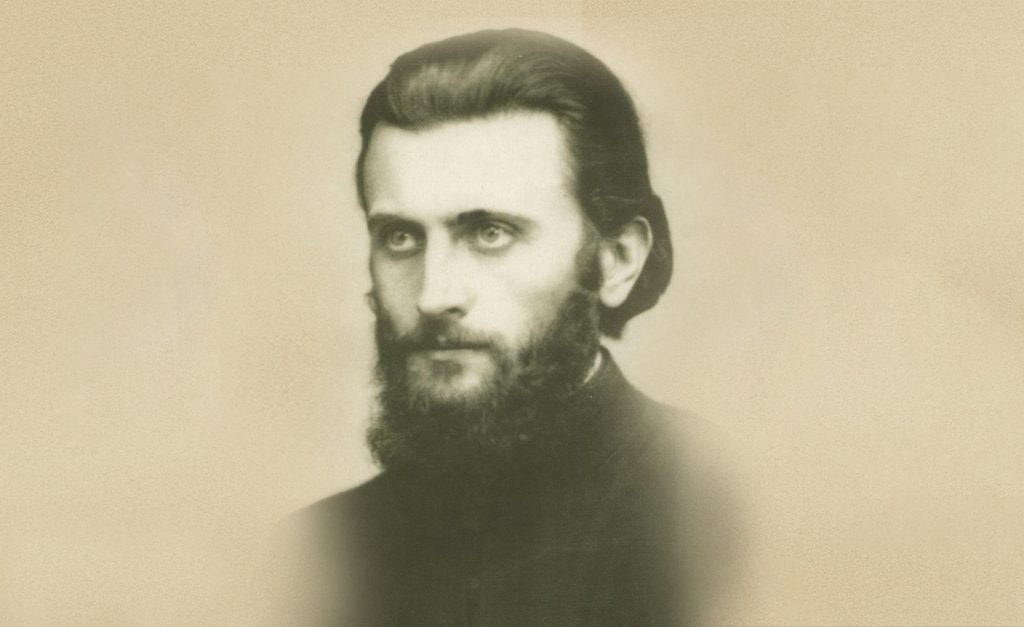
Top image: Arsenie Boca as a young man; the photographer and the date of the photograph are unknown. Source: basilica.ro, where it is marked “public domain”.
I am beginning on OrtodoxWay a series of articles about the hieromonk Arsenie Boca (1910–1989). For now I have planned it in eight parts:
- The Life of Arsenie Boca (I): Up to Prislop (1910–1948)
- The Life of Arsenie Boca (II): 1948–1989
- What the fathers who knew him said about him
- Questionable testimonies and miracles
- His teaching
- The paintings at Drăgănescu
- The canonization
- Conclusions
Every statement is referenced to its source.
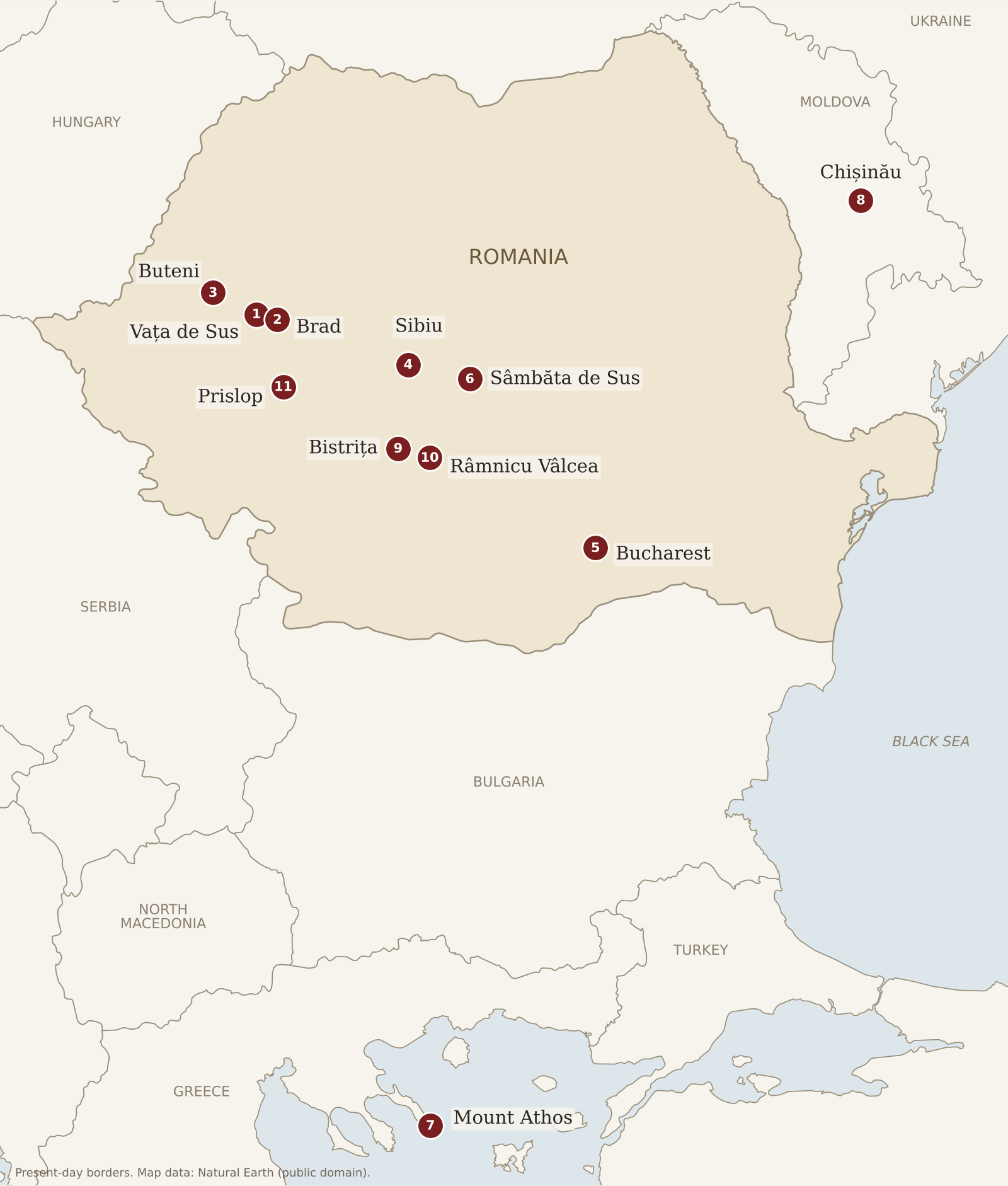
Map: OrtodoxWay. Cartographic data: Natural Earth (public domain).
- Vața de Sus: the village where he was born, on 29 September 1910.
- Brad: his father’s town; here he attended the “Avram Iancu” secondary school, which he finished in 1929.
- Buteni: the village where his cousin, Vasile Crucin, lived; he grew up in his house and spent his holidays there.
- Sibiu: here he studied at the Theological Academy of the Metropolis of Transylvania, between 1929 and 1933.
- Bucharest: here he studied at the Academy of Fine Arts, from 1933 to 1938.
- Sâmbăta de Sus: the monastery at which he was tonsured a monk, in 1940; here he was a monk and confessor until the autumn of 1948.
- Mount Athos: here he spent a few months, from March to June 1939.
- Chișinău: here he learned gilding from Russian craftsmen, from October until Christmas 1939.
- Bistrița: the monastery in Oltenia where he was in the summer of 1945.
- Râmnicu Vâlcea: the town where he was arrested for the first time, on 17 July 1945.
- Prislop: the monastery near Hațeg to which he was moved in the autumn of 1948.
Childhood and school (1910–1929)
Arsenie Boca was born on 29 September 1910 in Vața de Sus, a village in western Transylvania, near the town of Brad.1 Transylvania then belonged to Austria-Hungary. According to the biography published in 2018, his baptismal name, Zian, might be the Romanian name Jianu, written in Hungarian spelling. In the records of the Theological Academy in Sibiu he would appear as “Boca Zian-Vălean”.2 His mother, Creștina Popa, was eighteen years old and Orthodox. His father, Iosif Petru Boca, a shoemaker in Brad, was Greek Catholic, that is, he belonged to the Church united with Rome. Like many Transylvanians of that time, he went to work in America for a while.3
His parents separated when the child was small, and the court in Arad, which pronounced the divorce in 1922, entrusted him to his father. His mother remarried. Zian grew up in Brad, in his father’s family, and in Buteni, a village in Arad County, in the house of his cousin Vasile Crucin, the headmaster of the school there.4 He himself wrote about those years in a declaration which he signed at Râmnicu Vâlcea on 17 July 1945, the day on which he was arrested there for the first time. The declaration begins with the formula “The undersigned” and tells the story of his life up to then. It has been preserved in the files of the Securitate, the political police of the communist regime.5 He remembers his father as a man who was “a very good educator with his son” and who beat him only once, “so that I would not waste time any more”. Of his mother he says that he never asked her for help, “since she was divorced from father and I had been given to father by the divorce ruling”. His father died of tuberculosis in 1926, at the age of forty-five, when his son was entering the upper forms of secondary school.6
In Brad, Zian studied at the “Avram Iancu” secondary school and lived in its boarding house, while he spent Saturdays and holidays in Buteni. “Even then a certain inclination towards solitude and towards questions of religion could be noticed in me, even beyond my powers at that time,” he wrote, and he gave as an example a book by the German philosopher Immanuel Kant, Religia în limitele rațiunii, in which he had written his name as a pupil in the fourth year.7
From the Crucin family’s library he read, around 1928, Protocoalele înțelepților Sionului. Years later he told his interrogators: “I slipped it out from among my cousin’s books and I even read part of the contents of the book. Then I learned, from the contents of that book, about the struggle and the tactics that the Jews try to apply for the conquest of the world”.8
He finished secondary school in 1929, at the top of his year. He would have liked to become an aviator, but poverty stopped him: “if I had had property or if my guardians had stood surety for me I would have entered the aviation school at Cotroceni, which did not happen, poverty preventing me”.9
Sibiu and Bucharest (1929–1938)
In the autumn of 1929 he entered the Theological Academy in Sibiu, the school of theology of the Metropolis of Ardeal, that is, of Transylvania. The Metropolis was then shepherded by Nicolae Bălan. Year after year the Metropolitan chose the best students and sent them with scholarships to specialist studies, usually abroad.10 Among the young Zian’s teachers was Dumitru Stăniloae, from whom he learned Greek and who would translate into Romanian the Philokalia, the collection of writings of the Holy Fathers on prayer and the purification of the heart. He studied in Sibiu until 1933.11
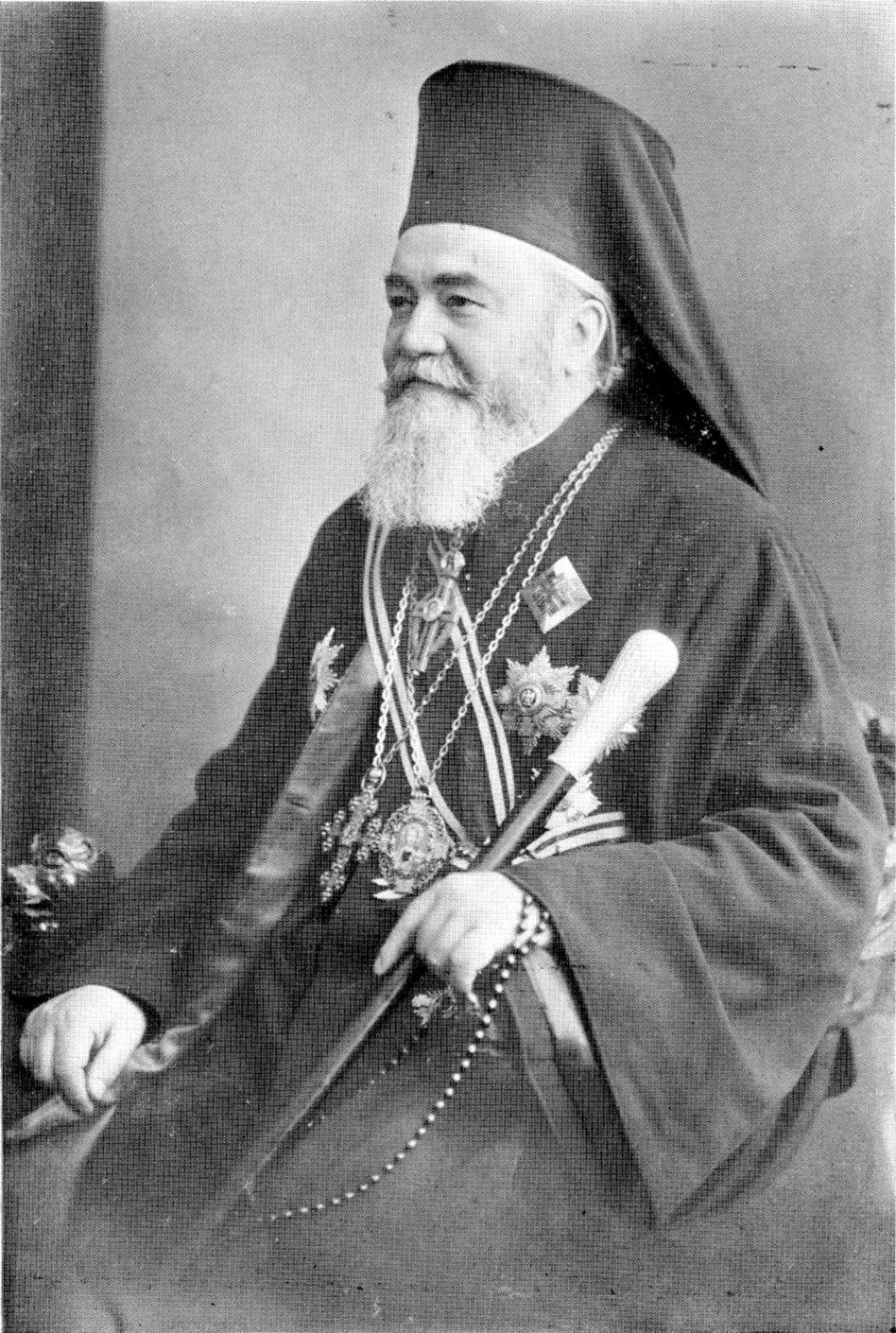
Unknown author, “Revista Teologică”, no. 5–8/1940, p. 120; public domain, via Wikimedia Commons.
He lived through those years in want. In December 1929 he asked the Archdiocesan Council to let him stay in the boarding house over the Christmas holidays, “being an orphan and lacking material means”, because otherwise he would have had to pay his guardian for his keep for the days spent with him, and he repeated the request year after year, for all the holidays. To be able to continue his studies he sold his family home in Brad.12 In the summer of 1931 he again stayed in the boarding house, because, as he wrote, he had “to work at the ‘Astra’ library in order to earn some money”, that is, at the library of the cultural association of the Romanians of Transylvania, and to copy the manuscripts of a professor of Slavonic languages, “in order to cover my expenses for books”. On 18 June, the library’s register records that he presented for payment the bill for arranging the index cards.13 Two years later, from Bucharest, he would write to the Metropolitan: “I think of the holidays I used to spend in Sibiu; and everyone went home, only I had nowhere to go; I was the man without a home, without a table.” His desk-mate, Teodor Bodogae, nevertheless wrote that his holidays “he often spent with a relative of his”.14
The same Bodogae, who became a priest and professor, remembered in 1990 a young man of a “somewhat unsociable, withdrawn, introverted” nature, who endured the cold in scanty clothing and gave up his portion of meat at the Academy’s canteen. He also wrote that he “read avidly studies of psychology, of characterology, of graphology, seeking to go deep into deciphering the hidden chambers of the soul”, that is, studies of the kinds of human character and of the attempt to know a person’s nature from his handwriting, that he knew French well and that he played the flute.14
Boca describes his years in Sibiu as a time of harsh discipline. He had resolved “that during the whole time of theology I would not make the acquaintance of any girls”, but in 1929 itself girls were admitted to Theology and he found himself with a few female classmates: “But I managed to have no acquaintances in town.”15 In a declaration of 1955 he would nevertheless mention that in his student years he had wanted to marry and that the story ended with “a sentimental incident”. At the same time he was preparing his mother for the parting: “I was accustoming mother as much as possible to being without me and as much as possible without letters, so that she would somehow forget me and not find it hard when she learned that I had become a monk”.16
“I had the problem of the will in mastering the senses,” he writes. “Even more, studying the comparative mysticism of the various higher religions, I was concerned to see through my own experience how far the sphere of the will extends in the domain of the life of the soul and of biological life.”17 Comparative mysticism sets side by side the religious experiences of different faiths. He wanted to find out whether reflex movements and instincts escape the will, and he came to the conclusion that “the action of the will and of the consciousness can extend even over instinct and reflex acts according to a certain variable”. “In these deepenings,” he said, he was also helped by the studies which Mircea Eliade, the historian of religions, was then writing in Calcutta and publishing in a philosophy journal in Bucharest. Those studies were about Indian philosophy and about yoga.18
What he did in the Academy’s hostel was told, at a lecture in 2014, by the priest and professor Dorin-Zosim Oancea, of the Faculty of Theology in Sibiu, who had heard it from his father, a dormitory-mate of Boca and of Bodogae. Boca “would sit for hours on end in front of a mirror and look between his eyes”, and to the colleagues who asked him what he was doing he said that he was doing “concentration exercises”. “He had a book of hatha-yoga. He was learning a technique from it.”19 Hatha-yoga is an Indian school of exercises of the body and of the breath. His colleagues had nicknamed him “Dr. Konig”, as a Securitate file shows. The 2018 biography connects the nickname with “Dr. King”, a hypnotist who gave fakir shows around Romania in the 1920s: the German König means what the English king means. Fakirs were ascetics and conjurors from India, famed for the mastery they showed over pain and over the body. A Securitate note later described Boca as “a mystic with serious knowledge of fakirism”.20
In June 1933 he sat his licentiate, the examination that concluded his studies, with a thesis on “Încercări asupra vieții duhovnicești”, written under the supervision of Stăniloae, which has not survived.21 The Metropolitan then sent him with a scholarship to Bucharest, to the Academy of Fine Arts: “he sent me the following year 1933/34 to the Academy of Fine Arts in Bucharest, which I finished in five years. My principal professors were Mr Francisc Șirato, Costin Petrescu and Fr. Reiner, the last from the Faculty of Medicine.”22 At the Faculty of Medicine he attended the lectures of the anatomist Francisc Rainer, although, as he writes, “many times I could not go because of the student unrest and strikes”. At the Faculty of Theology he attended Nichifor Crainic’s lectures on mysticism.23
He lived in the theology students’ boarding house at the Radu Vodă Monastery and, for a time, with Gheorghe Stăniloae, the professor’s brother, to whom he gave the nickname “Babu”.24 “School absorbed me totally and I had no time to waste,” he said of those years. It was then that he translated into Romanian the Ladder of Saint John Climacus, the book about the steps of the spiritual ascent: “as I liked very much the mystical writing of Saint John Climacus, I translated it into Romanian, in the space of 5 months. It helped me very much in completing my conviction to enter monasticism.”25
While he was studying in Bucharest, he went to the funeral of two Legionaries who had fallen in the war in Spain. The Legionaries were the members of the Legionary Movement, the nationalist political movement of the time. He later told his interrogators that he had gone there “on my own initiative”, “being impressed by the gesture” of the two, who had died “in a distant country”. In the same declaration he says that it was then that he saw Corneliu Zelea Codreanu, the commander of the Legionaries, “for the third and last time”.26 In other declarations, however, he condemned the violence of the Legionaries: “The right to punish belongs only to the constituted authority, whereas the Legionaries were a political formation, not yet invested with public responsibility, therefore terrorists.”27 Of himself he wrote: “I was completely outside any student movement or enrolment in any political movement.” Among his fellow students he remembered a communist, Vulpescu, with whom he had no “discussions”, and a Jew, Ițhoc Steinberg: “we were friends”. And he added: “Later on, when I read the Bible, I saw that the last world mission is that of the Jews, possibly that of an idea of the Jews.”28
After the Academy he did a year of practice, painting in fresco, that is, on the still-wet plaster, the church in Bixad, also called Bixadul Oltului, a village in Covasna County. He worked alongside his professor, the painter Costin Petrescu.29
Deacon and pilgrim to Athos (1935–1939)
Metropolitan Bălan ordained him a celibate deacon on 11 September 1936, for the metropolitan Cathedral in Sibiu, according to the documents in the archive of the Metropolis; other sources give the date of 29 September 1935.30 The 2018 biography places the ordination at Sâmbăta de Sus, a village at the foot of the Făgăraș Mountains, where the Metropolitan was renewing the monastery built long ago by Constantin Brâncoveanu, the prince of Wallachia, which is why it is also called the Brâncoveanu Monastery. The Metropolitan wanted to bring there monks with theological learning, from whom a renewal of monastic life would begin.31
The deacon wanted to come to know the monastic life of Mount Athos. Crainic later declared that it was he who had advised him to go, because there “one can still learn the art of raising ourselves again to the spiritual level of former times”.32 Boca writes that he went “sent by Metropolitan Nicolae Bălan to the Holy Mountain, in order to learn the monastic life there”, at a time when “there were the strictest investigations so that none of those who had ever been Legionaries could leave the country. I, having absolutely nothing on my record, obtained a travel passport: for Europe ‘sans Russie’, from the Police Prefecture of Sibiu.” “Sans Russie” is French for “without Russia”. Because he was a deacon, he writes that he also obtained “the special approvals from the three patriarchates: of Romania, of Constantinople and of Athens”, which showed that he had “nothing suspect on record, but only the simple calling towards inner perfection through the craft of monasticism”.33
As to when he was on Athos, Boca himself gave two accounts. In the declaration of July 1945 he writes that he returned in 1938: “I returned to the country on 8 June 1938. I remember the date for this reason, that entering the country through Moravița I saw the Romanian flags, for that 8 June, all at once.”34 Moravița is the place where he crossed the border. On the last leaf of a notebook of Philokalic texts copied on Athos, however, he noted that he had copied them “while I stayed on the Holy Mountain: March, April and May 1939”. The notebook was described by Bishop Daniil Stoenescu, former locum tenens of the Diocese of Dacia Felix, the diocese of the Orthodox Romanians of Serbia, and author of three books about Boca, which he presented in 2016 to the commission for Boca’s canonization.35 Father Nicolae Zian Streza, the author of a book about Boca’s stay on Athos, says that he has copies of the departure documents, kept in the archive of the Metropolis of Transylvania, and that Boca stayed there “in the year 1939, after 12 March and until 8 June, which was the national day of the Kingdom of Romania”. The year 1939 is also given by the life of Boca published by the Romanian Patriarchate in November 2025, after the canonization, whereas the 2018 biography follows the year 1938.36 The documents in the archive of the Metropolis of Transylvania, cited by the historian Adrian Nicolae Petcu, settle the year. On 18 November 1938 Metropolitan Bălan asked the fathers of the Holy Mountain to receive him. The consent of the Ecumenical Patriarchate and the visa came only in January 1939, and Boca reached Athos in March. On 14 June 1939, back in the country, he thanked the Metropolitan for the help that had allowed him to stay “with much profit on the Holy Mountain”. The year 1938 in his declaration is therefore wrong.37
According to the life published by the Patriarchate, he left together with Serafim Popescu, and on Athos “they were lodged at the Kellion of Saint Hypatius, where the abbot was the hieroschemamonk Teodosie Domnariu from Săliștea Sibiului”. Serafim Popescu afterwards lived with Boca at Sâmbăta and would be the abbot of the monastery between 1949 and 1955.38 On the last leaf of the notebook, however, Boca writes that he copied the texts “with the blessing of my Father confessor, Abbot Antipa” and “from the manuscripts of the Abbot”.39 Nicolae Zian Streza places at the head of the kellion the schemamonk Antipa Dinescu, who had been abbot “between 9 May 1900 and 4 September 1914” at Prodromou, the Romanian skete on the lands of the Great Lavra, and who in 1939 was eighty years old. The life published by the Patriarchate says that the Mother of God “arranged for him the meeting with the Romanian Athonite ascetics Dometie Trihenea and Antipa Dinescu, from whom he received both counsel and a manuscript of the Philokalia, which he copied and brought back with him to the country”.40
Many years later, in the house where he lived in Bucharest, on Doctor Toma Petrini Street, Boca is said to have told Nicolae Zian Streza that on Athos he had followed “a plan well established from the beginning, on three fronts”. First he is said to have sought a confessor, in dialogue “with several spiritually advanced monks”, among them Porfirie, Dometie Trihenia and Arsenie Mandrea, and to have spent much time “near the cave of Saint Athanasius”. Then he is said to have studied the paintings and the icons, and at the end to have copied Romanian manuscripts from the library at Prodromou.41 The part about the manuscripts is confirmed by Stăniloae, who writes in the preface to the first volume of the Philokalia that he used “copies of older Romanian manuscripts from Athos, brought by His Reverence and by Father Arsenie”, that is, by Serafim Popescu and by Boca.42
Chișinău and monastic tonsure (1939–1940)
According to the 1945 declaration, from his return from Athos until Easter of the following year he gathered tools and materials for a painting workshop and learned “in Chișinău, from some Russian craftsmen, the ‘cicanca’ gold gilding”. Chișinău at that time belonged to Romania. According to the documents in the archive of the Metropolis of Transylvania, likewise cited by Petcu, he stayed there from October until Christmas 1939, in the painting workshop of the Metropolis of Bessarabia. Another document from the same archive shows that he set up his icon workshop at Sâmbăta in February 1940.43
In a notebook of his, printed in 2009, Boca tells of an encounter at a railway station, which the same 2018 biography places in Chișinău. In the face of a man he was struck by “his pain” and by “a beauty which I can no longer forget”. He ran to bring him bread, and when he came back the man was no longer there. “Then I understood that I had met the One who is naked, thirsty, hungry and without a dwelling in this world. Then I understood in a few moments more than all that I had learned in so many years.”44 The life published by the Patriarchate places the event on 31 August 1939 and writes that at the station Boca “saw the Saviour”.45
Boca was tonsured a monk at Sâmbăta, on Bright Friday, the feast of the Life-giving Spring. He himself placed it in 1939: “On the Friday of the Life-giving Spring after Easter of the year 1939, I was tonsured a monk, receiving the name Arsenie.”46 The church press of the time, however, places the tonsure in 1940. Revista Teologică of Sibiu wrote at the time that at the pilgrimage at Sâmbăta, in the presence of Metropolitan Bălan and of Bishop Nicolae Colan of Cluj, “the impressive service of the tonsure into monasticism of Father Hierodeacon Arsenie Boca was performed”. We know the report from the transcription made by Father Ioan Gînscă, who in 2002 printed his licentiate thesis about Boca, with a recommendation from Archimandrite Teofil Părăian.47 The year 1940 agrees with the note in the notebook from Athos and with the workshop of February 1940; in the 1945 declaration, both the return from Athos and the tonsure stand a year earlier.48 The documents in the archive of the Metropolis and the register of tonsures of the Brâncoveanu Monastery, cited by Petcu, also give the day: 3 May 1940. He had made his request to be tonsured a monk on 9 March 1940.49
In the 1945 declaration, Boca writes that he chose the name himself: “Speaking has been hateful to me for as long as I can remember. I chose even my monastic name because Abba Arsenius had chosen the ascetic labour of silence, through which he was perfected inwardly.”50
The first years at Sâmbăta de Sus (1940–1944)
In the same declaration he describes thus his beginnings at Sâmbăta, where the monastery was only just being restored: “For a year I was occupied with the household; I was the first and only monk at the Brâncoveanu Monastery – Sâmbăta de Sus, Făgăraș County. No time was left to me for painting. The second year likewise.” “Father Serafim Popescu had also entered monasticism. I asked him to receive the priesthood – I feeling myself unworthy. He received it. Thus the services began at the Monastery as far as we were able.”51
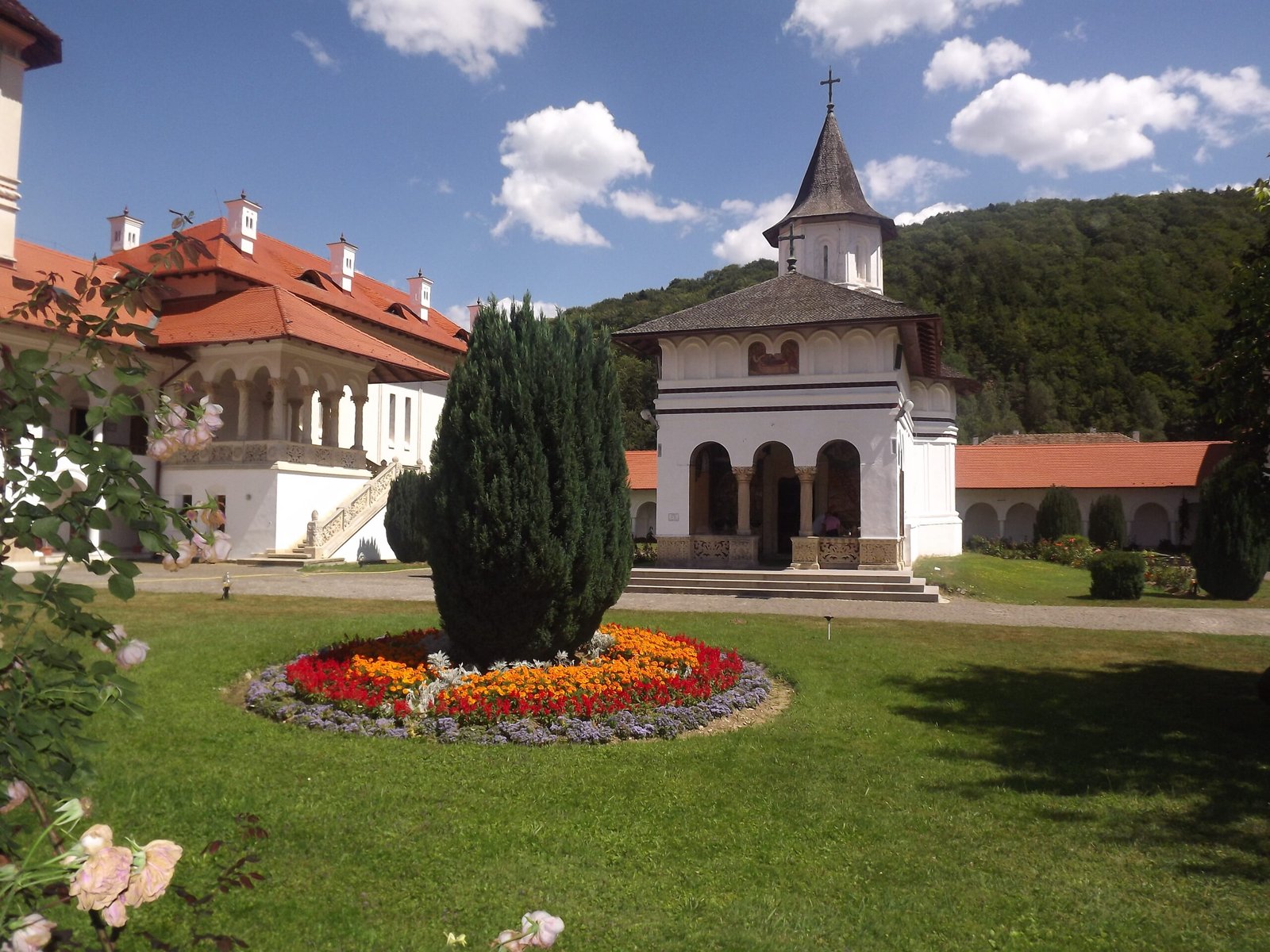
Photo: Stefanoleaota, 2012, CC BY-SA 4.0, via Wikimedia Commons.
He attributes his ordination to the people who began coming to him: “One winter, probably around 1941, we find ourselves with an avalanche of people of all ages and ranks, overwhelming me to talk with them about their troubles. Here I found myself acting as confessor to people although I was not a priest. […] Thus I saw myself forced to receive the priesthood”.52
Paulin Lecca, in those years a monk at Frăsinei Monastery, in Vâlcea County, and later an archimandrite, left a diary, printed in 2013, in which he records another version. He writes that he heard it at Sâmbăta from Nicolae Mladin, a former university classmate of Lecca’s, who would become a metropolitan. Mladin told him, on a bench by the monastery lake: “I, however, know him. I came here at the same time as he did. When he was not yet clothed in the monastic habit, he occupied himself with palm-reading. The women from the neighbouring villages would say among themselves: ‘Let’s go to the sorcerer priest!’ When Metropolitan Bălan saw that people were coming to look for him, he said: ‘Let us make him a priest, so that he may be of use to the people who come to him,..’. And so he made him a priest, and Father Arsenie continued to occupy himself with chiromancy, but also with other occult sciences…”53 The occult sciences are the practices by which a person seeks to attain hidden powers and knowledge. That Mladin was, alongside Boca, one of the first candidates for monasticism at Sâmbăta is also written by Gînscă, following Father Teofil Părăian.54
According to Father Nicolae Streza of Sibiu, the father of Nicolae Zian Streza, who had been coming to the monastery since 1942, when he was a schoolboy, Boca was ordained hieromonk on 10 April 1942, for the monastery at Sâmbăta, and became its confessor. The same date is also given by the life published by the Patriarchate. Telegraful Român, the newspaper of the Metropolis in Sibiu, wrote on 12 April 1942 that the Metropolitan had then ordained, at the pilgrimage on Bright Friday, the feast of the Life-giving Spring, “the Reverend protodeacon Arsenie Boca to the rank of hieromonk”.55
From the war years on, more and more people climbed up to Sâmbăta. Nicolae Streza remembered that Boca “would choose every Sunday at the door of the monastery a group of 70-80 believers, whom he called into the church, read them the prayer of confession, gave them a word of teaching and then told them to stay at the monastery the whole week”.56 Antonie Plămădeală, who used to go up to Sâmbăta as a student and later became Metropolitan of Transylvania, was tonsured a monk by Boca in 1949 at Prislop, a monastery near the town of Hațeg, in Hunedoara County. In the book Rugul aprins, printed in 2002, he writes that Boca heard confessions “always in Church, always in vestments, with the book before him, and at the end he gave the prescribed absolution”.57 Paraschiva Anghel, from the village of Dejani, who stayed a week at the monastery during Great Lent of 1944, remembered in a collection from 2008 that “Father would confess one person for as much as three hours”.58
In August 1943, Dumitru Stăniloae wrote in Telegraful Român about “the work at the Brâncoveanu Monastery”. On the monastery’s meadows, he wrote, there were every day “200-300 human beings”. Many came from hundreds of kilometres away and stayed there between two and five weeks, “feeding only on bread and water”. Each one waited for his turn at confession knowing “that Father will stay with him alone for 4-5 hours in intimate conversation”. Boca’s programme was for Stăniloae “a living restoration of the most authentic Orthodox spirit”.59
Nicolae Streza slept one night in his cell, together with other young men, before he entered Theology. Boca lay down “on his plank, dressed as he was”, and they on the floor.60
Lidia Stăniloae, the professor’s daughter, later wrote a book of memories about her father. She tells that one summer, without saying which year, she and her father met at Vlădeni, Stăniloae’s native village, in Brașov County, a group of peasants who were going on foot to Sâmbăta for the feast of Saint Elijah, “because Father Arsenie is beginning to speak the language of the birds and will then go up to heaven in the chariot of fire”. Stăniloae was saddened: “Poor people. […] They are naive and eager for the extraordinary. They interpret every word as they wish. We ought to be more careful about the way we express ourselves before them and give up cheap spectacle.” Lidia adds that her father “was very downcast, as on many other occasions” and that he said: “This is how dangerous errors are born among the people”.61
Lidia Stăniloae also writes that her father “disapproved of the desire ‘to put themselves on stage’ of some servants of the Church”. He considered Serafim Popescu “his true pupil and disciple” and said of him: “Father Serafim is a true monk. Without ostentation, without chasing after people’s admiration.” And further on: “If he had not stood there, steadfast and modest, like a rock beaten by the waves, everything at Sâmbăta would have gone to ruin.”62
Crainic later told his interrogators that the early fame of his former student rested on “a penetrating art of clarifying states of religious psychology and of giving spiritual counsel”. In the 1990 article, Bodogae wrote that Boca “made a special contribution, which must not be forgotten” to the movement at Sâmbăta, “even if in its methodology quite a few aspects remained to be corrected”.63 Boca declared: “Owing to the knowledge which I had gathered during my studies and which I applied wherever this could be done, the people overstepped the limits of just appreciation and believed me exceptionally gifted.”64 A note in the Securitate files, without author and without date, found on the same leaf as the nickname from his student years, says that he “would draw an ebonite comb through his rough beard and, when sparks were produced, would ask the women present: did you see?”.65 Ebonite is a kind of hard rubber, which becomes charged with electricity when it is rubbed.
Crainic, the Philokalia and the first arrest (1944–1945)
Crainic hid for a few months at Sâmbăta in the winter of 1944–1945, while the authorities were looking for him. In his memoirs, printed in 1996, he writes: “The monk with whom I arrived has transformed it through his fiery zeal into an immense place of pilgrimage. For this he was enlightened in Bucharest and polished on Mount Athos. The pilgrims who arrive singing with snow up to their chests bring enormous offerings, with which the monks feed a poor hamlet below the mountain and an orphanage in Sibiu.”66 In the evenings of that winter, Crainic explained to him the Exercițiile spirituale of Ignatius of Loyola, the founder of the Jesuit order. “In his capacity as a monk,” Crainic would recall, “being very curious to know this method of spiritual life, he asked me to translate it for him and to comment on it”.67
In these years, Dumitru Stăniloae was translating the Philokalia, and the first volumes began to appear in Sibiu in 1946. In the preface to the first volume, in the second edition, of 1947, Stăniloae writes that for some writings he had “a first draft of a translation” by the hieromonk Serafim Popescu. To Boca, “my good former student, who has always remained close to me”, he gives thanks because he “was so kind as to write down at my dictation the greater part of the translation in its first draft”. There too he shows that Boca sold 800 copies of the first edition, that the subscriptions Boca gathered gave him “the decisive impulse” to reprint it, and that it was also Boca who made the cover.68 In the preface to the second volume he writes that he was able to overcome the difficulties of printing “thanks to the massive subscriptions which His Reverence procured” and calls him “a foremost founder of the Romanian Philokalia”. In the preface to the fourth volume, of 1948, Stăniloae writes that Boca “continued to give the same decisive support through the subscriptions made”.69
Lidia Stăniloae remembers that “Father Arsenie still considered himself father’s disciple and for a few weeks wrote at dictation, in his small and orderly handwriting, what father was translating from Greek”. She also observes that Boca “never translated a single line of the above-named work”. She further writes that her father used to repeat: “The greatest danger for a monk is to let himself be led astray by the praises of others.”70 Antonie Plămădeală adds that the first volumes were distributed to the pilgrims at Sâmbăta.71
In the summer of 1945 he was arrested for the first time. Dudu Velicu, who in those years kept in Bucharest a diary of church life, noted in February 1947 that “this Arsenie was arrested by the priest C. Burducea, when the former was at Bistrița Monastery, and the latter was Minister of Cults”. Velicu does not say how he knows this. Bistrița Monastery is in Oltenia, not far from the town of Râmnicu Vâlcea. From Râmnicu Vâlcea, where he had been arrested on 17 July, he was taken to Bucharest and released on 30 July.72
Paulin Lecca tells, without giving the year, that he came on foot from Govora to Bistrița, where Boca was, to ask him to accept him as a disciple. He writes that “Father Arsenie met me with such hostility and contempt” that he withdrew to pray in the little church. At parting, Boca gave him a book placed “in two large envelopes, one inside the other”, asking him not to open them and to take it to Father Pandoleon, a priest at Govora. On the way, Lecca was stopped and searched, and the envelopes were opened: “It was a book by Rudolf Steiner, which spoke about clairvoyance, the aura, etc.”73 Rudolf Steiner was an Austrian philosopher and esotericist, the founder of anthroposophy, a teaching which he presented as a “science of the spirit”.74 A teaching is called esoteric when it is hidden and reserved only for the initiated. Clairvoyance is the supposed seeing of things hidden from the eyes, and the aura is a supposed light that surrounds the human body.
The last years at Sâmbăta (1946–1948)
In a collection of his writings a letter was printed addressed to “Our sister Frăsina”, signed “Arsenie” and dated 18 February 1946. Frăsina was a woman who said that she had visions. The letter begins thus: “I have read the things communicated from beyond. I am sending them to you corrected for grammar and, where it was needed, also for content. I value the gift which God has given you, but we must both be careful.” Boca then reminds her that “from the teaching of the Fathers it follows that we must guard ourselves against unusual happenings, such as visions, communications and others”. About the praises in her communications he writes: “the fact that the Mother of God praises you and names you as one who will be a saint and the saint of saints – even if you will get there, as Mary of Egypt got there, nevertheless makes me think.” And about himself: “I see that I too find myself praised. My cheek blushes with shame, knowing my falls and going from fall to fall. If I do not celebrate services, as you see – it is also a consequence of the fact that I have lost my decency before God and the Mother of God.” Further on he counsels her: “Flee even from the praise of the Mother of God.” At the end he tells her how she may come to speak at the gatherings of the Lord’s Army (Oastea Domnului): “So let Father Grovu ask for you the Bishop’s approval to speak at the Army. In the Church it is written that the woman should keep silent. So we do not spoil what is written.”75 The Lord’s Army was a religious movement linked to the name of Father Iosif Trifa of Sibiu.76
In 1946, too, he began to build himself a cell on the mountain. Father Nicolae Streza, who also worked there, writes that “the authorities then forbade the work”.77
In the summer of the same year, Lidia Stăniloae and her father went up into the Făgăraș Mountains with a group from Sâmbăta, which included Boca and Serafim Popescu. On the way back, the chalet-keeper’s dog bit Lidia. Her father wanted to take her the next day to Sibiu, for the injections against rabies, and Boca tried to stop her: “Don’t go! I assure you that nothing will happen!” Lidia writes: “Father Arsenie’s word was regarded by his admirers as gospel truth. But it was frivolity and self-infatuation for another to decide in my place in a circumstance which might possibly have serious consequences.”78 Self-infatuation is conceit.
In these years he came to know Princess Ileana, of the royal family of Romania. He declared to his interrogators in 1955: “Apart from my spiritual concerns, I used to visit Princess ILEANA, in her apartment, where I also had discussions with her.” Boca himself placed their first meeting in 1947, while Crainic remembered that they had talked about this meeting as early as the winter of 1944–1945.79
In the summers after the war, groups of students from Bucharest also came to Sâmbăta. Plămădeală writes that “in the holidays he prepared conferences of Christian initiation, and of initiation into prayer”.80 Professor Fl. Ghițescu of Brașov, who went up to Sâmbăta at that time, remembered in a collection from 2008 that the first words he heard from him, on 1 July 1946, were: “There is Paradise and hell”.81 According to Father Nicolae Streza, during the Dormition Fast of 1947, after the Liturgy and confession, Boca would read and interpret parts of Cărarea Împărăției, his book, which his admirers would print much later.82
On 20 February 1947, Boca came to the Faculty of Theology in Bucharest. Dudu Velicu, who saw him there, writes that at Sâmbăta he was “very well known, even renowned, as one said to have the gift of knowing people’s secrets”. He also notes that a group of ladies and a few young men “would not take their eyes off him”. Boca told those present that he would not speak to them that day, and Velicu learned afterwards that the dean’s office had forbidden him to give a public lecture in the faculty building. “He is a megalomaniac,” writes Velicu, and at the end of the entry he draws the conclusion: “Charlatanry is not foreign to this man”.83
From the spring of 1947 Julieta Constantinescu, a twenty-one-year-old student who was studying Theology and Philosophy in Bucharest, also came to Sâmbăta. She came together with a fellow student whom she loved without being loved in return any longer. “I loved him very sincerely,” she would later declare, “and for my part I was thinking of marrying him”, but “with time he began to reject me”. The fellow student was Nicolae Bordașiu, a student of Theology, the son of a priest from Bihor, who also went up to Sâmbăta in the summer holidays. In 1948 the Securitate was keeping him under surveillance together with a group of students of the Faculty of Theology in Bucharest whom it regarded as Legionaries. Among them were Leonida Plămădeală, the future Metropolitan Antonie, and Roman Braga. He lived as a fugitive until July 1955, when he was arrested.84 A note in the Securitate files, cited in the 2018 biography, tells of an incident after lunch. Screams were heard from the monastery courtyard: Julieta wanted to throw herself into the pond to take her own life, and a few students were pulling her back towards the bank. Boca came out of the refectory, calmed her down and tried to put those around at ease. The note further says that he is then supposed to have sat down with her on a bench, to have held her on his knees, as one holds a child, and to have joked to bring her out of her despair. Their relationship soon gave rise to talk. Another female student remembered that it was said of Julieta that she “would be capable of capturing Fr. Arsenie in place of the one she had lost”.85 The biography published in 2018 writes, without showing how it knows, that Boca then accompanied Julieta from Sâmbăta to Sibiu, in the monastery’s carriage, and from there by train to Bucharest, where together they looked, in vain, for Bordașiu. In 1950 Julieta became a nun, with the name Zamfira, and she would become abbess of Prislop Monastery.86
It was also at Sâmbăta that Father Arsenie Papacioc, later confessor at the skete of Techirghiol, on the shore of the Black Sea, came to know Boca. He had come, while he was preparing to enter a monastery, to ask for a blessing; he does not give the year. In 1996, in a conversation with the fathers of Sihăstria Monastery, which was recorded, he remembered the meal in the refectory at Sâmbăta: “And Arsenie Boca put his hands like this… Some blue eyes, powerful… at me like this… fixed… When I saw it I say: get on with you, sir. I wasn’t stupid, I was a well-read lad…” About the spiritual profit he had there he said: “I profited much from Father Serafim, not from Arsenie, from Serafim I profited.”87 In the same conversation, Papacioc also spoke about Julieta, whom he had known as a student of Theology. “When Arsenism appeared,” he said, “Julieta too went to Sâmbăta”, and there, so that she would be given attention, “she threw herself into the water that was there”. Asked by Father Ioanichie Bălan, of Sihăstria, whether it had been a suicide attempt, he answered: “she faked it”.88 Papacioc also said that afterwards Boca and Julieta “remained in intimacy, in great intimacy” and that “they would go off into the forest together”. He does not say that he was present, nor from whom he knows it.89
In Paulin Lecca’s diary there is also a saying of Boca’s about the Jesus Prayer. While Lecca was at Frăsinei, Father Nifon from there came to Sâmbăta. Boca asked him whether he knew Brother Victor, as Lecca calls himself in the diary. Then Boca said to Nifon: “Tell him from me to stop saying ‘Lord Jesus’, because he will go mad.” Lecca was not present at the conversation. He writes: “It was rather hard for me to hear such words from the ‘saint’ of Sâmbăta.” He nevertheless continued to say the prayer. In the diary, the episode comes immediately after the story of a brother who had lost his mind. Some said that it had come upon him from the Jesus Prayer, but Lecca writes that the cause had been “his unconfessed vice, and also the pride of holiness”.90
Paulin Lecca tells in the diary, without giving the year, that he took to Boca a girl who would fall into a trance and say that she was speaking with “Dear God”. A trance is a state in which a person seems to go out of himself. Lecca hoped that Boca would show the girl that she was being deluded by the devil. “But, to our astonishment, Father Arsenie not only did not warn us, but imprudently approved of the girl, in an unacceptable way.” Back at his own monastery, Lecca wrote to him: “Most Reverend Father A., have mercy on the Blood which our Lord Jesus Christ shed for us all, have mercy on the flock which you shepherd and have mercy on the soul of Your Reverence”.91
In 1948 Boca was arrested again. The “Repere biografice”, a chronology printed in the collection of testimonies compiled by the journalist Romeo Petrașciuc, give the date as 14 May. They say that he was accused of having helped with food the anti-communist fighters in the Făgăraș Mountains, that is, those who resisted the regime with arms, and that he was “tortured for a month and a half”.92 Dudu Velicu notes in his diary, in July, the rumour going round among the clergy: “The priest Arsenie, […] of Sâmbăta Monastery, has been arrested – it is asserted in clerical circles. And, although he was ill, he was nevertheless taken on foot”.93 According to the 2018 biography, he was interrogated first at the Siguranța in Făgăraș, the political police that preceded the Securitate, then in Brașov. Towards the end of the summer they set him free, because they had found no evidence against him. The author writes: “There are no indications that he was mistreated with the bestiality usually suffered by those arrested.”94
The interrogators asked him above all about the Legionaries. Boca declared that he had received at the monastery two former Legionaries as brothers and that he had asked the gendarmerie several times for “a fixed control post, which would spare the monastery from involvement in a forbidden domain”. About the fugitive Legionaries who came to confession he said, in other declarations, that he urged them to lay down their arms and to return to “the Christianity which does not quarrel with the Authorities”.95
Paulin Lecca spoke about the same years in a declaration given to the Securitate on 18 July 1958. He tells there that he had come to Sâmbăta and that Boca had received him “with much love”. Of those years he declared: “From the words of ARSENIE BOCA, from his sermons and from his attitudes, I found that he, dizzied by the halo of a saint created around him, adulated by the Legionaries who had grouped themselves around him, wanted to become (this is my opinion, acquired as a result of my observations and deductions) a kind of leader of the legion in the spiritual sense.” He also said that the Legionaries in the prisons asked for his advice and that those who came to Sâmbăta had made there “a kind of labour camp”.96
In the autumn of 1948, Boca left Sâmbăta for Prislop. Antonie Plămădeală writes that Metropolitan Bălan moved him there to protect him, “because Sâmbăta had in fact come into the Securitate’s sights”, and that Boca “was very grieved”.97 According to the 2018 biography, the move was decided by the Ministry of Cults, in the year in which the state abolished the Greek Catholic Church. A note in the Securitate file says that Boca was being sent to Prislop, until then a Greek Catholic monastery, “to take over and administer the monastery which according to the unification of the churches is to become a property of the Orthodox church”. The life published by the Patriarchate says only that he was sent “to restore Prislop Monastery near Hațeg”.98
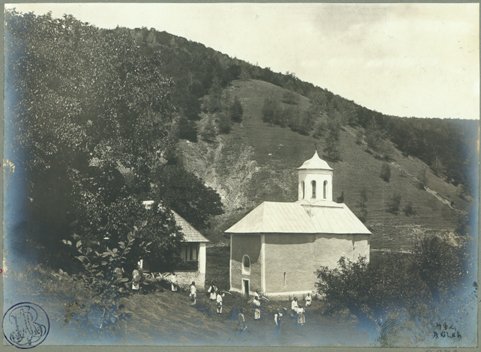
Photo: Leopold Adler, Library of the Romanian Academy, public domain, via Wikimedia Commons.
[Next article: The Life of Arsenie Boca (II), 1948–1989.]
Notes
- The declaration written by Boca in 1945 (“The undersigned, I was born in 1910, September 29, in Vața de Sus, Hunedoara County”), published by Daniil Stoenescu in Biserica de la Drăgănescu – “Capela Sixtină” a Ortodoxiei românești, Deva, 2005, pp. 11–13 (see note 5), after the study Grozăviile neasemănate de la Drăgănescu și viața Părintelui Arsenie Boca în lumina Sfinților Părinți – v 11, the blog “Adevărul despre Părintele Arsenie Boca” (888adevarul8despre8arsenieboca8.wordpress.com), 2016 (hereafter: Grozăviile; I cite the printed page), p. 847. The same date is given by: Tatiana Niculescu, “Ei mă consideră făcător de minuni”. Viața lui Arsenie Boca, Humanitas, Bucharest, 2018 (hereafter: Niculescu), p. 11, who describes the birth certificate without giving its archival reference; “Repere biografice”, in Romeo Petrașciuc, Părintele Arsenie Boca: minuni și mărturii, electronic edition “v.0.9”, without printed pagination (hereafter: Petrașciuc; the page is that of the electronic edition), p. 87; the life published by the Romanian Patriarchate on basilica.ro on 28 November 2025, in the calendar of the day: “Sfântul Cuvios Mărturisitor Arsenie de la Prislop; Sf. Cuv. Mc. Ștefan cel Nou; Sf. Mc. Irinarh”, https://basilica.ro/calendar-ortodox-28-noiembrie/ (hereafter: basilica.ro). ↩
- The form “Boca Zian-Vălean”: the address of the Rectorate of the Academy of 22 June 1933, in the Archive of the Metropolis of Transylvania (hereafter: AMA), dosar III-225-1933, no. 6193/22 June 1933, after Sorin-Gabriel Pomană, “Părintele Arsenie Boca în anii studenției la Academia Teologică Andreiană (1929–1933) – Documente inedite”, Studia Doctoralia Andreiana, I (2022), pp. 106–119 (hereafter: Pomană), p. 114. Pomană is an author favourable to Boca; from him I take only the documents, with the archival references he gives. The explanation through the Hungarian spelling of the name Jianu is given by Niculescu, p. 12, without a document to support it; she also writes that the name entered in the official records is “Zian Vălean”. ↩
- For the parents: Niculescu, pp. 11–12. The author describes the birth certificate, drawn up by the clerk of the town hall, without giving its archival reference or the place where it is kept. For the father’s departure to America: Niculescu, p. 12 (“at a time when many Transylvanians cross the Atlantic in search of a better life”), pp. 14–15 and 17. The author writes that “it is not known how long he stayed in America” and that Iosif Boca “is said to appear” in a photograph taken in 1920 in Cleveland, Ohio. The photograph was put into circulation on the internet by Florin Duțu, the author of a biography of Boca (Niculescu, p. 14, n. 2). ↩
- For the divorce: Niculescu, pp. 18–19, after Iovu Mihuț, Copilăria Părintelui Arsenie Boca, Icona, Arad, 2012, p. 61. The parents’ separation is also told by Zoe Daian, the daughter of Vasile Crucin, in Petrașciuc, p. 9. For the mother’s remarriage: Niculescu, p. 18. The admirers tell of this remarriage differently. Zoe Daian says that the mother was left alone “through the death of his father” and that, “being too young, her relatives forced her to remarry” (the interview conducted by Valentin Iacob, Formula As, no. 886, 2009, after Grozăviile, p. 890; the name of the interviewer is given by Niculescu, p. 23, n. 1; the text on the internet is without diacritics, and the diacritics in my quotations have been added by me). In the interview in Petrașciuc’s collection, the same Zoe Daian speaks first of the parents’ separation, when Zian was at primary school, then of the remarriage into which “her mother’s parents” forced her (Petrașciuc, pp. 9–10). Hierodeacon Dometie of Sâmbăta Monastery writes, in a testimony of 11 June 1990, that after the father’s death the mother “was forced by her mother to remarry” (Mărgăritare duhovnicești, content gathered by Archimandrite Serafim Popescu, edited by Hieromonk Teognost, 3rd revised ed., Ed. “Credința strămoșească”, 2013, electronic edition “v.0.9.8”, without printed pagination (hereafter: Mărgăritare; the page is that of the electronic edition), p. 5). In the 1945 declaration, Boca speaks of a divorce. The interview was republished, with diacritics and with the name of Valentin Iacob, in Formula AS, no. 1694, 18 November 2025 (https://www.formula-as.ro/2025/11/18/pe-urmele-parintelui-arsenie-boca-adolescentul-din-gradina-cu-flori/). There I checked the quotations about the remarriage and about the holidays in Buteni. For the childhood in Brad and in Buteni: Niculescu, pp. 15–16 and 20; Zoe Daian, in Petrașciuc, pp. 10–11. ↩
- The declaration is signed “Hieromonk Arsenie. R. Vâlcii. 17 July 1945” (hereafter: the 1945 Declaration). Stoenescu, Grozăviile and Niculescu call it an autobiography; we call it a declaration, because it was written on the day of the arrest, begins with “The undersigned” and is kept in the criminal file. It was published by Daniil Stoenescu in Biserica de la Drăgănescu – “Capela Sixtină” a Ortodoxiei românești. “O smerită mărturisire ortodoxă de credință exprimată plastic”, Deva, 2005, pp. 11–13. I cite it after Grozăviile, pp. 845–869, where it is reproduced in fragments. Tatiana Niculescu cites the same passages from ACNSAS, P 013928, ff. 17–21. ACNSAS is the archive of the National Council for the Study of the Securitate Archives. For now I cite the files through Tatiana Niculescu’s book, with the archival references she gives. The arrest at Râmnicu Vâlcea on 17 July 1945, with the release on 30 July: Petrașciuc, “Repere biografice”, p. 87; Niculescu, p. 19, speaks of “one of the autobiographies” of his, so Boca wrote several such declarations about himself. ↩
- For the father and the mother: the 1945 Declaration, after Grozăviile, pp. 847–848; Niculescu, pp. 19–20, who cites ACNSAS, P 013928, f. 17. The archival reference is garbled in the text of the book on p. 20; I give it after p. 21, where the same leaf is cited in full. For the father’s death: Niculescu, p. 20, without a reference; the 1945 Declaration: “On entering the upper cycle of secondary school I was left an orphan of my father” (after Grozăviile, p. 847). ↩
- For the secondary school and the boarding house: Niculescu, pp. 17 and 20; Zoe Daian, in Petrașciuc, p. 11. For the inclination towards religion and Kant’s book: Niculescu, p. 21, who cites ACNSAS, P 013928, f. 17; the 1945 Declaration, after Grozăviile, p. 847. ↩
- Niculescu, p. 23, who cites ACNSAS, I 002637, vol. II, f. 33. ↩
- For the graduation: Niculescu, p. 23; Petrașciuc, “Repere biografice”, p. 87; Father Nicolae Streza, in Alte mărturii despre Părintele Arsenie Boca, “Ortopraxia” series, Făgăraș, 2008 (hereafter: Alte mărturii), p. 17. “Top of his year”: Niculescu, p. 23. For aviation: the 1945 Declaration, after Grozăviile, p. 847. ↩
- For the entry into the Academy: Niculescu, p. 24; the 1945 Declaration: “I was also a scholarship holder” (after Grozăviile, p. 848). His application for enrolment, of 22 August 1929, with a certificate of poverty among the attached documents, is in AMA, dosar III-294-1929, no. 7565/23 August 1929, after Pomană, p. 108. For the Metropolitan’s scholarships: Pomană, p. 107: the Metropolitan “chose year after year the best-prepared young men – either from among the graduates of the Academy, or from among the licentiates of the Faculties of Theology of Cernăuți and Bucharest – and sent them with scholarships to specialization courses abroad”. ↩
- For Stăniloae and Greek: Pomană, p. 111: the second year of studies was “the year in which he also had his first Greek lessons with the young Prof. Dumitru Stăniloae”, after Anuarul Academiei Teologice “Andreiana” din Sibiu, VII, 1930–1931, pp. 101 and 106; see also Pomană, p. 107, with the list of professors. For the years of study: Niculescu, pp. 24 and 35; Petrașciuc, “Repere biografice”, p. 87; Nicolae Streza, in Alte mărturii, p. 17. ↩
- For the requests to remain in the boarding house: the request of 12 December 1929: AMA, dosar III-696-1929, no. 10790/12 December 1929, after Pomană, p. 110; for the requests of the following years, Pomană, p. 110, and for the Metropolitan’s permission to stay in the boarding house free of charge, AMA, dosar IV-60-1931, no. 4496/20 March 1931, after Pomană, p. 112. Bodogae wrote that the holidays “he often spent with a relative of his”, and Pomană adds that the AMA documents show that he spent them “in general, in the boarding house of the Academy” (Pomană, p. 113). For the sale of the house: the 1945 Declaration, after Grozăviile, p. 848: “During theology I sold my family home in order to be able to continue my studies.” Niculescu (p. 24) places the sale at his entry into Theology. ↩
- The request of May 1931 (“I must work at the ‘Astra’ library in order to earn some money; being an orphan, there is no one to send me anything, nor anyone to take care of me”; “I must copy some manuscripts of Mr Professor G. Caragheorghevici in Slavonic languages, in order to cover my expenses for books next year”): AMA, dosar IV-60-1931, no. 4496/23 May 1931, after Pomană, pp. 111–112. The entry of 18 June 1931 (“presents for payment a bill of Lei 1400 as a fee for arrang. of the index cards in the central library”): Registrul Indici Astra – 1931, no. 1756, at the Sibiu County Service of the National Archives, after Pomană, p. 112, n. 22. The bill signed by Boca no longer survives (Pomană, ibid.). ↩
- For the letter to the Metropolitan: letter from Bucharest, 5 December 1933, when he was in his first year at the Academy of Fine Arts, AMA, fond Corespondență Nicolae Bălan, unnumbered f., after Pomană, p. 115 (with a reproduction of the fragment on p. 119). For Bodogae: Teodor Bodogae, “În amintirea părintelui Arsenie”, Telegraful Român, no. 2–4, 1990, p. 4, read on the scan of the page reproduced by Sibiu Independent, 1 December 2025 (https://sibiuindependent.ro/2025/12/01/primul-articol-aparut-in-presa-despre-parintele-arsenie-dupa-revolutia-din-1989-o-marturie-discreta-si-esentiala-semnata-de-pr-prof-teodor-bodogae/). The fragment is also printed in Noi mărturii despre Părintele Arsenie Boca, ed. Ioan Cișmileanu, “Ortopraxia” series 13, Agaton, Făgăraș, 2005, revised edition (hereafter: Noi mărturii), p. 11. ↩ ↩
- The 1945 Declaration, after Grozăviile, p. 848. ↩
- For the 1955 declaration: Niculescu, p. 35, who cites ACNSAS, P 001659, ff. 34–36, and I 002637, vol. II, f. 34. For the parting from his mother: the 1945 Declaration, after Grozăviile, p. 848. ↩
- The 1945 Declaration, after Grozăviile, p. 848. ↩
- For the will and for Eliade: Niculescu, pp. 29 and 33–34, who cites ACNSAS, P 013928, ff. 17–18. For Eliade’s studies: Niculescu, p. 34, with the list of Eliade’s articles in Revista de filosofie and in Gândirea from the years 1929–1931. ↩
- Dorin-Zosim Oancea, lecture at the “Andrei Șaguna” Faculty of Theology in Sibiu, 4 March 2014 (minutes 30’40″–36’23”), after Părinții îl dezvăluie pe Părintele Arsenie Boca, a compilation without author and without publication details, a PDF published in 2016 on the blog “Adevărul despre Părintele Arsenie Boca” (888adevarul8despre8arsenieboca8.wordpress.com) (hereafter: Părinții îl dezvăluie; the printed page is the same as the PDF page), p. 73. Oancea places the incident “around 1928”; Boca entered the Academy in 1929, so the year is approximate. ↩
- For the nickname: Niculescu, pp. 31 and 35. The author refers to ACNSAS, I 002637, vol. I, f. 123. The connection with the fakir “Dr. King” is made by the author. For the note about fakirism: Niculescu, p. 34, who cites ACNSAS, P 013928, f. 6. ↩
- Pomană, p. 114: “Boca Zian-Vălean and Popa Elisaveta, under the supervision of Fr. Prof. Dumitru Stăniloae”. The address of the Rectorate to the Metropolitan of 22 June 1933, with the titles of the theses and the examination set for 26 June 1933: AMA, dosar III-225-1933, no. 6193/22 June 1933, after Pomană, p. 114; also there, Anuarul Academiei Teologice “Andreiana” din Sibiu, IX, 1932–1933, pp. 110–111, and “Licențiații Academiei Andreiane din Sibiu”, Telegraful Român, no. 55, 15 July 1933, p. 3. Of the 24 students in the fourth year, three were registered for the licentiate; according to Telegraful Român, the others took the examination of priestly qualification. That the thesis no longer survives is stated by Pomană, p. 114, n. 32. The title of the thesis is also given by Boca, in the 1945 declaration (ACNSAS, P 013928, f. 18, after Pomană, p. 113). ↩
- The 1945 Declaration, after Grozăviile, p. 868. Petrașciuc, “Repere biografice”, p. 87, gives the scholarship as granted “on the recommendation of Professor Nicolae Popovici”; see also Nicolae Streza, in Alte mărturii, p. 17, and Niculescu, pp. 35–36. ↩
- For Rainer: the 1945 Declaration (“At medicine many times I could not go because of the student unrest and strikes”), after Grozăviile, p. 868; Petrașciuc, “Repere biografice”, p. 87; Nicolae Streza, in Alte mărturii, p. 17; Niculescu, pp. 39–40. For Crainic: Petrașciuc, “Repere biografice”, p. 87; Nicolae Streza, in Alte mărturii, p. 17; Niculescu, pp. 39–40. ↩
- Niculescu, p. 36 (the boarding house at Radu Vodă, without a reference) and p. 38, who refers to Lidia Stăniloae Ionescu, Lumina faptei din lumina cuvântului. Împreună cu tatăl meu, Dumitru Stăniloae, 2nd ed., Humanitas, Bucharest, 2010, p. 140. According to Niculescu, those close to Gheorghe Stăniloae called him “Babu”; Lidia Stăniloae writes that the nickname was given to him by Zian (after Părinții îl dezvăluie, p. 24, where the page of her book is not given). ↩
- For “School absorbed me totally”: Niculescu, p. 39, who cites ACNSAS, P 013928, ff. 17–21 (in the book: “P 0013928”). In the text published by Stoenescu: “School absorbed me totally and I had no time [vreme] to waste” (Grozăviile, p. 868). For the translation of the Ladder: the 1945 Declaration, after Grozăviile, p. 869. ↩
- Niculescu, p. 45, who cites ACNSAS, I 002637, ff. 33–35. The declaration shows that the funeral was in Bucharest, in Piața Gării de Nord. The three meetings with Codreanu, according to the same declaration: in the courtyard of General Cantacuzino’s house on Gutenberg Street, at a speech given to the Legionaries; at the Legionaries’ oath for the two who had fallen, Moța and Marin; at the funeral (Niculescu, p. 45). For Codreanu, “the commander of the Legionaries and of the Iron Guard”: Niculescu, p. 37. The declaration is taken at second hand: I have not seen the original, at ACNSAS, I 002637, ff. 33–35. ↩
- Niculescu, p. 58, who cites ACNSAS, I 002637, vol. II, ff. 310–311. ↩
- For “completely outside”: the 1945 Declaration, after Grozăviile, p. 868. For Vulpescu and Steinberg: the 1945 Declaration, after Grozăviile, p. 869. ↩
- The 1945 Declaration, after Grozăviile, p. 869. ↩
- Adrian Nicolae Petcu, “Părintele Arsenie Boca (o biografie documentară) I”, Tabor, XVII, no. 2, February 2023, pp. 5–35 (hereafter: Petcu 2023, I), p. 10, with a reference to AMA, dosar I-200-1936, unnumbered f. Petcu is an author favourable to Boca; from him I take only the references. I have not seen the document. The same date is given by Petrașciuc, “Repere biografice”, p. 87, who places in 1935 his cheirothesia as reader and subdeacon; Niculescu, p. 44, without a reference for the date, places the ordination at Sâmbăta. The date of 29 September 1935: Adrian Nicolae Petcu, “Părintele Arsenie Boca în percepția poliției politice din România”, in CNSAS, Arhivele Securității, Nemira, Bucharest, 2004, note 74 (read in the republication on marturisitorii.ro, 29 September 2014, without the book’s pagination), places it on 29 September 1935, after Mircea Păcurariu, Istoria Mănăstirii Prislop, Arad, 1986, p. 158. ↩
- For Sâmbăta de Sus: Niculescu, p. 44; Nicolae Streza, in Alte mărturii, p. 18 (“the Brâncoveanu Monastery, refounded by Metropolitan Nicolae Bălan”). For the Metropolitan’s intention: Fr. Ioan Gînscă, Părintele Arsenie Boca, mare îndrumător de suflete din secolul XX. O sinteză a gândirii părintelui Arsenie în 800 de capete, Editura Teognost, Cluj-Napoca, 2002, ISBN 973-85376-5-7, read in the electronic edition “v. 1.0”, which reproduces the title page (hereafter: Gînscă). The pagination of this electronic edition agrees with its own table of contents and places the Recommendation on p. 3, after the title page, so it seems to follow the printed book; it has not been checked against a printed copy. Here: p. 12: the Metropolitan “wanted to have there only graduates of Theology”. In the 1943 article cited below, Stăniloae writes of “the intention of His Eminence Metropolitan Nicolae” to begin, through the restoration of the monastery, “a general renewal of the Orthodox monastic spirit” (Gînscă, p. 17). Niculescu, p. 44, adds that a deacon like Boca “fits this project wonderfully”; that is the author’s interpretation. ↩
- Niculescu, pp. 43–44, who cites Crainic’s declaration from ACNSAS, I 002637, vol. II, f. 85. ↩
- For the departure to Athos and the passport: the 1945 Declaration, after Grozăviile, p. 869. For the approvals: Niculescu, p. 47, who cites ACNSAS, P 013928, f. 20; the 1945 Declaration, after Grozăviile, p. 869, where the approval “of the two governments: Romanian and Greek” is added. ↩
- The 1945 Declaration, after Grozăviile, p. 869. ↩
- Daniil Stoenescu, Părintele Arsenie – “Omul îmbrăcat cu haină de in” și “Îngerul cu cădelnița de aur”, Charisma, Deva, 2nd ed., 2009 (hereafter: Stoenescu 2009), p. 9. I read the page in a scan of the book, which lacks the page with the edition details; I give the publisher and the year after the study Înșelarea Părintelui Arsenie Boca și falsele lui minuni – în lumina Sfinților Părinți, the same blog, 2016 (hereafter: Înșelarea; the printed page is the same as the PDF page), p. 42, n. 46. Stoenescu describes the notebook as “an unpaginated volume, written by hand, bound in hard covers and bearing two seals in Greek of the holy Mount Athos and three of the holy Brâncoveanu Monastery of Sâmbăta de Sus”. Stoenescu’s three books about Boca and his report on them, presented at the meeting of the canonization commission at Prislop on 31 October 2016: basilica.ro, “Mănăstirea Prislop: Întrunirea comisiei de canonizare a părintelui Arsenie Boca”, 2 November 2016. On the Diocese of Dacia Felix: doxologia.ro, “Episcopia Dacia Felix (Serbia)”. ↩
- For Streza: Nicolae Zian Streza, Catisme ale Părintelui Arsenie Boca pe Muntele Athos, Ed. “Credința strămoșească”, 2008 (hereafter: Streza, Catisme), pp. 16–21, after Părinții îl dezvăluie, p. 92. The archival documents have no archival reference. For the year given by the Patriarchate and by the 2018 biography: basilica.ro: “in the spring of the year 1939, he was sent to the Holy Mount Athos”; Petrașciuc, “Repere biografice”, p. 87 (1939); Niculescu, pp. 48 and 50 (March–8 June 1938, without a reference; the dates come from the 1945 declaration). ↩
- Petcu 2023, I, pp. 8–9, with a reference to AMA, dosar III-728-1938, unnumbered f.: the Metropolitan’s letter to the Holy Kinot of 18 November 1938, the consent of January 1939 and Boca’s letter of 14 June 1939. I have not seen the documents. Petcu writes that Boca stayed on the Holy Mountain until 8 June 1939, taking the date from the 1945 declaration. ↩
- For the Kellion of Saint Hypatius: basilica.ro. For Serafim Popescu: Mărgăritare, pp. 2–3: “one of the first dwellers, together with Father Arsenie Boca, of the Holy Brâncoveanu Monastery of Sâmbăta de Sus. He was abbot between the years 1949 – 1955”. ↩
- Stoenescu 2009, p. 9. ↩
- For Antipa Dinescu: Streza, Catisme, pp. 16–21, after Părinții îl dezvăluie, p. 92: the kellion in which “some four Romanian monks lived, headed by the Father schemamonk, Antipa Dinescu”; the abbacy at Prodromou; “When in 1939 the deacon Zian Boca goes to Athos, Father Antipa was 80 years old.” For Teodosie Domnariu, basilica.ro. For the life published by the Patriarchate: basilica.ro. ↩
- For the place of the conversation: Streza, Catisme, pp. 43–44 and 181, after Părinții îl dezvăluie, pp. 92–93, and Înșelarea, p. 472, where Streza’s clarification is also found: “this discussion took place right in Bucharest, in the house on Doctor Toma Petrini Street, in which Father Arsenie lived”. For the plan “on three fronts”: Streza, Catisme, pp. 43–44 and 181, after Părinții îl dezvăluie, p. 93. Înșelarea gives the same passage once as p. 181 of Streza’s book (p. 34), another time as pp. 43–44 (p. 173). ↩
- Stăniloae, preface to Filocalia, vol. I, 2nd ed., 1947, after Părinții îl dezvăluie, p. 5. The preceding sentence names “the Very Rev. Fr. Hieromonk Serafim Popescu, of the Brâncoveanu Monastery”. ↩
- For Chișinău: the 1945 Declaration, after Grozăviile, p. 869. Niculescu, p. 56, writes, without a reference, that the Metropolitan sent him to the church-painting workshops in Chișinău. For Chișinău in October–December 1939: Petcu 2023, I, p. 9, with a reference to AMA, dosar III-728-1938, unnumbered f. For the workshop at Sâmbăta: Adrian Nicolae Petcu, “Părintele Arsenie Boca (o biografie documentară) II”, Tabor, XVII, no. 3, March 2023, pp. 5–33 (hereafter: Petcu 2023, II), p. 24, with a reference to AMA, dosar III-124-1940, unnumbered f. I have not seen the documents. ↩
- Semințe duhovnicești. Un caiet al Părintelui Arsenie Boca, Lumea Credinței, Bucharest, 2009, p. 72, after Niculescu, p. 57. Niculescu places the incident at the railway station in Chișinău, while Boca was waiting for the Bucharest train. ↩
- basilica.ro: “One day before the beginning of the Second World War, on 31 August 1939, at the station, ‘looking over the hubbub of the world’, he saw the Saviour ‘with eyes of a divine beauty and with an infinite pain’.” ↩
- The 1945 Declaration, after Grozăviile, p. 869. ↩
- For Revista Teologică: Grigorie T. Marcu, in Revista Teologică, no. 9–10, September–October 1940, pp. 524–525, after Gînscă, p. 14. Gînscă also gives the date, 3 May 1940, and further transcribes an article from Telegraful Român, 12 May 1940, p. 6, about the same service “on the great day, the ‘Friday’ of the Week of the Lord’s Resurrection, the ‘Life-giving Spring’” (p. 15; the full text of the article in Appendix II, pp. 242–243). The date of 3 May 1940 is also given by basilica.ro, “34 de ani de la plecarea în veșnicie a părintelui Arsenie Boca”, 28 November 2023. I have not seen the facsimiles of the publications. For Gînscă: Gînscă, pp. 3–4, where the recommendation of Archimandrite Teofil Părăian is found. Părăian writes that the author “made this work as a draft licentiate thesis in theology” and that he urged him “to print it”. He does not give the year in which it was defended. ↩
- Stoenescu 2009, p. 9. ↩
- Petcu 2023, I, p. 10, with a reference to AMA, dosar I-200-1936, unnumbered f., to the register of ordinations and to the register of monastic tonsures of the Brâncoveanu Monastery, f. 1. I have not seen the documents. ↩
- Niculescu, p. 53, who cites ACNSAS, P 013928, f. 18. By “speaking” Boca means here much talking, not speech as such: in the text of the declaration published by Daniil Stoenescu the word is “talkativeness” (“Talkativeness has been hateful to me for as long as I can remember. Even my monastic name I chose…”, after Grozăviile, p. 845). ↩
- For the first year at Sâmbăta: the 1945 Declaration, after Grozăviile, p. 869. For Serafim Popescu: the 1945 Declaration, after Grozăviile, p. 869. Niculescu, p. 59, says, without a reference, that Serafim Popescu soon joined him. ↩
- Niculescu, p. 62, who cites ACNSAS, P 013928, ff. 20–21. In the text published by Stoenescu: “I found myself to be acting as confessor” (Grozăviile, p. 869). ↩
- Paulin Lecca, Jurnal duhovnicesc, ed. Ioan Gându, Studion, Bacău, 2013 (hereafter: Lecca), pp. 109–110, after Părinții îl dezvăluie, pp. 45–46. Lecca calls Mladin “my former university classmate and the present Metropolitan”, so the passage seems to have been written while Mladin was Metropolitan of Transylvania: elected “in June 1967”, he shepherded the Metropolis “until 1981” (basilica.ro, “1 iunie 1986 – A trecut la cele veșnice la Mănăstirea Sâmbăta de Sus Mitropolitul Ardealului Nicolae Mladin”, 1 June 2013). The year of printing, 2013, is not the year of writing. ↩
- Gînscă, p. 12: “The monastery began with three great men” (Teofil Părăian), that is, Boca, Nicolae Mladin and, from 1940, Serafim Popescu. ↩
- For the date of the ordination: Nicolae Streza, in Alte mărturii, p. 18; basilica.ro: “on the day of 10 April 1942, he was also made worthy to receive the grace of the priesthood”. The “Repere biografice” give the year 1942 and add that he was then appointed abbot at Sâmbăta (Petrașciuc, p. 87). Niculescu describes, without a reference, an ordination as hieromonk as early as 1939 (p. 55), which does not agree with Boca’s 1945 declaration. For Telegraful Român: “Praznicul duhovnicesc de la Mănăstirea Sâmbăta de Sus”, Telegraful Român, 12 April 1942, p. 4, after Gînscă, p. 16. ↩
- Nicolae Streza, in Alte mărturii, p. 16. ↩
- Antonie Plămădeală, Rugul aprins, Arhiepiscopia Sibiului, Sibiu, 2002, cited after the Apologeticum electronic edition, 2006 (hereafter: Plămădeală), p. 57. ↩
- Paraschiva Anghel, in Alte mărturii, p. 80. ↩
- Dumitru Stăniloae, “Lucrarea de la Mănăstirea Brâncoveanu”, Telegraful Român, 8 August 1943, pp. 1–2, after Gînscă, pp. 16–19 (the reference to the newspaper: p. 19, n. 22). I have not seen the original newspaper. There too Stăniloae writes that the preaching at Sâmbăta “has as its main object the combating of sin by awakening the mind to the living presence of Christ” (p. 18). Gînscă also gives, after Romulus Neag, “Părintele Arsenie Boca în Alma Mater Zarandensis”, Gândirea, new series, VI, no. 5–6, 1997, p. 29, the words which Petru Boldor, Boca’s desk-mate at the secondary school in Brad, says he heard from Stăniloae at Sâmbăta: “Father Arsenie is a unique phenomenon in the history of Romanian monasticism” (Gînscă, p. 19). ↩
- Nicolae Streza, in Alte mărturii, pp. 18–19. The cell had, according to him, a table with a Bible, a cross and other books, a wardrobe and a coat rack, but it had no stove. ↩
- For Lidia Stăniloae’s book: Lidia Stăniloae Ionescu, Lumina faptei din lumina cuvântului. Împreună cu tatăl meu, Dumitru Stăniloae, 2nd ed., Humanitas, Bucharest, 2010. I cite it after the collection Părinții îl dezvăluie, which does not give the pages of the book. For what she says: Lidia Stăniloae Ionescu, op. cit., after Părinții îl dezvăluie, p. 26. Vlădeni, the native village of Dumitru Stăniloae, in Brașov County: salutfagaras.ro, “S-au împlinit 118 ani de la nașterea părintelui Dumitru Stăniloae, originar din Vlădeni”. ↩
- Lidia Stăniloae Ionescu, op. cit., after Părinții îl dezvăluie, pp. 26–27. ↩
- For Crainic: Niculescu, p. 67, who cites ACNSAS, I 002637, vol. II, f. 85. For Bodogae: Teodor Bodogae, “În amintirea părintelui Arsenie”, Telegraful Român, no. 2–4, 1990, p. 4, read on the scan of the page (see note 14); the article is also transcribed by Gînscă, pp. 9–11. Noi mărturii prints only two fragments of it, without the reservation about method and without the prayer at the end. ↩
- Niculescu, p. 68, who cites ACNSAS, I 002637, vol. II, ff. 311–313. ↩
- Niculescu, p. 67, who cites ACNSAS, I 002637, vol. I, f. 123. Niculescu refers to the same leaf for the nickname “Dr. Konig” as well. Since it is the same leaf, the note might refer to the student years, not to Sâmbăta; this remains to be checked in the file. ↩
- For Crainic’s hiding: Niculescu, pp. 75–76, without a reference. For his memoirs: Nichifor Crainic, Memorii. Pribeag în țara mea, Muzeul Literaturii Române, Bucharest, 1996, after Niculescu, p. 75. Niculescu does not give the page of this passage; her note on the following page refers to p. 45 of the memoirs. ↩
- Niculescu, p. 76, who cites ACNSAS, I 002637, vol. II, f. 90. ↩
- Stăniloae, preface to Filocalia, vol. I, 2nd ed., 1947, pp. XI–XII, after Părinții îl dezvăluie, p. 5. ↩
- For the second volume: Stăniloae, preface to Filocalia, vol. II, after Părinții îl dezvăluie, p. 5, which cites an electronic edition of the volume. For the fourth volume: Stăniloae, preface to Filocalia, vol. IV, Sibiu, 1948, pp. V–VII, after Părinții îl dezvăluie, p. 9. ↩
- For the dictation and the translation: Lidia Stăniloae Ionescu, op. cit., after Părinții îl dezvăluie, pp. 23–24. For Stăniloae’s warning: Lidia Stăniloae Ionescu, op. cit., after Părinții îl dezvăluie, p. 24. ↩
- Plămădeală, p. 58. ↩
- For Velicu: Dudu Velicu, Biserica Ortodoxă în perioada sovietizării României. Însemnări zilnice, vol. I (1945–1947), edited by Alina Tudor-Pavelescu, Arhivele Naționale ale României, Bucharest, 2004 (hereafter: Velicu I), p. 217, in the entry of 20 February 1947. For the journey from Râmnicu Vâlcea: Petrașciuc, “Repere biografice”, p. 87. ↩
- Lecca, after Părinții îl dezvăluie, p. 46. Lecca does not give the year. He tells the incident in the conversation with Mladin at Sâmbăta, while Boca was still there: Boca kept asking him, Lecca writes, to take his licentiate “so that I might enter the cenobitic community at Sâmbăta” (p. 45). The context points to an incident before the autumn of 1948, when Boca left for Prislop. Lecca writes that at Govora he was stopped by “militiamen” and taken “to the ‘Militia’”. The General Directorate of the Militia was established only on 23 January 1949, by Decree no. 25 (sri.ro, “Momente-cheie”), and the passage was written after 1967 (see the note about the conversation with Mladin): the word belongs to the one who is writing; it does not date the incident. Niculescu, pp. 67–68, citing the same page of the diary (p. 110), writes that the envelope was given to Mladin and that it was he who discovered the books. ↩
- Niculescu, p. 10. ↩
- For the letter and its provenance: the letter is signed “Arsenie” and dated “18. II. ’46”. I know it from Înșelarea, pp. 177–181, which cites it after the collection “O sinteză a lucrării Părintelui Arsenie Boca din 12 cărți”, pp. 431–433, a PDF published in 2012 on invitatielaortodoxie.files.wordpress.com. I do not yet know in which printed book it first appeared, nor where the original is kept. For the quotations from the letter: Înșelarea, pp. 177–180. ↩
- The booklet of the Archdiocese of Argeș, Ieromonahul Arsenie Boca între adevăr și legendă (hereafter: the Argeș booklet), p. 5, mentions “Father Iosif Trifa, of Sibiu, the one with the Lord’s Army”. ↩
- Nicolae Streza, in Alte mărturii, p. 19. ↩
- Lidia Stăniloae Ionescu, op. cit., after Părinții îl dezvăluie, p. 27. ↩
- For the 1955 declaration: the interrogation record of 5 October 1955, after Vasile Manea, Părintele Arsenie Boca – obiectivul “Bratu”, Patmos, Cluj-Napoca, 2009, cited in the study Părintele Profesor Dumitru Stăniloae și Părintele Arsenie Boca – o relație demitizată, p. 38, after an article on ziaristionline.ro (13 September 2015). The archival reference given there: “Dosar Informativ 2637 (VOL I)”, without a leaf number. For the date of the meeting: Niculescu, p. 77, who cites, for Crainic’s recollection, ACNSAS, I 002637, vol. II, f. 88. ↩
- Plămădeală, p. 57. ↩
- Fl. Ghițescu, in Alte mărturii, p. 107. ↩
- Nicolae Streza, in Alte mărturii, p. 18; on the printing of the book, Niculescu, p. 88. ↩
- For the forbidden lecture: Velicu I, p. 216. For Velicu’s judgement: Velicu I, pp. 216–217. The final sentence continues: “…which, considering his posture, his manner of presenting himself, combined with the presence around him of the group of women, recalls old, historical attitudes, sad experiences in the Russian Church”. In the same entry, Velicu calls him “Archimandrite Arsenie Boca of Sibiu” and gives him “some 45 years” (p. 216); he was 36. ↩
- For Julieta: Niculescu, pp. 90–91, who cites Julieta Constantinescu’s declaration from ACNSAS, P 001659, vol. III, f. 13. The fellow student was likewise a student of Theology, a year ahead of her. For Bordașiu at Sâmbăta: that Bordașiu and Julieta were among the theology students from Bucharest who came to Sâmbăta in July–August 1947: Florin Duțu, “Și cărțile au fost deschise”, cited in Grozăviile, p. 898, with a reference to ACNSAS, fond Penal, dosar 1659, vol. I, f. 157 (Julieta’s file). That they visited Boca at Sâmbăta “in the summer holidays”: Petcu 2023, II, p. 8. His father, Gheorghe Bordașiu, was a priest in Bihor; Boca calls him “priest in the commune of Tihiaga, Raion Oradea” in a declaration of 1955 (ACNSAS, P 001659, vol. IV, ff. 13–16, after Duțu, in Grozăviile, p. 898; Niculescu, pp. 110–111, cites the same declaration). His native village, Sabolciu, is given by Niculescu, p. 100. For the surveillance and the arrest of Bordașiu: Petcu 2023, II, p. 8, who refers to ACNSAS, fond Informativ, dosar 2637, vol. 2, ff. 335–352: arrested on 18 July 1955, “after he had managed for six years to evade the organs of repression”. Niculescu, p. 112, writes that he had been sentenced in absentia to 20 years of hard labour. Bordașiu died in November 2018 (basilica.ro, “Pr. Nicolae Bordașiu a trecut la cele veșnice”). ↩
- For the incident at the pond: Niculescu, p. 92, who cites ACNSAS, I 002637, vol. I, f. 124. Also according to the note, at the table were Boca, Serafim Popescu, Dumitru Stăniloae, Zorica Lațcu, a general from Bucharest and other visitors, and Stăniloae is supposed to have said of the girl: “An overwrought girl!”. Niculescu places the incident in 1947 (p. 99). For what was said about Julieta: Niculescu, p. 92, after the same leaf (ACNSAS, I 002637, vol. I, f. 124). ↩
- For the journey to Bucharest: Niculescu, pp. 100–101, without a reference. She too places the incident in 1947. The carriage, she writes, had been put at the monastery’s disposal by Metropolitan Bălan. For the tonsure and the abbacy: Niculescu, pp. 90–91, who cites ACNSAS, I 203645, vol. I, f. 1; for the tonsure, on 6 August 1950, Niculescu, p. 118. That she was abbess at Prislop is shown by Paulin Lecca’s declaration of 1958: “present abbess of Prislop” (after Grozăviile, p. 886). ↩
- For Techirghiol: Plămădeală, p. 42: “Father Arsenie Papacioc who is now at the Techirghiol Skete”. For the conversation at Sihăstria: the conversation at Sihăstria Monastery in 1996, with Archimandrites Cleopa Ilie, Ioanichie Bălan, Arsenie Papacioc and others, after the recording put on the internet (https://www.youtube.com/watch?v=w9AAI9iwvkM; the same conversation, longer, at https://www.youtube.com/watch?v=pVenPJIVm6I, 16 December 2020, minutes 1:43 and 2:17), transcribed in Grozăviile, pp. 165–166. On listening to the longer recording, “I profited much from… Serafim” (minute 1:43) and “some blue eyes, powerful… at me” (2:17) could be made out. The words “not from Arsenie”, “get on with you, sir” and “I was a well-read lad” could not be made out and remain as transcribed in Grozăviile. Grozăviile places the conversation in 1996; Father Antim Gâdioi, in another recording, says 2001. Niculescu, p. 205, mentions the recording, which “circulates on the internet under the title Despre rătăcirile Părintelui Arsenie Boca”. Papacioc calls Serafim Popescu “abbot”, although he was abbot from 1949, after Boca’s departure. Papacioc does not give the year of his visit. ↩
- The same conversation: the recording pVenPJIVm6I, minutes 5:08–5:50; Grozăviile, pp. 921 and 924–925. On listening to the recording, “Julieta too goes to Sâmbăta”, the fall into the pond (“she could have drowned”) and “there were many people” could be made out. The answer “she faked it”, after Father Ioanichie’s question, could not be made out and remains as transcribed in Grozăviile. Papacioc does not say that he was present, nor from whom he knows of the incident. ↩
- The same conversation at Sihăstria: the recording pVenPJIVm6I, around minute 6:00; Grozăviile, pp. 921 and 925. On listening to the recording, “great intimacy” and “they would go off into the forest together” could be made out. ↩
- Lecca, after Părinții îl dezvăluie, p. 41. That the “Brother Victor” of the diary is Lecca himself can be seen from what he writes immediately afterwards. Stelian Gombos says so too, in a text reproduced in the same collection, p. 33. Frăsinei Monastery belongs to the Archdiocese of Râmnic, in Vâlcea County (frasinei.arhiepiscopiaramnicului.ro). ↩
- Lecca, after Părinții îl dezvăluie, pp. 42–44. The points of reference: Lecca meets the girl at the Antim Monastery in Bucharest, “towards spring”, after Monsignor Ghica “in 1947, was in Bucharest”; in trance, the girl says that “Patriarch Alexei of Moscow will come to our country, though we knew this”, and “announces” that King Michael will be driven out of the country, “an event which we had already learned of” (p. 44). The patriarch’s visit is given as future, and the king’s expulsion as already known; these points of reference do not allow a sure dating. The place is not named: Lecca writes only that he went “to Father Arsenie, who lived at a monastery in the north of the country”. ↩
- Petrașciuc, “Repere biografice”, pp. 87–88, with a reference to George Enache, Părintele Arsenie Boca în atenția poliției politice, Partener, Galați, 2009. ↩
- Dudu Velicu, Biserica Ortodoxă în anii regimului comunist. Însemnări zilnice, vol. II (1948–1959), edited by Alina Tudor-Pavelescu and Șerban Marin, Bucharest, 2005, p. 94, in the entry begun on 23 July 1948. Velicu does not give his surname. ↩
- Niculescu, pp. 101–103, without a reference for the places of the interrogation. ↩
- For the control post: Niculescu, p. 102, who cites ACNSAS, I 002637, vol. II, ff. 124–126. For the urging to lay down arms: Niculescu, p. 63, who cites ACNSAS, P 013928, f. 39. The same formula also appears on p. 102, with a reference to I 002637, vol. II, ff. 124–126. ↩
- Paulin Lecca’s declaration of 18 July 1958, ACNSAS, dosarul no. 5101, after Florian Bichir, Romeo Petrașciuc, Raluca Toderel, Părintele Arsenie Boca în Arhivele Securității. Anchetele, canalul și persecuția. Opis de documente, vol. II, Agnos, 2014, pp. 490 and 506, cited in Grozăviile, pp. 886–887. I have not seen the volume. In the same declaration, Lecca says that he had come to Sâmbăta after he had come out of the military prison in Timișoara. ↩
- Plămădeală, pp. 33 and 51. Aurelia Tinca, who worked in the monastery kitchen, says that “Metropolitan Bălan sent him to Prislop, where the monastery was abandoned” (Petrașciuc, p. 86). ↩
- For the move to Prislop: Niculescu, p. 104; the ministry’s decision is given without a reference, and the note is cited after ACNSAS, P 13928, f. 46. The month of the departure, November 1948, is given by the “Repere biografice” (Petrașciuc, p. 88). For the life published by the Patriarchate: basilica.ro: “The Venerable Arsenie was sent, in the autumn of the year 1948, to restore Prislop Monastery near Hațeg”. ↩