
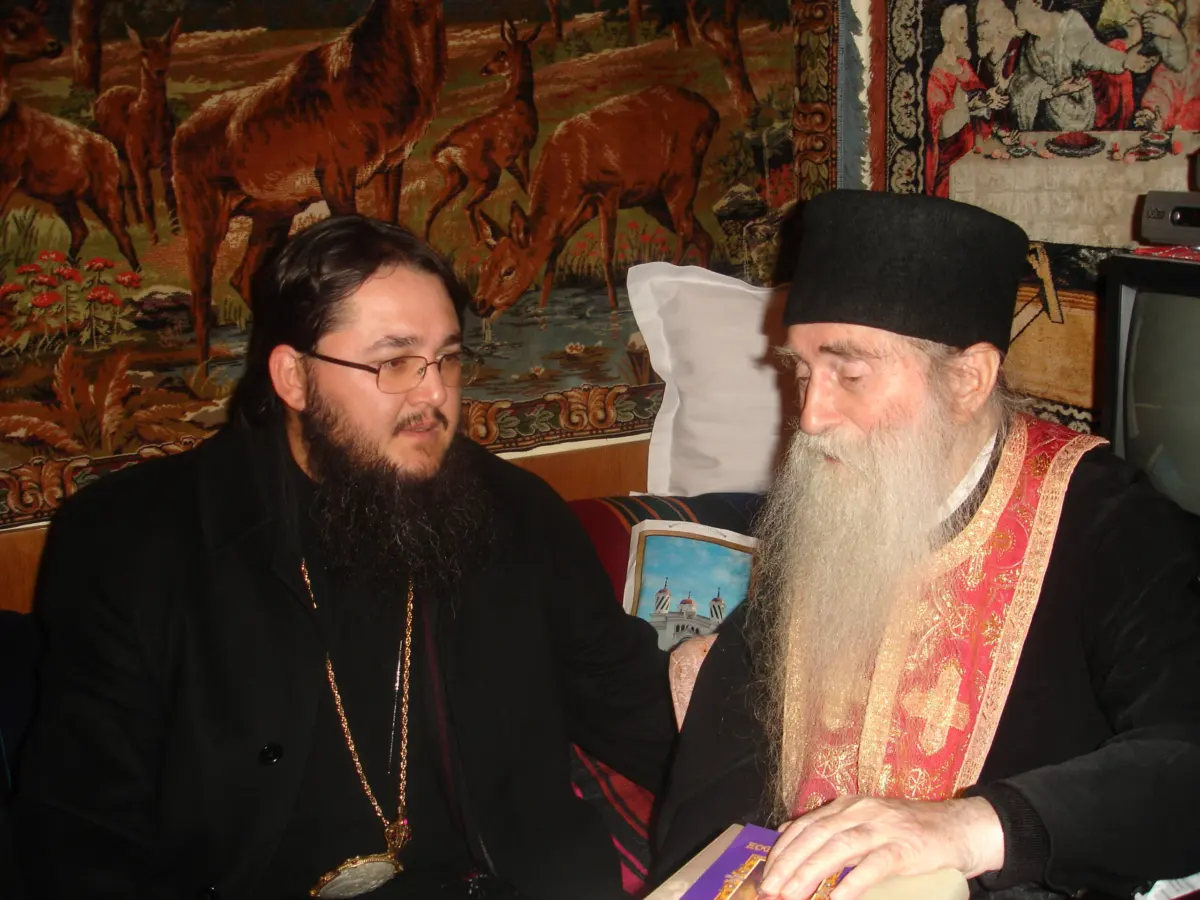
The sixth article in the series on the hieromonk Arsenie Boca (1910–1989). The first two, The Life of Arsenie Boca (I): Up to Prislop (1910–1948) and The Life of Arsenie Boca (II): From Prislop to Sinaia (1948–1989), tell the story of his life. The third and the fourth, Arsenie Boca (III): The Teaching of Cărarea Împărăției and Arsenie Boca (IV): The Teaching of Cuvinte vii, examine his writings, and the fifth, Arsenie Boca (V): The Painting at Drăgănescu, his painting. The testimonies of those who venerated him are known. The present article gathers those of some monks and priests of his time who drew away from him, kept their distance from him, or also said what did not agree with the praises.
For each testimony we say whether the one who speaks was present and through whom his words have reached us. Our conclusion on each testimony is given in bold italics. Every quotation has a reference to its source, and where the first source was not available to us we say in a note through whom we know it.
The hieromonk Arsenie Boca was venerated by crowds even in his lifetime. Some of the monks and priests who knew him, however, also said things about him that his admirers do not mention. Those who speak here are his teacher of theology, Dumitru Stăniloae; the archimandrite Paulin Lecca and the hieromonk Adrian Făgețeanu, who sought him out in their youth; the archimandrite Teofil Părăian, of Sâmbăta; and the archimandrite Arsenie Papacioc.1
Arsenie Boca was a spiritual father at the Brâncoveanu Monastery at Sâmbăta de Sus, in the Făgăraș Land, until the autumn of 1948. He then moved to Prislop Monastery, near Hațeg. In May 1959, in the years when the communist authorities were putting many monks out of the monasteries, the Bishop of Arad removed him from there, together with the abbess, Mother Zamfira. Julieta Constantinescu by her name in the world, Mother Zamfira had been his disciple. Arsenie Boca spent the rest of his life in Bucharest, where he lived in the same house as she did, and at Sinaia, in the Prahova Valley, where he died in 1989.2
In this article
Dumitru Stăniloae
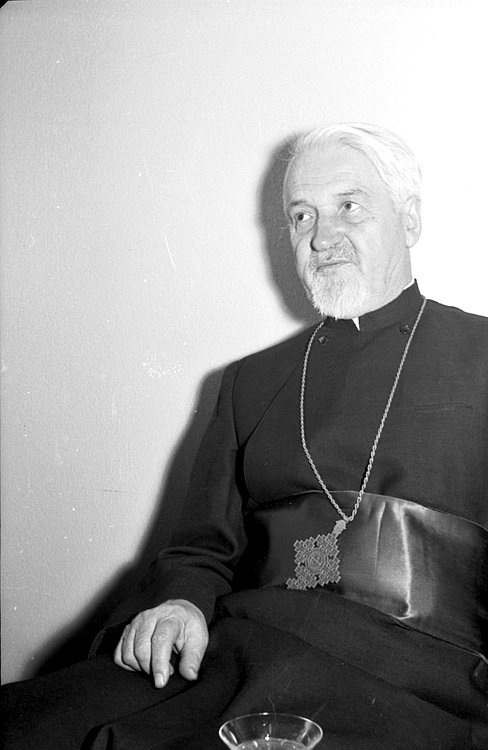
The priest Dumitru Stăniloae (1903–1993), the translator of the Philokalia into Romanian, had Arsenie Boca as a student at the Theological Academy in Sibiu.3 In 1943 he wrote about him in the Sibiu newspaper Telegraful Român,4 and in the prefaces of the Philokalia of 1947 he thanked him for his help with the translation.5
The fullest testimony about the bond between them is that of his daughter, Lidia Stăniloae. She wrote it in order to correct a statement made after her father's death. In a broadcast of the radio station Radio Free Europe, a monk from Bucharest had said that the professor had been “the disciple of Father Arsenie”.6
After Arsenie Boca became a monk, Lidia writes, “he often came to us, being received as a member of the family”. Her father spoke to him “insistently about discernment and about humility”, which he regarded as “two basic virtues of a monk”. And he kept repeating to him: “The greatest danger for a monk is to let himself be scandalized by the praises of others.” The Romanian word used here, smintit, can also mean “deranged”; here it means, as Lidia explains, being led into temptation and turning aside from the path of monastic life, not a disturbance of the mind. She also gives another counsel of her father's: “Flee as far as you can when someone begins to look at you with admiration, to praise you.” And she concludes: “Unfortunately, his words of caution, which were a real warning, were not heeded.”7
Stăniloae held that seeking the spectacular in faith does harm. One summer, at Vlădeni, his native village in Brașov County, he met a group of people, men and women, who were walking to Sâmbăta. They wanted to be there for the feast of the Prophet Elijah, “because Father Arsenie begins to speak the language of the birds and then goes up to heaven in the chariot of fire”. “Poor people,” he said then. “They are naive and eager for the extraordinary. They interpret every word as they please. We ought to be more careful about the way we express ourselves in front of them and to give up cheap theatrics.” Lidia writes that he remained downcast and said: “This is how dangerous errors are born among the people.”8
Lidia writes that her father “disapproved of the wish of some servants of the Church ‘to put themselves on stage’”. The monk Serafim Popescu, who lived at Sâmbăta alongside Arsenie Boca, he “loved and esteemed very much”. Of him he said: “The bond with God is sustained in the secret of prayer and in the stillness of the cell, not on the stage. Not in the footlights, not by pursuing effects of the extraordinary, of the sensational. Father Serafim is a true monk. Without ostentation, without the chase after the admiration of men.” And he added: “Nothing is more harmful to the spiritual life than the praises and eulogies that make the fineness of thought, humility and the longing for a truly virtuous life disappear.” Of Serafim's place at Sâmbăta he said: “Had he not stood there, steadfast and modest, like a rock beaten by the waves, everything at Sâmbăta would have gone to ruin.”9
According to Lidia, Arsenie Boca came to Bucharest to ask her father's counsel about his plan to make Prislop a monastery of nuns. Stăniloae “did not agree” and told him “that this could give rise to a host of ambiguities and misunderstandings”. He urged him to found there a monastery of monks, with services, with preaching, and with monks who would devote themselves to study and to translations. Prislop became a monastery of nuns on 11 April 1950. Lidia writes: “Father Arsenie never came back to us again.”10 In an interview of 2010, Lidia said that she herself had been present at their meeting. According to her, Arsenie Boca wanted a monastery of nuns “at all costs”. Her account ends thus: “Father Boca said no, he left, and with that their relations came to an end.”11
Lidia sums up her testimony thus: “I wish to stress once more, with full responsibility, as one who was present at these circumstances, that my father was very fond of Father Arsenie for as long as he kept within the limits of the duties above, keeping strictly to the conceptions and prescriptions of the Holy Fathers and of the monastic tradition.” Then: “But from a certain moment, when Father Arsenie adopted another way of seeing things, the relations between them cooled, my father no longer approved of his way of life, and Father Arsenie would not accept my father's criticism and remarks.” What her father felt after this estrangement she calls “profound disappointment”.12
Stăniloae himself spoke about Arsenie Boca in April 1993, a few months before his death, in an interview taken by Crina and Florian Palas. He recalled that, when Arsenie Boca was a student at Sibiu, he “would come to me and sometimes stay for months on end”. After he became a monk, Boca “stayed in Bucharest with a brother of mine”, until “he came across this Zamfira”. And he adds: “From then on he never again came into my house. And from then on I cannot tell you anything more about him.”13 His daughter connects the end of the visits with the monastery of nuns at Prislop, and he connects it with Mother Zamfira. A few sentences further on, Stăniloae nevertheless says: “But I don't know why he stopped coming to me.” For his resoluteness he likened him to Corneliu Zelea Codreanu, the commander of the Legionary Movement, a nationalist political movement in the Romania of the 1930s: “They both impressed by their resolute way of being. It was a gift of theirs. I think there is a certain likeness between them, they were like a stone, a rock.”14
According to his daughter's testimony, Stăniloae warned him earnestly against praise and did not approve his plan to make Prislop a monastery of nuns. Arsenie Boca did not accept his remarks, the bond between them was broken, and he never came back to their house. Lidia calls what her father felt then “profound disappointment”. In 1993 Stăniloae himself connected the end of the visits with Mother Zamfira, although he also said that he did not know why Boca stopped coming to him.
Paulin Lecca

The archimandrite Paulin Lecca (1914–1996), a Bessarabian, entered Frăsinei Monastery, in Vâlcea County, as a novice in 1940. Later he became abbot of Arnota Monastery, also in Vâlcea. He left a Jurnal duhovnicesc (“Spiritual Diary”), printed in 2013, in which he relates how he drew away from Arsenie Boca.15
He had heard of Arsenie Boca in 1942, while he was a missionary in Transnistria, the land beyond the Dniester, and had come to Sâmbăta to ask his counsel about the priesthood. After he came out of the military prison at Timișoara, he came again, and Boca, as he declared in 1958, “received me with much love”. Lecca wanted to be his disciple. The Metropolitan of Transylvania, Nicolae Bălan, however, would not receive him at Sâmbăta without a degree in theology, so Boca urged him to obtain one. Lecca obtained his degree at Suceava in 1947.16
While he was still at Frăsinei, a monk from there, Father Nifon, brought him from Sâmbăta a word from Arsenie Boca: “Tell him from me to stop saying ‘Lord Jesus’, because he will go mad.” Lecca laboured in the Jesus Prayer, the short and unceasing prayer of monks, which begins with these words. In the diary, the word comes immediately after the story of a brother who had lost his mind. Some said it was because of the Jesus Prayer, but Lecca writes that the cause had been “his unconfessed vice, but also the pride of holiness”. Of the counsel he received he writes: “I found it rather hard to hear such words from the ‘saint’ of Sâmbăta.” He nevertheless went on praying in the same way.17
At Sâmbăta, Nicolae Mladin, Lecca's former fellow student and later Metropolitan of Transylvania, asked him what he thought of Arsenie Boca. Lecca answered that he had no opinion yet, “thinking that Father Arsenie has clairvoyance and is regarded as a holy man”. Then he told him his perplexities. After he had obtained his degree, Boca “will not even talk to me”. When he told him that he wished to confess to him, Boca “simply ran away, so that I could not catch up with him...”. Another time, in the monastery courtyard, Boca raised his eyes towards him and said to the people around: “Do you see ‘this one’? His beard has grown long while he keeps begging me to receive him here, and I do not receive him.” Lecca adds that he said it “laughing mockingly”. He had also gone to look for him at Bistrița Monastery, in Vâlcea, where Boca then was, walking from Govora Monastery, also in Vâlcea, to ask him once more to receive him as a disciple. There, he writes, “Father Arsenie met me with such hostility and contempt” that he withdrew to pray in the little church of the monastery. At parting, Boca saw on his face the peace that came after the prayer and was, Lecca writes, “quite respectful”.18
Mladin answered him, Lecca writes, that he had come to Sâmbăta at the same time as Arsenie Boca and that, before becoming a monk, Boca “used to practise palm reading”. For this we have no witness other than Mladin, and him we know only through Lecca's diary. When Lecca left Bistrița, Boca had given him a book closed in two envelopes, to take to a priest at Govora. Those who stopped him on the road and searched him opened the envelopes: “It was a book by Rudolf Steiner, which spoke about clairvoyance, the aura, etc.”19 Rudolf Steiner was the founder of anthroposophy, an esoteric teaching about the spiritual world, that is, a teaching reserved for the initiated.
Around 1947, while he was working as a translator at Antim Monastery in Bucharest, Lecca came to know a girl who fell into trance and said that she spoke with “Doamne-Doamne”, the name by which Romanian children speak of God. A trance is a state in which a person seems to have gone out of himself. Lecca suspected a deception of the devil, because in the lives of the saints he found no such fallings. He took her to Arsenie Boca together with Father Adrian Făgețeanu, believing that Boca would see the deception and warn them. “But, to our astonishment, Father Arsenie not only did not warn us, but he approved the girl imprudently, in an unacceptable manner.” The girl's state grew worse there, and Lecca left, he writes, “escaped as if from the claws of a wild beast”.20
Back at Frăsinei, he wrote to Arsenie Boca: “Most Reverend Father A., have mercy on the Blood which our Lord Jesus Christ shed for us all, have mercy on the flock that you shepherd, and have mercy on the soul of your reverence”. Of what came of the letter he writes: “Perhaps later he listened, but I am not sure, because I have not seen a public renunciation by him of all those spiritist errors and Steinerian heresies!”21 Spiritism is the calling up of the souls of the dead and of spirits. The deeds that Lecca relates in the fragments of the diary that we have are the girl's visions, which Boca approved, and the book in the envelope. Of the latter he writes: “Is it any wonder, then, that one who begins his work with occult practices can end up an impostor?”22
The Securitate, the political police of the communist regime, kept two documents about Lecca that must be read with care. The first is the report of an agent dated 26 October 1951. Arsenie Boca was then imprisoned in the labour colonies of the Danube–Black Sea Canal. The agent had sought Lecca out at Govora Monastery and had passed himself off to him as a priest without a parish, “persecuted by the present rulers”. According to the report, Lecca told him that, had he not known “the envoy of God, Father ARSENIE”, he “would not have stepped into monasticism with so much love and élan”. He also told him that “the divine power inspired Father ARSENIE to speak the truth in the domain of the mystical”. This is how Lecca spoke, if the agent reported him faithfully, about a man then imprisoned at the Canal, before one who passed himself off as a persecuted priest. The second document is a declaration by Lecca of 18 July 1958, kept in copy. There he wrote that Boca, “dizzied by the halo of a saint created around him”, wanted to become “a kind of leader of the Legion in a spiritual sense”. Lecca added, in parentheses: “this is my opinion, acquired as a result of my observations and deductions”. The diary places his criticism earlier, in the 1940s, but the pages in which he relates it were written after 1967.23
Lecca came to Arsenie Boca regarding him as one who saw by the Spirit, and wanted to be his disciple. In the recollections of his diary he relates that Boca kept him at a distance and mocked him. He also writes that Boca approved the visions of a girl whom Lecca regarded as deceived by the devil, and that he gave him a book by Rudolf Steiner to deliver. Lecca then wrote to him to have mercy on his own soul. A Securitate report of 1951, from the time when Boca was imprisoned at the Canal, attributes to him words of admiration for Boca. In 1958, in a declaration kept by the Securitate, Lecca wrote that Boca was “dizzied by the halo of a saint created around him”.
Adrian Făgețeanu
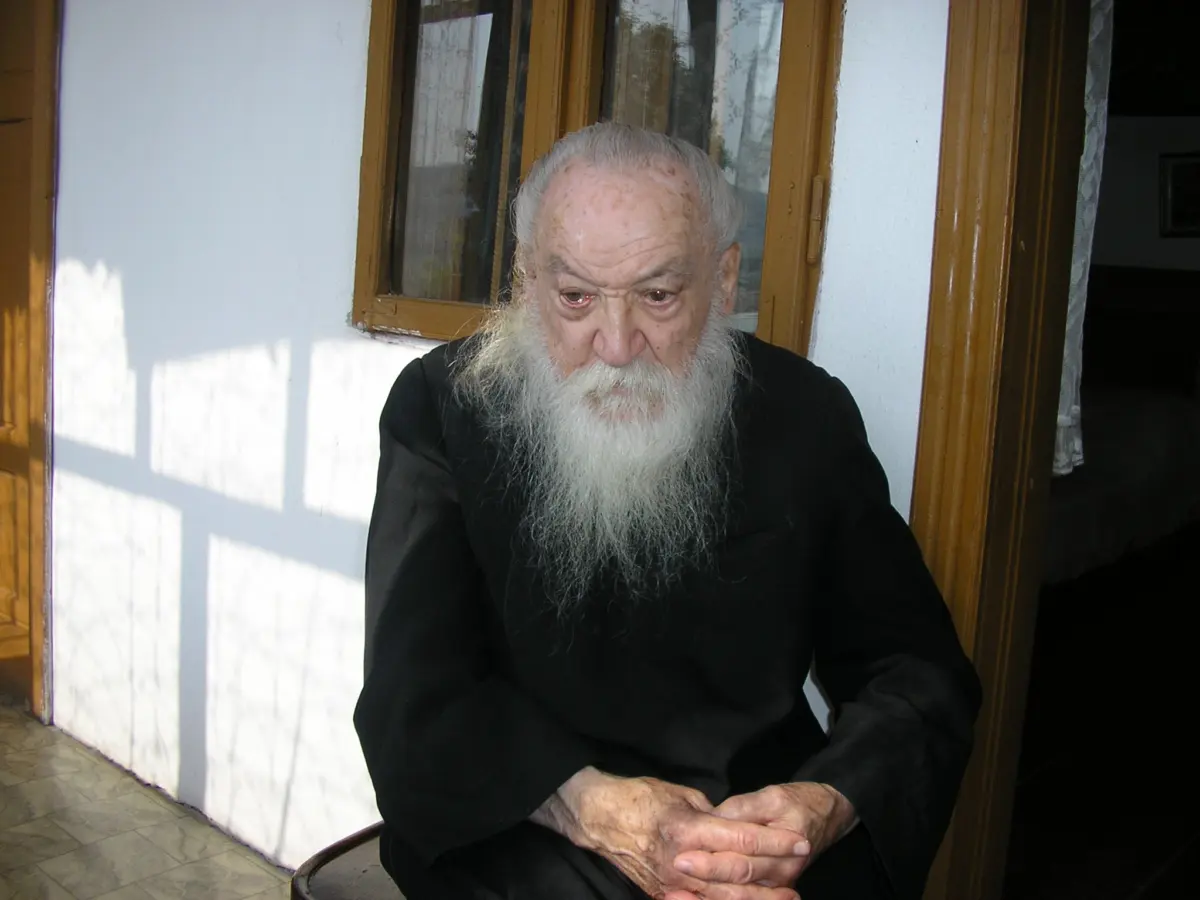
The hieromonk Adrian Făgețeanu (1912–2011) lived for many years at Antim Monastery and was imprisoned by the communist regime between 1950 and 1956 and between 1958 and 1964.24 In his youth he would go to Sâmbăta to hear Arsenie Boca. He says in a recording from his old age: “I liked him so much, when he preached, that I would sell my satchel of books and my gloves and my scarf, at the flea market, not at the shop, so as to have money to take for the journey to Sâmbăta.”25
One morning of the monastery's feast he arrived early in the church at Sâmbăta. Arsenie Boca came in and bowed before the iconostasis, and after him a woman came in. Boca rebuked her on the spot for the sin she had committed the night before, naming also the man with whom she had committed it. Făgețeanu was amazed: “I mean, a man who has not learned it from anyone… is he not clairvoyant?” And he confesses: “Yes, it got into my head: clairvoyant, clairvoyant, clairvoyant…”
Then he began to wonder how Boca knew. A thought came to him, he says, “I don't know whether from the devil or from whom”: the woman taken in adultery, whom the Pharisees brought to the Saviour. “The Saviour never exposed anyone's sins.” The faithful who were listening to him said that the Holy Spirit had shown it to Boca. Făgețeanu answered them: “I told you, the Saviour did not expose the sin of others. He said to them all: whoever is without sin, let him cast the stone.” They then asked him: “The devil showed it to him?” And he answered: “Yes. Because the devil had urged her on.” He learned later from the woman, he says, that she had been deceived by a man who had invited her to sleep at his house.26
Lecca relates that, around 1947, at Antim Monastery, Făgețeanu was reading at Matins when the girl with visions began to speak aloud with the spirits, before the icon of the Mother of God. Făgețeanu stopped reading and asked: “If the psalms of David are inspired by the Holy Spirit, what spirit speaks through [her], that it interrupts my reading?” Lecca writes that the question “gave us much to think about”. With this girl the two of them went to Arsenie Boca, and Boca approved her.27
In his old age, asked by the faithful, he spoke about him unwillingly: “I would rather not, but if you press me, I have no choice.” Then: “Father Arsenie Boca was a superior man, from every point of view. Both as a monk, and as a painter, and as a man, and in everything. As Solomon was before he was pampered by the queen of Sheba.” Solomon, he says, did not die “as holy as he was at the beginning”. And he concludes: “So Father Boca would have been a saint, if it had not been for Mother Zamfira.” About Mother Zamfira he says still more, but the saying is his own: he does not show how he knows, and he brings no fact.28
About the painting of the church at Drăgănescu, a village near Bucharest, he says that Mother Zamfira supposedly made him believe that he was “the most handsome in the world”, and that he “looked in the mirror” so as to paint Christ after his own likeness. Here too he does not say how he knows.29
Făgețeanu loved him in his youth for his preaching. At that same time he heard him tell in church the sin of a woman and asked himself how he knew it. He came to believe that the devil had shown it to him. According to Lecca, he was also present when Boca approved the girl with visions. In his old age he saw in him a great man, like Solomon, who did not die “as holy as he was at the beginning”. To Mother Zamfira he attributed an evil influence, without bringing facts. In his old age he returned to the question he had asked himself as a young man at Sâmbăta: how Arsenie Boca knew the sins of others.
Teofil Părăian
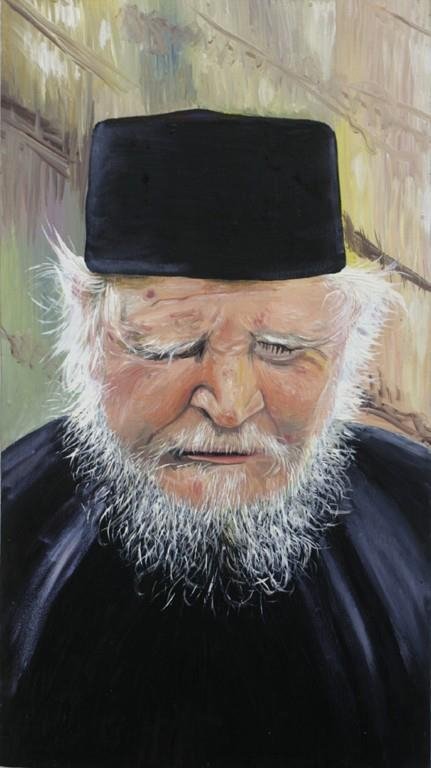
The archimandrite Teofil Părăian (1929–2009), blind from birth, entered the brotherhood of the monastery of Sâmbăta de Sus in 1953 and is buried there.30 He came to know Arsenie Boca on 30 August 1942, when he came to Sâmbăta at thirteen and a half, intending to become a monk. He saw him again in 1965, at the Patriarchate's painting workshop at the Schitul Maicilor church in Bucharest, and then two or three more times.31
In his old age he spoke about him in a recorded talk, “In the School of Father Arsenie Boca”. He said there: “I am not such an admirer of Father Arsenie as to tell only the part that is favourable to him.”32 Of the years at Sâmbăta he says that Boca “did not concern himself very much with the monks”. The monastery had begun without a tradition, with a great many lay people who came to him.33
Boca spoke to people with resoluteness and “was never hesitant in affirming something”, “although he did not always get it right”. Părăian knew of cases in which he was not right, and he calls them “failures of Father Arsenie”.34
Părăian says that in Bucharest, besides the Fine Arts, Boca had also attended courses in medicine. He would send people to have their blood tested and drew conclusions from the results about their families and their troubles. No one knows, Părăian says, when Boca was working with his knowledge and when with clairvoyance. Some things anyone else could also have said. Once Părăian took him the X-ray of a nun who was ill in the leg, to find out whether she would get well. Boca gave him “an evasive answer”: “that depends on the strength of her body and on the skill of the doctor”. Părăian gives this answer as an example of something anyone could have said.35 Of the blood tests he says: “that does not necessarily belong to the spiritual man, but belongs to the informed man”.36
Of his character he says that he was “sometimes too harsh” and that he “did not have a father's heart”. “In any case, he was not a consoling man, a man warm of soul.”37 For Părăian he was not “one who gave rest”, although he was “a founder by what he taught me”. “I always preferred Father Serafim,” he says, “a man warm of soul.”38 Of the books of testimonies about Arsenie Boca he says: “I do not think they are very, very reliable.” Each witness, he adds, understood him “through his own filter”.39
Părăian came to know him as a child, at Sâmbăta, and spoke about him without hostility. He nevertheless said that Boca did not always get it right, that some of his words could belong to the informed man, not necessarily to the spiritual one, and that he did not have a father's heart. For the good of his own soul, Părăian always preferred Father Serafim to him.
Arsenie Papacioc
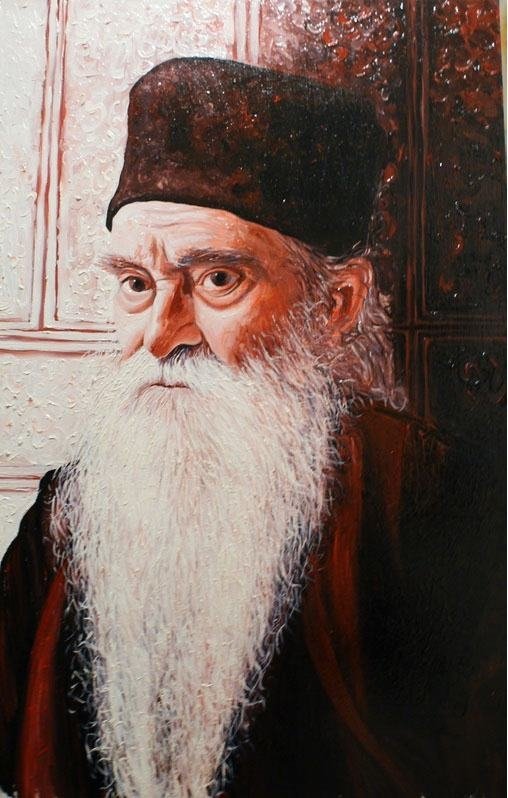
The archimandrite Arsenie Papacioc (1914–2011) entered Cozia Monastery, in the Olt Valley, as a novice in 1947 and was tonsured a monk at Antim Monastery in 1950. He was imprisoned between 1958 and 1964, and from 1976 he was spiritual father at the monastery at Techirghiol, near Constanța.40 In his old age, at Sihăstria Monastery, in the region of Neamț, he spoke about Arsenie Boca with the archimandrite Ioanichie Bălan, a monk of Sihăstria, with others present. The conversation was recorded, and the compilation that transcribes it places it in 1996.41
Papacioc says that he went to Sâmbăta as a young man, before entering the monastery, to ask for a blessing. There was at that time, he recalls, “this Arsenist current, very strong”. Spiritual profit he found with the same monk whom Stăniloae esteemed, who was later to become abbot of the monastery: “I profited much from Serafim Popescu… not from Arsenie… from Serafim I profited.” At table, Boca stared at Papacioc with “some blue eyes, powerful”. “When I saw, I say: mind your own business, sir.” And he adds: “I sensed him.” When Boca wanted to come towards him, at the edge of the forest, Papacioc prayed that he would not come, and Boca turned back. “I left for the monastery. I minded my own business.”42
Arsenie Boca himself says, in a declaration given to the Securitate: “He came to me with the aim of entering monastic life. I had not known him before.” He then directed him to Cozia Monastery: “Since he also knew the trade of wood carver, I sent him to the ‘Cozia’ monastery”.43
The monk Iachint, who in 2015 was living at the Monastery of Saint Paul on Mount Athos, wrote a letter that year about Arsenie Boca. In it he recalls other words of Papacioc about the same years: “Once there were several of us young men with him, at Sâmbăta de Sus, and he told us, among other things: ‘You see these places, I was here 300 years ago with the spirit of Elijah’.” Also according to Iachint, Papacioc said: “Because I had seen and heard so many un-Orthodox things from him, when I was tonsured and was given the name Arsenie I was saddened, understanding that many would take me for his disciple.” Iachint writes from memory and was not present at the things he relates. In the recording, Papacioc relates a single visit, without other young men.44
In the conversation at Sihăstria, Papacioc says: “He believed in metempsychosis, that is, in reincarnation, things proven, there was no question about it.”45 Metempsychosis, or reincarnation, is the belief that after death the soul passes into another body. Arsenie Boca wrote about it in the sermon “The Mystery of Elijah and John”, at Prislop, in December 1949. He says there that the reincarnation of human beings “has no basis at all in Revelation”. In the same sermon, however, he asks whether angels “can return to earth in earthly bodies”. Such a coming of theirs he also calls reincarnation, different, he says, from “the Indian doctrine of reincarnation”, and he connects it with Elijah and John. At the end he calls his questions vain: “I have let the questions strike against all the dams of the mystery and prove their vanity, dashing against the limits of what is permitted.”46 In the fourth article of the series we showed that an angel cannot come to earth in a body born of woman. The words about Elijah that, according to Iachint, Papacioc attributed to Boca belong to the same question.
Papacioc also relates that, after Arsenie Boca had become abbot at Prislop, the monks of Antim called him to take counsel with them. At Antim there gathered at that time the prayer group called “the Burning Bush”, founded by the writer Sandu Tudor. “We reproached him: you take no account, you keep no bond with the Church (we, those of Antim), and we invite you to take part in counsel with us here… [...] He did not accept.”47
Lecca too writes about Sandu Tudor and Arsenie Boca, in the declaration given to the Securitate in 1958: “SANDU TUDOR criticized ARSENIE BOCA at Antim on account of his fakirisms, his miracle-mongering, and that he is surrounded by too many women. I observed between them a kind of envy, perhaps because both wanted to become the spiritual leaders of the youth.” Fakirisms are astonishing feats of the kind performed by the fakirs, the ascetics of India, and miracle-mongering is the chase after miracles.48
Papacioc saw him for the last time after his years in prison, when he was abbot of Cheia Monastery, in Prahova. They met at the Biblical Institute of the Patriarchate, in Bucharest, where Papacioc had come for little crosses and other things for the monastery's pangar, that is, for the place where candles and small icons are sold. He invited him: “Come and visit us at the monastery…” Boca answered him: “I have no need, (he says), never mind, your reverence keeps my place, you know… Arsenie too.” Papacioc: “Father, I keep my own place, I keep no one's place, you should know…” And he concludes: “That was my last meeting with him.”49 Iachint gives the same meeting differently, as he knew it from Papacioc's words, with Boca telling him “Now you remain in my place!” and with the answer “No! each in his own place”.50
Papacioc also says that Boca “in prison gave up both the priesthood and the monastic life”. He does not show how he knows. The documents show that he left the monastery in May 1959, by decision of the Bishop of Arad, which required him to leave “without the cassock”.51 An act by which he himself gave up the priesthood and the monastic life we do not have.
At Sihăstria, Papacioc judged him thus: “Father Boca, a pity about him. He was an intelligent man, with a good soul, [...] very well prepared, a great painter, but, Father… he had fallen into this form of prophecy… at some time… and of holiness, and this spirit of pride entered...” He also said: “Dear Father, Father Arsenie too was a small problem in our Church.” And he showed what he lacked: “To live, to accept the remark of correction, because you are a man and you can err. To have a confessor with whom, without discussion, you can communicate, and you can have ten… no one stopped you. He isolated himself and stayed that way… with Julieta.” And of his death: “Perhaps God took him early, so that he would not make greater mistakes.”52
Papacioc came to Arsenie Boca as a young man, to ask a blessing for monastic life, but kept away from him from the first meeting and sought his profit with Father Serafim. Together with the monks of Antim he called him to take counsel with them, and Arsenie Boca did not accept. In his old age he acknowledged his intelligence, his good soul and his gift as a painter, but he said that “this spirit of pride” had entered him and that he had isolated himself, without accepting the correction of others.
Conclusions
The testimonies meet in a few things. All five recognized in him a gifted man, and most of them asked themselves where the powers that people saw in him came from. The Fathers call this inquiry the discernment of spirits, that is, the gift of knowing whether a vision, a word or a power comes from God or from the evil one. Lecca and Făgețeanu came to see deception where the crowds saw holiness. Părăian attributed some of his words to the informed man, not necessarily to the spiritual one. Papacioc sensed him at first sight.
The testimonies meet in one more thing: Arsenie Boca did not accept correction from those around him. According to his daughter, Stăniloae warned him against praise. Lecca wrote to him to have mercy on his own soul, and the monks of Antim called him to take counsel with them, but he “did not accept”. Papacioc says in a few words what he lacked: to accept “the remark of correction” and to have a confessor.
Three of them mention Mother Zamfira, each in a different way. Stăniloae connects the end of the visits with her, Făgețeanu attributes to her an evil influence, without bringing facts, and Papacioc says that “he isolated himself and stayed that way… with Julieta”.
Three of them set Serafim Popescu beside him, the monk who lived with him at Sâmbăta. Stăniloae regarded him as “a true monk”, Papacioc profited from him, “not from Arsenie”, and Părăian always preferred him, as “a man warm of soul”.
Three of the fathers who knew Arsenie Boca valued him for his zeal and his gifts and drew away from him because of what they saw later. The professor who had written in 1943 that he was “pure, opposed to every passion and to every thought of pride” came, according to his daughter's testimony, to a “profound disappointment”. The monk who wanted to be his disciple wrote to him to have mercy on his own soul. The young man who sold his satchel to hear him came to believe that the sin of the woman at Sâmbăta had been shown to him by the devil. The clearest word was spoken by Papacioc, who kept away from him from the first glance: “this spirit of pride entered”.
Notes
- These fathers spoke about him at different times and in different ways. Stăniloae wrote about him during his lifetime, and in 1993 he spoke about him in an interview. Lecca set down his recollections in a diary, printed in 2013. Papacioc and Făgețeanu spoke in their old age, in recorded conversations, and Părăian in a recorded talk. Other words of theirs have been kept for us by people who talked with them. We have not used sayings that we know only through people who did not know Arsenie Boca and who do not name the witness from whom they have them. We have also left aside words that we could not connect with a printed text, a letter or a recording. Most of the testimonies here come from books, letters and recordings of monks and priests who spoke in their own name, most of them after 1989. From the archive of the Securitate we quote three documents in the text: the report of 1951 and the declaration of 1958 about Lecca, and Arsenie Boca's declaration about Papacioc. In notes 13, 28 and 51 we mention a few more of its records, known through those who published them. ↩
- See the first two articles of the series. Decision no. 2407/1959 of Bishop Andrei Magieru of Arad, of 14 May 1959, for Arsenie Boca, and decision no. 2408/1959, for Mother Zamfira Constantinescu: Adrian Nicolae Petcu, “Părintele Arsenie Boca (o biografie documentară) II”, Tabor, XVII, no. 3, March 2023, pp. 5–33 (hereafter: Petcu 2023, II), p. 10, after the archive of the Archdiocese of Arad (AAA), dosar III-317-1949, ff. 462–463. In the same place, on the arrests and the removals from the monasteries in 1959; for Decree no. 410/1959, the second article of the series. The house in which he lived with Mother Zamfira in Bucharest: the same article. ↩
- The dates: basilica.ro, “30th anniversary of Father Dumitru Stăniloae's blessed repose”, 2023 (born on 16 November 1903, at Vlădeni, in Brașov County; departed to the Lord on 5 October 1993). Arsenie Boca, his student at Sibiu: Stăniloae, in the interview of April 1993 (“Arsenie Boca was very close to me as a student at Sibiu”), after Părinții îl dezvăluie pe Părintele Arsenie Boca (“The Fathers Reveal Father Arsenie Boca”), a compilation without author and without publication details, a PDF published in 2016 on the blog “Adevărul despre Părintele Arsenie Boca” (“The Truth about Father Arsenie Boca”) (888adevarul8despre8arsenieboca8.wordpress.com) (hereafter: Părinții îl dezvăluie; the printed page is the same as the PDF page), p. 22. ↩
- Dumitru Stăniloae, “Lucrarea de la Mănăstirea Brâncoveanu” (“The Work at the Brâncoveanu Monastery”), Telegraful Român, Sibiu, 8 August 1943, pp. 1–2, after Fr Ioan Gînscă, Părintele Arsenie Boca, mare îndrumător de suflete din secolul XX. O sinteză a gândirii părintelui Arsenie în 800 de capete (“Father Arsenie Boca, a Great Guide of Souls of the Twentieth Century. A Synthesis of Father Arsenie's Thought in 800 Chapters”), Editura Teognost, Cluj-Napoca, 2002, read in the electronic edition “v. 1.0” (hereafter: Gînscă), p. 18 (the reference to the newspaper: p. 19, n. 22). The pagination of the electronic edition seems to follow the printed book, but we have not compared it with a printed copy. We have not seen the newspaper. The article is also quoted in the first article of the series. His words about Arsenie Boca: “Father Arsenie's programme? Through what he has made of himself and through what he preaches, he is a living restoration of the most authentic Orthodox spirit”; his word came “from the rock-like steadfastness of one who does not bargain and does not sway like a reed shaken by the wind”; the man was “whole, just as his word is: pure, opposed to every passion and to every thought of pride”; of the preaching at Sâmbăta: “Every individualism or pride eager for display, with a sectarian tinge, is struck on the head.” ↩
- Dumitru Stăniloae, preface to the Filocalia, vol. I, 2nd ed., Institutul de arte grafice “Dacia Traiană”, Sibiu, 1947, pp. XI–XII, and preface to vol. II, Tipografia Arhidiecezană, Sibiu, 1947, pp. I–II, after Părinții îl dezvăluie, pp. 5–6, and after Petcu 2023, II, p. 20. For vol. II, the compilation cites an electronic edition. We have not seen the prefaces in the 1947 editions. Arsenie Boca had written at his dictation “the greater part of the translation in its first draft”. In the same place he called him “my good former student, who has always remained close to me” and said that by his persistence “he fed my courage considerably”. In the preface to the second volume he called him “a foremost founder of the Romanian Philokalia”. The third volume, printed in 1948, was dedicated to him, and in the preface to the fourth volume, of the same year, Stăniloae thanked him again for the subscriptions he had gathered (Petcu 2023, II, p. 21, who gives p. VII for vol. IV). His daughter, Lidia Stăniloae, said in an interview of 2010 that Arsenie Boca's contribution “was that of having written at my father's dictation”. His great contribution, according to her, was that he made the translation known, so that many Christians bought it. That he had urged her father to translate the Philokalia was, according to her, “completely inaccurate”: “My father was a professor, and Father Arsenie was his student, and so they remained all their lives, in these relations, and not the other way round – as ‘mentor’ to my father.” The interview was taken by Răzvan Bucuroiu and appeared in Lumea Credinței (“The World of Faith”), May 2010, pp. 23–28. Răzvan Codrescu republished it in full on his blog (razvan-codrescu.blogspot.com, “A murit Lidia Stăniloae” [“Lidia Stăniloae Has Died”], 19 February 2017), from which we quote. We have not seen the magazine. ↩
- Lidia Stăniloae Ionescu, Lumina faptei din lumina cuvântului. Împreună cu tatăl meu, Dumitru Stăniloae (“The Light of the Deed from the Light of the Word. Together with My Father, Dumitru Stăniloae”), Humanitas, Bucharest, 2023 (the pagination is the same as that of the 2nd edition, of 2010; hereafter: Lidia Stăniloae), p. 234, read on the photograph of the page. On p. 235 she writes that she sent a letter to the editorial office of the radio station, to correct the statement. ↩
- Lidia Stăniloae, p. 141, read on the photographs of the page. What “sminteala” means: in the same place. On p. 140, Lidia writes that Arsenie Boca came from Sâmbăta “to write at my father's dictation, and thus helped him for a few weeks in the work of translation”. ↩
- Lidia Stăniloae, pp. 199–200. Lidia does not give the year. The incident is also in the first article of the series. ↩
- Lidia Stăniloae, pp. 200–201; the same text in Părinții îl dezvăluie, pp. 26–27, from which we quote the sentences about Serafim. In the same place, on p. 201, she writes that her father regarded Serafim Popescu as “his true pupil and disciple”. In the preface to the first volume of the Philokalia, of 1947, Stăniloae writes that for Saint Anthony, Evagrius, John Cassian and Isaiah he had “a first draft of a translation” by the hieromonk Serafim Popescu (see the first article of the series). Serafim Popescu lived at Sâmbăta with Arsenie Boca and was abbot of the monastery between 1949 and 1955 (see the first article of the series). The Romanian Orthodox Church numbered him among the saints as the Venerable Serafim the Long-suffering of Sâmbăta de Sus, commemorated on 20 December, by the tomos proclaimed on 4 February 2025; that it is he is stated by alba24.ro, 13 July 2024. ↩
- Lidia Stăniloae, p. 233. How it came to a monastery of nuns: the historian Adrian Nicolae Petcu, who wrote a biography of Arsenie Boca from the archives, shows that his attempt to gather a brotherhood of monks at Prislop had not succeeded, after the unexpected departure of Antonie Plămădeală, the future Metropolitan of Transylvania, one of the two young men whom he had tonsured as monks there; the church historian Mircea Păcurariu attributes the decision to the Bishop of Arad. The date of 11 April 1950 and the failed attempt: Adrian Nicolae Petcu, “Părintele Arsenie Boca (o biografie documentară) I”, Tabor, XVII, no. 2, February 2023, pp. 5–35 (hereafter: Petcu 2023, I), p. 22, after AAA, dosar III-317-1949, ff. 582–583: “The untimely departure of the young monk was inevitably to lead to the failure of Father Arsenie's attempt to put together a brotherhood of monks at Prislop.” The departure of Antonie Plămădeală, on 20 January 1950: the second article of the series. Mircea Păcurariu, Istoria Mănăstirii Prislop (“The History of Prislop Monastery”), Sibiu, 1986, p. 57: “in April 1950, when Bishop Andrei came here again, he decided that Prislop should become a monastery of nuns”. ↩
- The 2010 interview (see note 5). Lidia says there that, after the years of the Philokalia, “the relationship between them was broken off”. Asked for what reason, she relates the meeting about Prislop. She says that her father also asked Arsenie Boca to gather there “a few spiritual, cultivated young men, who would translate and also do pastoral work in the Hațeg area”. She places the meeting “around 1947-48”, “when he left for Prislop”. The date agrees with his move to Prislop, in November 1948. The documents show, however, that there he first tonsured two monks, on 14 September 1949, and that Prislop became a monastery of nuns on 11 April 1950 (see note 10 and the second article of the series). Petcu 2023, II, p. 22, quotes from the same interview only what Lidia says about the Philokalia. His quotation stops before these sentences. ↩
- Lidia Stăniloae, p. 234 (“I wish to stress...”) and p. 235 (the cooling of the relationship and “profound disappointment”), read on the photographs of the pages. In the book, Lidia does not give the year in which relations cooled. In the 2010 interview she places the meeting about Prislop “around 1947-48” (see note 11). ↩
- Arsenie Boca knew Julieta Constantinescu, the future Mother Zamfira, from Sâmbăta, where she had been coming since the spring of 1947 (Tatiana Niculescu, “Ei mă consideră făcător de minuni”. Viața lui Arsenie Boca (“‘They Consider Me a Miracle-Worker’. The Life of Arsenie Boca”), Humanitas, Bucharest, 2018, pp. 90–91, after the Archive of the National Council for the Study of the Securitate Archives (hereafter: ACNSAS), I 203645, vol. I, f. 1; see the first article of the series). In the summer of 1949 she stayed a few months at Prislop, and after 1959 Arsenie Boca lived in Bucharest in the same house as she did (the second article of the series). Prislop became a monastery of nuns on 11 April 1950 (Petcu 2023, I, p. 22), and Julieta writes in the autobiography kept by the Securitate that she came there in May 1950 (transcribed in Florian Bichir, Romeo Petrașciuc, Raluca Toderel (coord.), Părintele Arsenie Boca în arhivele Securității. Anchetele, Canalul, persecuția. Opis de documente (1950–1959) (“Father Arsenie Boca in the Archives of the Securitate. The Investigations, the Canal, the Persecution. Inventory of Documents (1950–1959)”), vol. II, Agnos, Sibiu, 2014, ISBN 978-973-1941-18-9, from a series published in partnership with CNSAS (hereafter: Opis II), p. 554, read on the photograph of the page; we have not seen the archival reference). Stăniloae does not say which of these years he had in mind. In the 2010 interview, Lidia places the break at his departure for Prislop (see note 11). ↩
- The interview taken by Crina and Florian Palas, published in the magazine Veghea (we do not know the issue) and republished by Victor Roncea and on napocanews.ro, 7 October 2013 (“Au consemnat Crina si Florian Palas / Veghea via Victor Roncea”), from which we quote; we have read the text in full. The month, April 1993: the text on the relationship between Stăniloae and Arsenie Boca on ortodoxiatinerilor.ro, quoted in Părinții îl dezvăluie, p. 22; a transcription without diacritics, from apologeticum.ro (November 2010), is on pp. 21–22. On napocanews, the meeting with Zamfira is placed “until 1920”, an impossible year, because Arsenie Boca was then ten years old; it is a misprint or a transcription error, and we give the sentence without the year. About the two who took the interview we know nothing more. Also from the interview: “There was a mystery in him, he was a man who spoke with resoluteness, he did not speak with hesitations, as other people speak.” Of himself he said that he had set value “on love, on gentleness, on goodness, on the values of the Trinity”, and he ended: “and I don't know which is better…” The compilation reads the comparison with Codreanu as a reproach; we give it whole, as it is. On Codreanu: the first article of the series. ↩
- For his life: the text by Stelian Gombos about Paulin Lecca on crestinortodox.ro, reproduced in Părinții îl dezvăluie, pp. 31–41. The departure for Frăsinei, “on 28 September 1940”: Lecca himself, after Părinții îl dezvăluie, p. 44. The diary: Paulin Lecca, Jurnal duhovnicesc, edited by Ioan Gându, Studion, Bacău, 2013 (hereafter: Lecca), which we quote after Părinții îl dezvăluie, pp. 41–49. For its fragments the compilation gives only a list of pages of the diary: 52–53, 65–71, 89–90, 95, 109–113, 120, 381–382 and 386–387 (p. 49, n. 23). We have not seen the diary. Lecca calls Nicolae Mladin “my former fellow student and the present Metropolitan”; Mladin was Metropolitan of Transylvania between 1967 and 1981 (see the first article of the series). This is an indication that this passage was written in those years; for the other pages about Arsenie Boca we have no date. ↩
- The declaration of Paulin Lecca of 18 July 1958, ACNSAS, I 2637, vol. III, ff. 87–88, transcribed in Opis II, pp. 506–507. We have read the pages on photographs; we have not seen the archive. From here come the year 1942, the prison at Timișoara, the reception “with much love” and the degree obtained at Suceava in 1947. For Metropolitan Bălan: Lecca, after Părinții îl dezvăluie, p. 45 (“Metropolitan Nicolae Bălan would not receive me, at the monastery at Sâmbăta, without a degree”). The two texts do not agree entirely: in the diary the Metropolitan in the end approves his request to enrol at the Academy in Sibiu (“The Metropolitan approved my request”, p. 45), while in the declaration Lecca says that the Metropolitan did not receive him. ↩
- Lecca, after Părinții îl dezvăluie, p. 41. In the diary, Lecca calls himself “Brother Victor”, after his baptismal name (see the first article of the series). ↩
- Lecca, after Părinții îl dezvăluie, pp. 45–46. Lecca does not give the year of these events. Arsenie Boca was at Bistrița in the summer of 1945 and in September 1947 (Petcu 2023, I, pp. 14–16). ↩
- Lecca, after Părinții îl dezvăluie, p. 46. Lecca calls those who stopped him “militiamen”, but the Militia was founded only in January 1949, and the incident is from before the autumn of 1948: the word belongs to the one who writes years later. Another rendering of the same page of the diary says that the envelope was given to Mladin. Both things are set out in the first article of the series. On Steiner and anthroposophy: the first and the fifth articles of the series. ↩
- Lecca, after Părinții îl dezvăluie, pp. 41–44. The year is shown by another incident from the same fragment, which took place “in 1947” in Bucharest (p. 43). Other markers in the text do not agree with one another (see the first article of the series). Lecca does not name the monastery in which they found Arsenie Boca. ↩
- Lecca, after Părinții îl dezvăluie, p. 44. Note 10 of the edition, reproduced in Părinții îl dezvăluie, p. 49, according to which Stăniloae, Benedict Ghiuș, Adrian Făgețeanu, Arsenie Papacioc and others also knew of Arsenie Boca's “spiritist séances and heretical Steinerian ideas”, is by the editor of the edition, Ioan Gându. This is said by the monk Iachint, who finds it in the diary on pp. 386–387 (Părinții îl dezvăluie, p. 75). We do not use it as a testimony of those named there. ↩
- Lecca, after Părinții îl dezvăluie, p. 46. ↩
- The agent's report of 26 October 1951, about the meeting of 23 October at Govora: ACNSAS, I 2637, vol. III, ff. 93–95, transcribed in Opis II, pp. 199–201. The report also says that Boca “is at the canal” (p. 199). According to the Securitate's records, Arsenie Boca was imprisoned between 19 January 1951 and 17 March 1952, at the Canal (see the second article of the series). The same report is summarized in a synthesis of 17 September 1957, “dosar nr. 5101 privind pe PAULIN LECA” (“file no. 5101 concerning PAULIN LECA”): ff. 90–91, in Opis II, p. 490. The synthesis writes “was the spiritual son of ARSENIE”, and the report “was the spiritual son of the disciple ARSENIE”. In the report, Lecca is said to have connected Arsenie Boca's name with the Legionary Movement as well; we do not take up these words, because such an accusation would rest only on the agent's word. The declaration of 18 July 1958: ACNSAS, I 2637, vol. III, ff. 87–88, in Opis II, pp. 506–507. We have read the pages on photographs; we have not seen the archive. The copy of the declaration has in its heading: “din declarația de la dosarul nr. 5101 al inform. PAULIN LECA” (“from the declaration in file no. 5101 of the inform. PAULIN LECA”); “inform.” is the abbreviation of the word “informer”. We do not know in what circumstances Lecca gave the declaration. The declaration of 1958 is also quoted in the first article of the series. ↩
- OrthodoxWiki, “Adrian Fageteanu”: born on 16 November 1912, departed to the Lord on 27 September 2011, in Bucharest; the years at Antim. The years of imprisonment: Octavian Silivestru, the presentation of the interview given by Adrian Făgețeanu to Mariana Conovici and Octavian Silivestru on 14 July 2000, rador.ro, 12 April 2015 (“imprisoned between the years 1950 – 1956, 1958 – 1964”). At Antim, around 1947: Lecca, after Părinții îl dezvăluie, p. 42. ↩
- The recording on YouTube (https://www.youtube.com/watch?v=Nl8FOC0CjHQ), transcribed on the blog danielvla.wordpress.com on 7 December 2015 and reproduced in Părinții îl dezvăluie, pp. 59–62; here p. 59. The transcription is without diacritics; we added them and corrected a spelling error (“romanesca”), with no other change. We have not compared it with the sound. The recording is undated; Făgețeanu died in 2011. ↩
- Părinții îl dezvăluie, pp. 59–60. The author of the blog who transcribed the recording (danielvla.wordpress.com, 7 December 2015, after Părinții îl dezvăluie, pp. 62–63; part of the text is without diacritics, and we added them) considers that Făgețeanu's stories “do not prove much” and that they may be “only the interpretation of his reverence”. About this incident he points out that only Boca, the woman and, further off, Făgețeanu were present, and he recalls that the Saviour told the Samaritan woman her life: “For thou hast had five husbands; and he whom thou now hast is not thy husband” (John 4:18). The verses of Holy Scripture are quoted from the King James Version, in the standardized text of 1769, from the electronic edition on eBible.org (https://ebible.org/eng-kjv/), consulted on 5 November 2026, an electronic edition, without pages. The book quoted in note 28 as 1 Kings is called 3 Kings in the Septuagint and in the Romanian Bible. ↩
- Lecca, after Părinții îl dezvăluie, pp. 42 and 44. In place of the girl's name we have put [her]. ↩
- Părinții îl dezvăluie, p. 60. Făgețeanu continues: “Mother Zamfira loved him not only with her soul and with her heart”. In the rest of the sentence he claims, with a coarse word that we do not reproduce, that their relationship was also carnal. In Scripture, Solomon's heart was turned away from God by his foreign wives: “For it came to pass, when Solomon was old, that his wives turned away his heart after other gods” (1 Kings 11:4). The queen of Sheba appears one chapter earlier, having come “to prove him with hard questions” (1 Kings 10:1). The rumour that Arsenie Boca and Mother Zamfira were married went around in the 1960s in theological circles in Bucharest (Petcu 2023, II, p. 14). The Securitate officer who was watching him wrote in June 1965 that they were not, “because they do not have the legal forms of marriage” (ACNSAS, fond Informativ, dosar 2637, vol. 1, f. 317, after Petcu 2023, II, p. 14; see the second article of the series). Petcu also writes that from 1964–1965 the Securitate set in motion a “strategy of denigration” against Arsenie Boca: its agents are said to have spread opinions in church circles about the former monks and nuns, so as to set them against one another and to compromise them. For this he cites no document (Petcu 2023, II, p. 15). ↩
- Părinții îl dezvăluie, pp. 61–62. On the painter's own face in the painting at Drăgănescu: the fifth article of the series. ↩
- basilica.ro, “95 de ani de la nașterea Părintelui Teofil Părăian” (“95 Years since the Birth of Father Teofil Părăian”), 2024: born on 3 March 1929, at Topârcea, near Sibiu; “he was born blind”; entered monastic life in 1953 at the Brâncoveanu Monastery; passed to eternal life on 29 October 2009 and buried at Sâmbăta de Sus. In the talk cited in the next note, Părăian gives the day he entered the brotherhood: 1 April 1953 (part 2, minutes 1:51–2:20). ↩
- Teofil Părăian, “În școala Părintelui Arsenie Boca” (“In the School of Father Arsenie Boca”), a talk given at a camp, before priests and faithful, uploaded to YouTube in two parts by the user “Balan Iulian” on 21 April 2013: part 1, youtube.com/watch?v=gsw5L73_zKI, 25:07, and part 2, youtube.com/watch?v=KwVnGZk-B08, 26:55 (hereafter: Părăian's talk). The day is not stated; Părăian mentions Nicolae Streza's book of testimonies, of 2005, so he gave the talk between 2005 and 2009. The title, he says, is also that of a chapter of his book Gânduri senine (“Serene Thoughts”); we have not seen the printed text. The year 1942 and his age: part 1, minutes 2:48–5:13. Seeing him again in 1965, and the other meetings: part 2, minutes 2:20–2:38 and 8:06–8:16. ↩
- Părăian's talk, part 2, minutes 11:15–11:25. In the same talk he also says that Boca had an “unusual endowment” and that he regarded him as “a genius” (part 1, minutes 1:17–2:30), that he had “a gift from God as well” (part 2, 19:24–19:32), and that for him he was nevertheless “a founder by what he taught me” (part 2, 23:46). He also mentions two healings that he knows to be connected with him (part 2, 11:49–14:19). ↩
- Părăian's talk, part 2, minutes 4:56–5:45. ↩
- Părăian's talk, part 2, minutes 10:51–11:15. ↩
- Părăian's talk, part 2, minutes 8:25–9:41. The nun was then living outside the monastery, after the decree of 1959. He gives the answer as an example at minutes 19:32–19:49. ↩
- Părăian's talk, part 2, minutes 14:54–15:39 (the courses in medicine) and 19:08–20:22. ↩
- Părăian's talk, part 2, minutes 15:39–16:14. ↩
- Părăian's talk, part 2, minutes 23:38–24:11. “A founder”: minute 23:46. ↩
- Părăian's talk, part 2, minutes 25:24–25:46. ↩
- basilica.ro, “Remembrance Service 4 Years After The Passing Away Of Father Arsenie Papacioc”, July 2015: born on 13 August 1914; received as a novice at Cozia in 1947; tonsured a monk at Antim in 1950; ordained priest for Slatina Monastery, in Suceava County, on 26 September 1950; arrested on 14 June 1958 and released in 1964; spiritual father at Techirghiol from 1976; departed to the Lord on 19 July 2011. ↩
- The recording of the conversation at Sihăstria, put on YouTube (https://www.youtube.com/watch?v=w9AAI9iwvkM, used by the compilers on 17 May 2015; the same conversation, longer, at https://www.youtube.com/watch?v=pVenPJIVm6I, put up on 16 December 2020), transcribed in Părinții îl dezvăluie, pp. 50–55 (hereafter: the conversation at Sihăstria). The transcription stops at minute 13:10 of the longer recording. The compilation places the conversation in 1996, in the cell of Father Varsanufie Lipan; in the part we use, the recording does not state its year. We have compared the quotations with the longer recording, and the minutes in the notes are those of the longer recording. The sound is poor. Where something other than what is in the transcription can be heard, we follow the recording; the transcription has “de părintele Serafim, nu de Arsenie” (“from Father Serafim, not from Arsenie”), “vezi de treabă” (“mind your business”), “Vino la noi la Mănăstire” (“Come to us at the Monastery”) and “l-a luat din vreme” (“took him in good time”). ↩
- The conversation at Sihăstria, p. 52; minute 1:16 (“this Arsenist current”) and minutes 1:46–3:00. In the transcription, after the words about Serafim, Ioanichie Bălan adds: “Yes, Father Serafim Popescu…” Serafim Popescu was abbot at Sâmbăta from 1949 (see the first article of the series). Papacioc does not give the year of the visit. ↩
- Arsenie Boca's declaration in the Securitate investigation, Opis II, p. 430; the page seen on a photograph. The volume places Boca's interrogations on pp. 415–437; we have not yet seen the date and the archival reference of the declaration. The same sentence, “He came to me with the aim of entering monastic life”, is quoted by Florin Duțu, “Și cărțile au fost deschise”. Părintele Arsenie Boca (1910–1989) – o biografie (“‘And the Books Were Opened’. Father Arsenie Boca (1910–1989) – A Biography”), Floare Albă de Colț, Bucharest, 2013, pp. 113–114, after Grozăviile neasemănate de la Drăgănescu și viața Părintelui Arsenie Boca în lumina Sfinților Părinți – v 11 (“The Unparalleled Horrors of Drăgănescu and the Life of Father Arsenie Boca in the Light of the Holy Fathers – v 11”), the blog “Adevărul despre Părintele Arsenie Boca”, 2016 (we cite the printed page), p. 1012, with Papacioc's coming placed “in the year 1945/1946” and with the form “eu l-am trimis la M-rea Cozia” (“I sent him to Cozia Mon.”). We have not seen Duțu's book. Papacioc's entry as a novice at Cozia, in 1947: basilica.ro, the article of July 2015. In the conversation at Sihăstria Papacioc does not mention this counsel. ↩
- The letter of the monk Iachint to the Babel Publishing House and the Father Arsenie Boca Christian Foundation, 21 February 2015, from the Monastery of Saint Paul, Mount Athos, after Părinții îl dezvăluie, pp. 74–77; here p. 75: “I write from what I remember”. We have not seen the original of the letter. ↩
- The conversation at Sihăstria, p. 53; minute 6:43. The transcription continues: “I personally am convinced of this, that is… just as I caught him in many things…”. In the recording, this continuation can be made out only in part. ↩
- Arsenie Boca, Cuvinte vii (“Living Words”), edited by Bishop Dr Daniil Stoenescu, 2nd ed., revised, Editura Charisma, Deva, 2006, sermon 108, pp. 271–273, dated at Prislop, 14 December 1949; the quotations, pp. 272–273. See the fourth article of the series, on angels “in earthly bodies”. ↩
- The conversation at Sihăstria, p. 53; minutes 6:23–6:36. “The Burning Bush” and Sandu Tudor: Antonie Plămădeală, Rugul aprins (“The Burning Bush”), Arhiepiscopia Sibiului, Sibiu, 2002, p. 20; see also the second article of the series. Plămădeală writes that, while Arsenie Boca was still at Sâmbăta, Sandu Tudor and Benedict Ghiuș came from Bucharest on a visit and had “a long conversation in which they harmonize their points of view in a way”. The preceding sentence, however, names Arsenie Papacioc, so it is not clear to whom the visit was made (Plămădeală, Rugul aprins, p. 110, in the address delivered at Cluj on 24 May 1991; the page seen on a photograph). ↩
- The declaration of Paulin Lecca of 18 July 1958, ACNSAS, I 2637, vol. III, ff. 87–88, in Opis II, p. 507; the page seen on a photograph. We do not know in what circumstances he gave it (see note 23). On the page before, 506, Lecca calls Sandu Tudor “a paranoiac”. ↩
- The conversation at Sihăstria, p. 54; minutes 10:55–11:32. Papacioc says that he had had one other meeting with Boca after he came out of prison, “long before this”. The meeting at the Biblical Institute is therefore after 1964. ↩
- Iachint's letter, after Părinții îl dezvăluie, p. 75. Iachint places it in Bucharest, “when he had been thrown out of the monastery”. ↩
- The conversation at Sihăstria, p. 52; minute 3:24. The decision of 14 May 1959: Petcu 2023, II, p. 10. His leaving the monastery falls in the years when Papacioc himself was imprisoned (see note 40). The documents do not say the same thing about his state. In the request of 3 December 1959 to the Department of Cults, the institution through which the state controlled the Churches, Arsenie Boca asked to be entered “on the list of monks” who were applying for residence in Bucharest (Arhivele Naționale Istorice Centrale [Central National Historical Archives], fond Ministerul Cultelor și Artelor, dosar 86/1961, f. 187, after Petcu 2023, II, p. 12). In the request of 10 September 1960 he called himself “former monk at Prislop monastery” (the same fond, dosar 13/1961, f. 4, after Petcu 2023, II, p. 13). On 12 October 1969, at Brad, he signed “Arsenie, icon painter and monk” (Daniil Stoenescu, Părintele Arsenie – “Omul îmbrăcat cu haină de in” și “Îngerul cu cădelnița de aur” (“Father Arsenie – ‘The Man Clothed in Linen’ and ‘The Angel with the Golden Censer’”), Charisma, Deva, 2nd ed., 2009, p. 10; see the second article of the series). The Securitate kept him on record as a “former monk” (Petcu 2023, II, p. 18), and an informer wrote in 1962 that he “is no longer a priest” (the second article of the series). According to Petcu, he was buried in the vestments of a hieromonk; for this he gives no document (Petcu 2023, II, p. 19). ↩
- The conversation at Sihăstria, pp. 52 and 55; minutes 0:41, 12:15, 12:40 and 12:50–13:10. ↩
