
The fast prepared us for being sent; the feast shows us where the mission leads when carried to the end: not to rest, but to the crown.
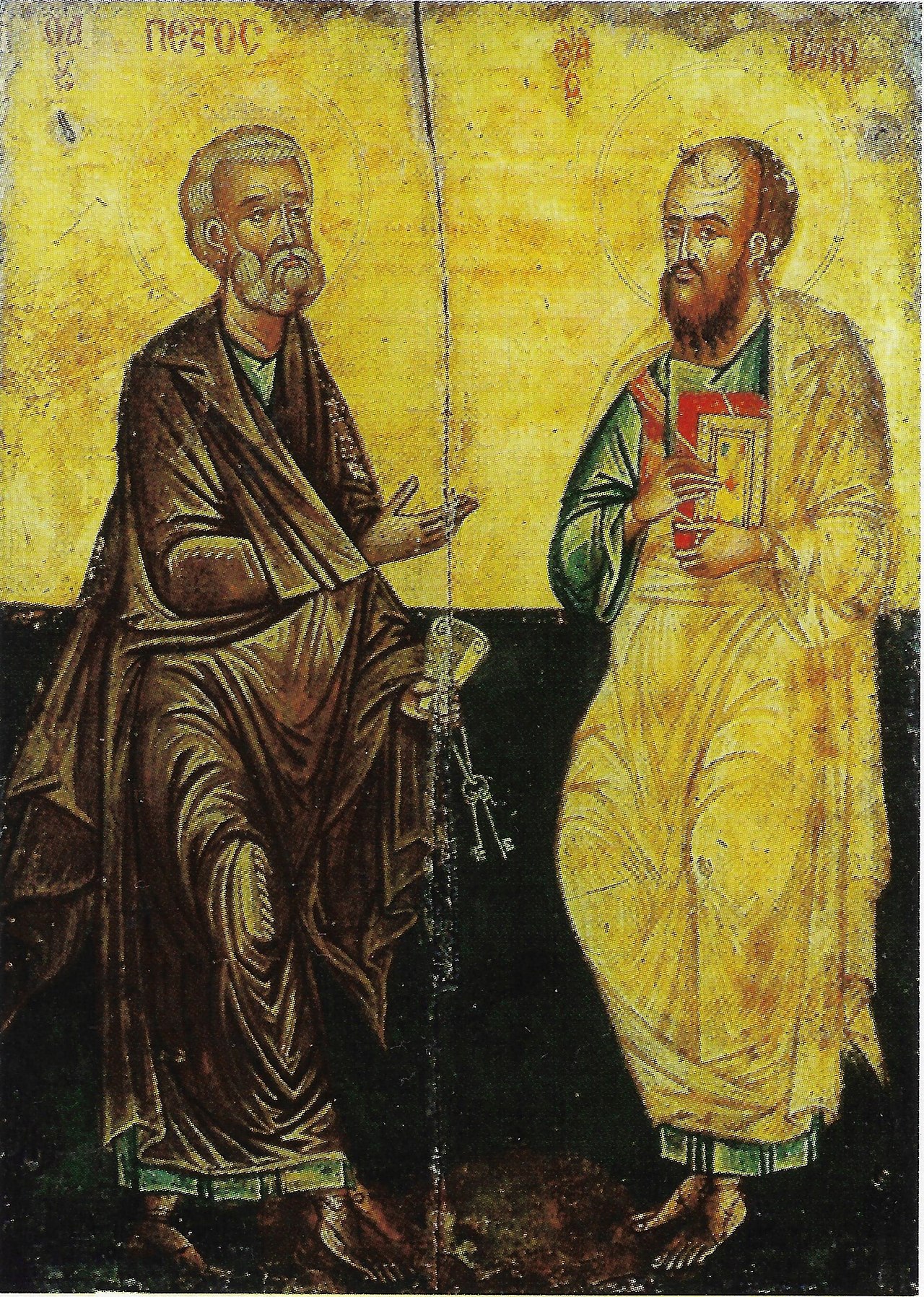
On June 29, the Church celebrates the two Apostles Peter and Paul. Yet what this feast sets before us, in the deepest sense, is not their achievements. Not Paul’s journeys, not the epistles, not the cities in which the Gospel was preached for the first time, not the Churches founded. What this day sets before us is their death. Both ended their lives in Rome, in the time of the emperor Nero, as martyrs; and the Church has appointed the same liturgical day to honour them together as crowned ones.
Here there lies a perplexity that we pass over from habit. A feast is joy. And yet what we celebrate is the day of their suffering. How can the day of death be a day of joy for the Church? The whole light of the feast lies in the answer to this question.
The fast that has just ended taught us that the Apostles were those sent, and that every Christian, in his own measure, is also one who is sent. But being sent has an end. The feast shows us what that end is: not a place of rest at the end of the road, but the cross and the sword. The two Apostles did not rest at the end of their mission; they died for it.
“Thou shalt stretch forth thy hands”
Of Peter we know that he did not fall beneath persecution by chance, but that his death had been foretold beforehand by the Lord Himself. After the Resurrection, by the sea, after the threefold question and the threefold confession of love, Christ reveals to him his end:
“Verily, verily, I say unto thee, When thou wast young, thou girdedst thyself, and walkedst whither thou wouldest: but when thou shalt be old, thou shalt stretch forth thy hands, and another shall gird thee, and carry thee whither thou wouldest not. This spake he, signifying by what death he should glorify God. And when he had spoken this, he saith unto him, Follow me.” (John 21:18-19)
The Evangelist leaves no doubt about the meaning: the word was spoken signifying by what death he should glorify God. The stretching forth of the hands is the cross. He who, on the night of the Passion, had denied three times and wept bitterly, now receives the promise that he will follow the Teacher even unto the cross; and the command at the end is one alone: Follow me. And Peter followed. According to an ancient tradition of the Church, he asked to be crucified head downward, judging himself unworthy to die in the same manner as his Lord. The denial of old was turned, at the end, into the final confession, not spoken with the mouth, but written in the body.
“There is laid up for me a crown of righteousness”
Unlike Peter, Paul sees his end not from the mouth of another, but confesses it himself in the last of his epistles, written to Timothy as a testament:
“For I am now ready to be offered, and the time of my departure is at hand. I have fought a good fight, I have finished my course, I have kept the faith: henceforth there is laid up for me a crown of righteousness, which the Lord, the righteous judge, shall give me at that day: and not to me only, but unto all them also that love his appearing.” (2 Timothy 4:6-8)
The Apostle of the nations speaks here as a man who knows that his hour is near. I am ready to be offered — he sees himself as a sacrifice being poured out. And he names clearly what awaits him beyond the sword: the crown of righteousness. Paul, being a Roman citizen, was not crucified like Peter, but, according to tradition, was slain by the sword outside the city. Two different deaths, just as their earlier lives had also been different: the Galilean fisherman and the learned Pharisee, each sealing his mission in the manner prepared for him. Yet one and the same crown stands above them both.
In Rome, the end of two roads
The two Apostles had set out on very different paths. Peter, the first among the Twelve, preached first to those of his own people; Paul, called last, carried the Gospel, as apostle of the nations, to the ends of the world. Different roads, toward different peoples. And yet both end in the same place: in Rome, at the heart of the empire, the city in which all the nations of the earth had been gathered together.
That they met there was no accident. To Paul, arrested in Jerusalem and held under guard, the Lord Himself had shown that his witness had to reach that city:
“And the night following the Lord stood by him, and said, Be of good cheer, Paul: for as thou hast testified of me in Jerusalem, so must thou bear witness also at Rome.” (Acts 23:11)
The witness that had begun in a corner of Galilee thus reaches the midst of the world — and reaches it not as a triumph of power, but as a witness sealed with blood. Two Apostles sent toward the two edges of the same world — toward Israel and toward the nations — are gathered, at the end, in the city that ruled over both; and there, by the same witness of blood, they seal the one Church, gathered alike from Jews and from Gentiles.
Martyrdom, the seal of apostleship
Why does the Church place their death at the heart of the feast, rather than their deeds? The answer lies in the very word by which we name them. Martyr translates the Greek martys, which means, before all else, witness. The martyr is first of all the witness. And apostleship — being sent — finds its perfection precisely in witness: the one sent is sent in order to bear witness, and the fullest witness, the one that can no longer be called into question by anyone, is the witness given at the price of life.
For this reason the death of the Apostles is not the interruption of their work, but its seal. Everything they had preached throughout their lives by word was confirmed, at the end, by blood. Upon this witness strengthened by death the faith of the first Church rested: those who had proclaimed the Resurrection did not take back their word even before death, but confirmed it with their very lives. The feast therefore does not celebrate the end of their work, but its fulfilment. What the natural eye sees as defeat — two men condemned to death by the power of this world — is, in truth, the fullest victory of their mission.
The crown that multiplies
And this seal does not rest upon these two alone. Peter and Paul are its clearest images, but not the only ones. According to the tradition of the Church, most of the Apostles sealed their preaching by martyrdom, each in the place to which he had been carried — scattered over the whole earth, yet united in the same end. For this reason the honouring of the two chief Apostles does not close in upon them. It is no accident that immediately after their feast, on June 30, the Church celebrates the Synaxis of the Twelve Apostles: the crown of the two opens the next day toward the whole assembly of those sent, as one crown multiplied in many.
First among the Apostles
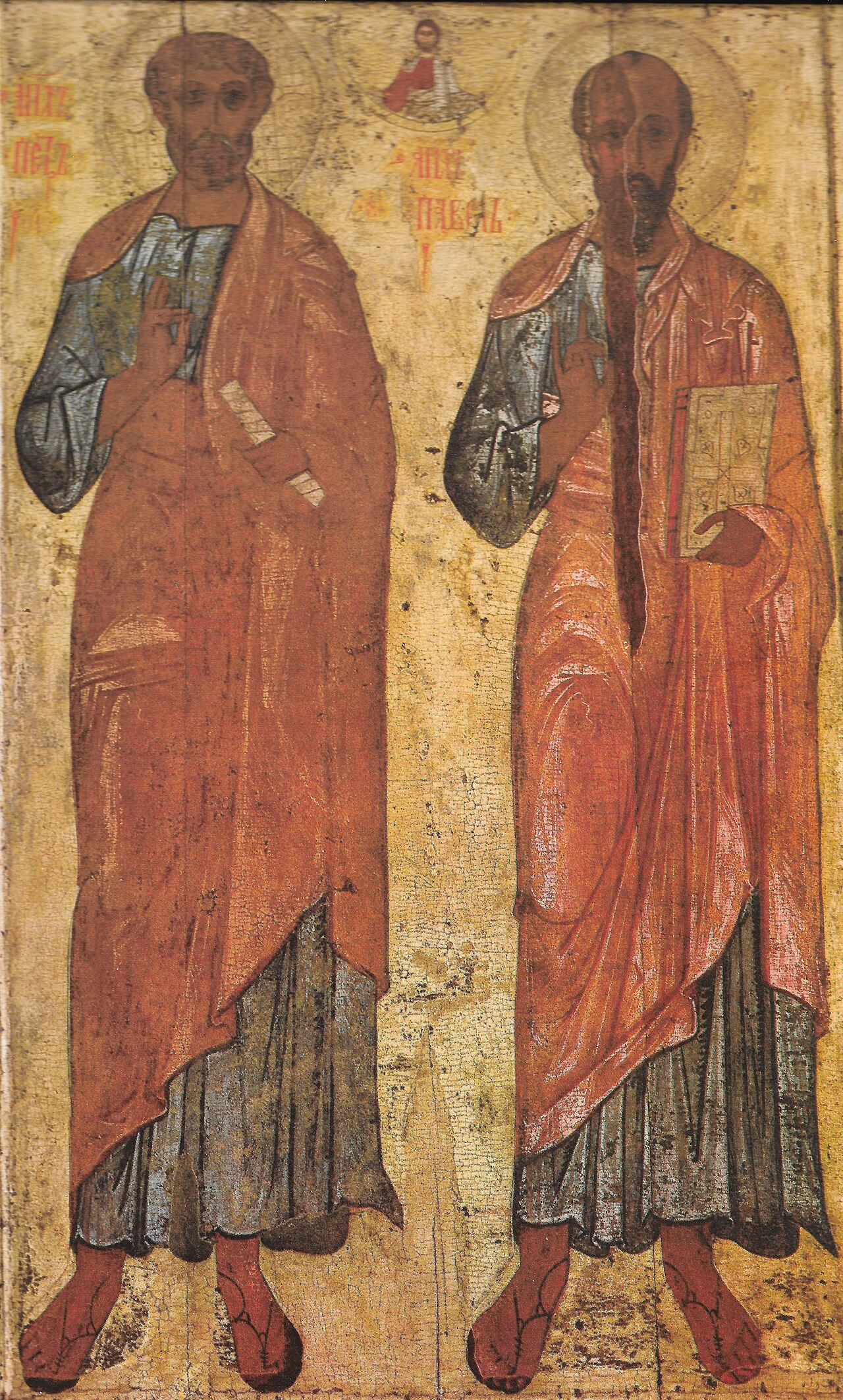
And yet, in the midst of this multitude of apostles and martyrs, the Church sets these two above all the others and calls them, in her hymns, the leaders of the Apostles. Why precisely them?
Peter, because he was the first to confess, in the name of all, who Christ is. When the Lord asked the disciples who they believed Him to be, Peter answered for all:
“Thou art the Christ, the Son of the living God.” (Matthew 16:16)
Upon this confession the Lord called him rock. Peter is the first among the Twelve, their voice before the Teacher, the first to preach after the Descent of the Holy Spirit and to bring thousands of souls to Christ in a single day.
Paul, because, though he had not been among the Twelve, but was called last and from being a persecutor, he carried the Gospel farther than any other and gave the Church the greater part of her written teaching. Most of the epistles read to this day in the services are his. He himself confessed: “I laboured more abundantly than they all: yet not I, but the grace of God which was with me” (1 Corinthians 15:10).
And the Church does not exalt one above the other, nor set Peter as a single head over the other Apostles, but unites both in one feast. Their primacy is not a dominion over the Church, but a primacy of confession and labour. The two, placed together, show the whole: the rock of right confession and the labour that carried it to the ends of the earth. Neither one alone is the measure; together they are the icon of the whole apostolic calling.
What we receive from their life and word
What use is it to us, in daily life, to know these two?
First, their life is hope for us. Peter, the rock, had denied his Teacher on the darkest night; and yet denial did not have the last word, but repentance and tears. He who had fallen so deeply was raised up and set at the head of the Apostles. Anyone who has fallen and thinks himself lost has in Peter the proof that no fall is without return, if repentance follows. And Paul had first been a persecutor of the Church, a consenting witness to the killing of the first martyr; and precisely him grace chose as apostle of the nations. The one whom his past weighs down has in Paul the witness that the grace of God can turn even an enemy into a confessor. One shows us that we are not condemned by our falls; the other, that we are not condemned by our past.
Then, their word is teaching for us. The epistles of Peter and of Paul are not writings closed in the past, but the living voice of the Apostles, read at every Liturgy. To know them means to know the apostolic faith as it was from the beginning — not by hearsay, nor by late interpretations, but from those whom Christ sent. Whoever wishes to learn what love is, or what the Church is, or how grace works, has from Paul words to which the Church has returned for two thousand years; whoever seeks courage in affliction and hope in persecution finds them in what Peter wrote.
For this reason the feast does not call us merely to honour them from afar, but to draw near to them: to take from their life the boldness to rise again, and from their word the right faith that holds us.
The fast asked; the feast answers
The Apostles’ Fast, the article at the beginning of the fast, placed a question upon us: for what work am I preparing? to what am I sent? The feast gives this question the deepest answer possible. Being sent, carried to the end, does not stop at word, nor at deed, but reaches witness — and the fullest witness is the one of which the two Apostles were made worthy.
The fast taught us to empty ourselves of ourselves, so that the work of the Spirit might find room in us. Martyrdom is the final and perfect emptying: man gives even the body, the last thing that remains to him. And the Lord, speaking precisely near the confession of Peter, had set beforehand the law of this emptying:
“If any man will come after me, let him deny himself, and take up his cross, and follow me. For whosoever will save his life shall lose it: and whosoever will lose his life for my sake shall find it.” (Matthew 16:24-25)
He who loses his life for Christ finds it — and nowhere is this seen more clearly than on the day of the death of the two Apostles, who, losing their life, found it.
Martyrdom without blood
But not all who are sent are called to seal their mission by blood. Most of us will never stand before the sword. Does this mean that the feast of the martyrs concerns us less? On the contrary.
The Church has always known a martyrdom without blood: the witness of each day, in which a man dies not once, but little by little — dying to his desires, his own will, anger, vainglory. The fast just completed was itself a school of this small and unceasing death. The one who practices self-restraint, the one who keeps silence when he would wish to wound, the one who bears injustice without returning evil, the one who confesses the faith without noise where this costs him — he bears, in hidden form, the same seal of witness. His blood has not been asked of him, but his will is asked; and often to give up one’s will, day after day, is a death longer than the sword.
The Fathers saw in this daily witness a martyrdom of conscience, a voluntary martyrdom: not because it replaces the martyrdom of blood or stands above it, but because it bears the same logic of self-denial. The martyr gives his life once and fully; the one who struggles in secret gives his life in thousands of small deaths, noticed by no one. The first is more fearful; the second is longer and more hidden, because it has neither a clear hour nor a visible crown, but must be renewed every morning. The crown of the martyrs shines also above this quiet witness.
The day of death, the day of birth
Now the question from the beginning can be answered: how can the day of the death of two men be a feast, that is, a joy? Because, in Christ, the death of the martyr is not an end, but a birth. The first Church did not call the day of a martyr’s end his day of death, but his birthday — the day on which he was born out of this world into the true life. The feast of June 29 is, in this sense, the birthday of the two pillars of the Church: the day on which Peter, stretching forth his hands upon the cross, and Paul, bowing his neck beneath the sword, were born fully for the Kingdom.
For this reason the hymns of the feast do not place before us the achievements of the Apostles, but receive their sufferings and death as the highest fruit of their whole life. And before us, who are barely learning to die little by little, the two martyrs stand not only as an adornment of the Church, but as a promise: that the same crown of righteousness which the Righteous Judge prepares for those who have kept His faith is prepared also for quiet witness, if it is kept to the end.