
A man prays for months for work and does not find it. Another asks for his child’s health, goes on pilgrimage, reads akathists, fasts, and the illness remains. Both have read in the Gospel that whoever asks receives, and both arrive, sooner or later, at the same question: if the Lord promised so plainly, why do we sometimes ask and not receive?
The question does not come from little faith. It comes from the fact that the Gospel sets side by side words which, read apart from one another, seem to contradict each other.
Words That Seem to Contradict
In the prayer the Lord Himself gave us we say, “Thy will be done.” We surrender, and we ask for nothing in particular.
In the same Gospel He says, “Ask, and it shall be given you; seek, and ye shall find; knock, and it shall be opened unto you” (Matthew 7:7).
In Saint Mark the word is bolder still: “What things soever ye desire, when ye pray, believe that ye receive them, and ye shall have them” (Mark 11:24).
And to the disciples who had failed to deliver a sick child He says that if they have faith as a grain of mustard seed they shall say to the mountain, remove hence to yonder place, and it shall remove, and nothing shall be impossible unto them (Matthew 17:20).
Which is true, the word of surrender or the word of boldness? Both are true, and the way they stand together is seen most clearly in Gethsemane.
Gethsemane
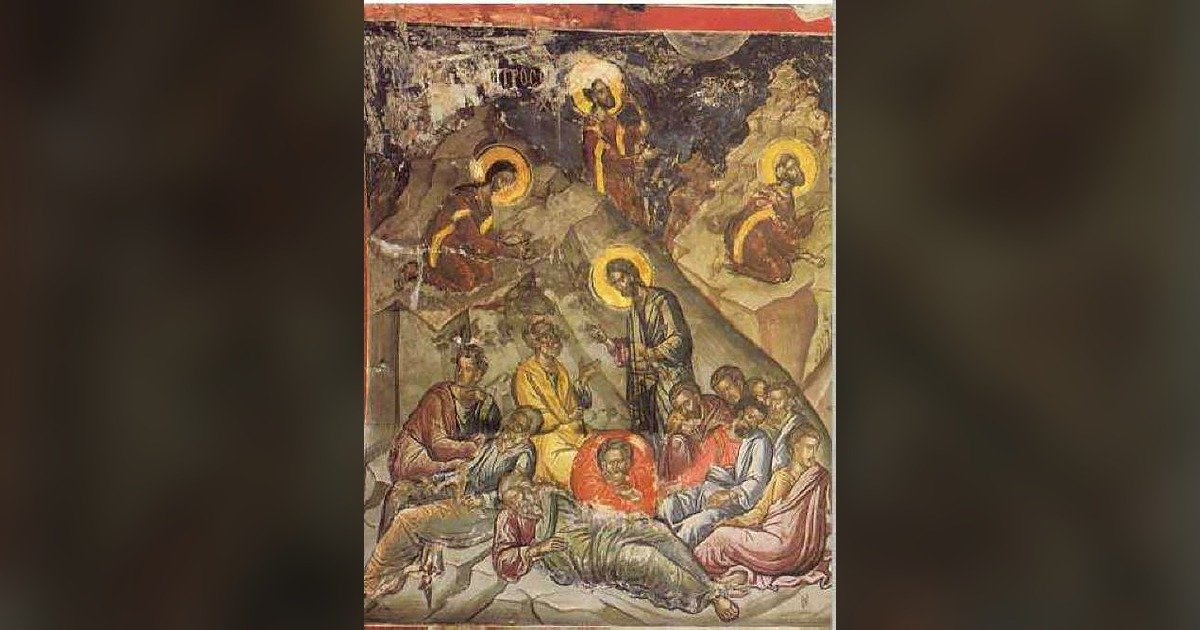
On the night before the Cross, the Lord does not say only, “Thy will be done.” He asks first, and asks for something very precise: “O my Father, if it be possible, let this cup pass from me.”
He does not avoid the pain, nor does He turn it into general speech. He tells the Father exactly what He desires.
In the same prayer He adds, “nevertheless not as I will, but as thou wilt” (Matthew 26:39). And the second time, praying again, He speaks word for word the petition from the Our Father: “O my Father, if this cup may not pass away from me, except I drink it, thy will be done” (Matthew 26:42).
Asking and surrender are not two opposing prayers here. They are one prayer, in which a man says what he desires and then lays his desire in the Father’s hands.
The cup did not pass. The prayer of the Son of God, spoken with a faith no one has ever equalled, did not obtain the thing asked, and through that refusal the world was saved.
A prayer whose end does not resemble what we asked remains a prayer that was heard. Sometimes God’s answer is precisely what we, in that hour, call a refusal.
What the Gospel Actually Promises
After the word about asking, the Lord speaks of a father and his child: what man is there of you, who, if his son ask bread, will give him a stone? And He concludes: “If ye then, being evil, know how to give good gifts unto your children, how much more shall your Father which is in heaven give good things to them that ask him?” (Matthew 7:11).
The Father gives good things. We, however, do not always know which things are good.
The same teaching is found in Saint Luke, with the same words almost to the end, and there the end is different: “If ye then, being evil, know how to give good gifts unto your children: how much more shall your heavenly Father give the Holy Spirit to them that ask him?” (Luke 11:13).
Matthew says “good things.” Luke says “the Holy Spirit.” The two Gospels illumine one another, and the gift God never refuses proves to be God Himself.
Earthly things are not despised. The Lord commanded us to ask for our daily bread each day. A child’s illness belongs in prayer, and so does trouble at home, and so does the lack of money. All of them, however, are set within an order, in which the Kingdom comes first and the rest is added. We are not asked to desire nothing. We are asked that no desired thing become greater than God.
The Word That Binds It Together
Saint John gathers the whole matter into a single sentence: “And this is the confidence that we have in him, that, if we ask any thing according to his will, he heareth us” (I John 5:14).
According to His will. This is not a clause appended at the end to cover the cases where prayer goes unanswered. It is the very heart of Christian prayer.
Prayer Changes First the One Who Prays
The Lord says, “If ye abide in me, and my words abide in you, ye shall ask what ye will, and it shall be done unto you” (John 15:7).
We usually read only the second half. Yet the promise begins with “if ye abide in me.”
The man who abides in Christ can ask what he wills precisely because, little by little, his will ceases to be foreign to the will of Christ. God is not persuaded to do the will of man. Man learns the will of God.
Here lies the deepest work of prayer. It does not only change the circumstances around us; it changes first the one who asks. We enter prayer saying, “Lord, let this come to pass,” and we leave it saying, “Lord, remain with me even if it does not.” This is no defeat, but a prayer that has descended further.
Why We Ask and Do Not Receive
Saint James names two failures one after the other. The first: “ye have not, because ye ask not.” The second: “Ye ask, and receive not, because ye ask amiss, that ye may consume it upon your lusts” (James 4:2-3).
It is possible, then, to ask much and yet to ask wrongly. The thing asked is not always evil in itself, but our desire can be crooked. We ask for money out of love of money. We ask for success out of vainglory. We ask for justice when what we want is revenge. We may ask even for good things, desiring them more than we desire God.
Here lies the gravest danger. It begins the moment we say to God, with the heart if not with the mouth, that either He gives us this or we no longer believe in Him. In that moment the thing asked has taken the place of the One we are asking.
There is one further obstacle we pass over almost every time. Immediately after “believe that ye receive them,” the Lord adds: “And when ye stand praying, forgive, if ye have ought against any: that your Father also which is in heaven may forgive you your trespasses” (Mark 11:25). We have separated the two verses. Christ did not separate them. The man who keeps his fist closed against his brother cannot ask the Father to open His hand.
The Grain of Mustard Seed
The word about faith as a grain of mustard seed is the one most often taken out of its place.
The Lord speaks it after the disciples had failed to cast a demon out of a child. They ask why, and He answers them: “Because of your unbelief.” And immediately after the promise about the mountain He adds: “Howbeit this kind goeth not out but by prayer and fasting” (Matthew 17:20-21).
This faith is not a straining of the mind, as though the thing desired would come if we imagined it strongly enough. That would be the wish to have the power of God without obedience to God.
Evangelical faith grows in a man who is being purified, and the Lord says on the spot by what means it is worked: by prayer and by fasting. The grain is small, but it is alive.
The Persistent Thought
Whoever carries a thought for years notices something unsettling: that thing often ends by coming to pass. Not at once, sometimes after very many years, but it comes to pass.
Persistence is not, in itself, something to avoid. The Lord spoke two parables about it, of the friend who knocks at night until the door is opened and of the widow who gives the judge no rest. He commanded us to ask and not to lose hope.
Beneath the same persistence, however, very different things can be hidden.
There is first the persistence God accepts. A man asks for years, receives in the hour God chooses, and the delay purifies him along the way.
There is next the natural power of a settled thought. Whoever carries a thought for a long time arranges his attention, his choices, his acquaintances and his years around it without noticing. The thing comes to pass because the man has worked toward it a whole lifetime. This is neither grace nor sin, but the way a man is made.
And the third is passion. The Fathers described the stages through which a thought passes until it comes to rule: first it approaches without our willing it, then we linger with it, then we consent to it, then it enslaves us, and at last it becomes a passion, that is, a settled disposition that moves a man from within. A passion also reaches its object, because the man has become its servant and works for it without being asked.
From the outside, the three look alike. The same request held for years, the same persistence, the same fulfilment at the end.
Fulfilment therefore proves nothing about where a request came from.
The Psalm says this of the people in the wilderness: “And they lusted exceedingly in the wilderness, and tempted God in the dry land. And he gave them their request, and sent fulness into their souls” (Psalm 105:14-15 LXX). They asked persistently and received what they asked.
A request held without “Thy will be done” may be fulfilled precisely because we insisted upon it, and its fulfilment then becomes our trial.
The signs by which a thought is tested lie along the road, not at the end.
Watch what the thought leaves in you while you carry it. Peace comes from God, while agitation and haste have another origin, however good the desired thing may appear.
Tell it to your spiritual father. A thought that withers when spoken aloud was already sick before it was spoken.
See whether the Jesus Prayer grows beside it or is pushed out by it. A thought that will not bear “have mercy on me” alongside it is no longer a request, but a master.
And the shortest test returns us to Gethsemane. Can you say over that thing, “nevertheless not as I will, but as thou wilt,” without your heart tightening? If you can, it is a request. If you cannot, the thought is holding you.
Virtue and Trial
The man who struggles receives more readily, and Saint John says so openly: “Beloved, if our heart condemn us not, then have we confidence toward God. And whatsoever we ask, we receive of him, because we keep his commandments, and do those things that are pleasing in his sight” (I John 3:21-22). Whoever abides in Christ asks differently and is given differently.
Out of that same virtue, however, trial is also born. Job is the clearest case.
Job was rich, his household whole, his estate prospering, and he was being punished for nothing. God Himself points him out to the accuser, asking whether he has considered His servant Job, since there is none like him on the earth, blameless and upright, fearing God and turning away from evil (Job 1:8).
The trial did not come upon his righteousness but through it. Job was singled out precisely because there was no other like him. His virtue was the occasion of the testing, not the shield against it.
Scripture sets this down as a rule, at the very beginning of the approach to God: “My son, if thou come to serve the Lord, prepare thy soul for temptation.” And it adds at once the reason: “For gold is tried in the fire, and acceptable men in the furnace of adversity” (Sirach 2:1 and 5).
Job asks without ceasing. He asks to be heard, he asks to be told why, he asks for judgment. And the answer he receives is not the explanation he had asked for. At the end he says: “I have heard of thee by the hearing of the ear: but now mine eye seeth thee” (Job 42:5). He had asked for an answer and received God.
It does not follow that every suffering is a sign of virtue, nor that we would do well to seek out trial. On that same night in Gethsemane the Lord told His disciples, “Watch and pray, that ye enter not into temptation” (Matthew 26:41). We ask to be spared, and we do well to ask.
But when trial comes upon a man who was walking uprightly, he has no ground to read it as a sign that God has turned away from him. Virtue does not change what we can extract from God. It changes what God can entrust to us.
Saint Paul Asked and Did Not Receive
Saint Paul speaks of a thorn in the flesh, a suffering whose nature he does not explain. He says, “For this thing I besought the Lord thrice, that it might depart from me.” Three times, and the thorn was not taken away.
The answer was another: “My grace is sufficient for thee: for my strength is made perfect in weakness” (II Corinthians 12:8-9).
He had asked that his circumstance be changed. He received the changing of the man. And afterward he can say something that would earlier have seemed impossible: “Most gladly therefore will I rather glory in my infirmities.” The suffering had not become good. The grace of God had proved greater than it.
We Are Permitted to Ask for Particular Things
None of this forbids us to ask for plain and small things. Christ commanded us to ask, and faith does not require us to pretend that what hurts us does not hurt.
The mother of a sick child ought to ask for his healing. The man left without work ought to ask for a place. The lonely may ask for a family, and the man weighed down by debt may ask for help. He who has stopped asking for anything is not thereby more spiritual. Christ Himself said in Gethsemane what He desired.
The Place of the Saints
The Church has always asked the prayers of the saints, and has asked them by name, for particular needs. So her services are written. So the fathers nearest to us have taught. Saint Cleopa of Sihăstria, the Romanian elder of the last century, would send students to Saint Nicholas before an examination. Father Arsenie Papacioc, like many before him, would send people to the Mother of God. This is no lesser piety, permitted to the weak. It is the order of the Church.
The Lord’s first miracle was worked at such a request. At the wedding in Cana His Mother tells Him that the hosts have run out of wine. It is no lofty petition, but a domestic difficulty, the shame of a family before its guests. And the answer she receives sounds like a postponement: “mine hour is not yet come.”
What she does then shows everything that need be known about the intercession of the saints. She does not press with words, nor does she seek to persuade Him. She turns to the servants and says, “Whatsoever he saith unto you, do it” (John 2:5). It is her last recorded word in the Gospel, and it points not to herself but to her Son. And the water became wine.
The saints are not a way of going around the will of Christ. They lead us into it.
The straying begins when this end is lost and prayer comes to resemble a mechanism: read this akathist so many times and the matter will resolve, light so many candles and heaven becomes indebted. Fasting turns into currency and pilgrimage into payment. It also happens that a man has a saint for every need but has not confessed in years and does not approach the Chalice.
Graver still is when Christ comes to be felt as a Judge hard to move, and the Mother of God and the saints as better intercessors who must persuade Him. This overturns the Gospel. Christ is the One who gave His life for us, and the saints do not shield us from His love; they live within it.
The saints do not give. The saints pray. All that is given is given by God.
The guidance of the fathers presupposed a whole life. When Saint Cleopa sent a student to Saint Nicholas, he was sending a man who confessed, who fasted, who communed. The counsel was given within that life, not as a work standing on its own.
How to Ask
The Fathers left us no method for prevailing upon God. They left us an ordering of the heart.
Ask plainly. Name the thing, without shame. God has no need that we explain the circumstance to Him, but we have need to open our heart before Him.
Seek the Kingdom first. Ask yourself whether the thing you desire draws you nearer to God or further from Him.
Say also what Christ said: “nevertheless not as I will, but as thou wilt.” Not as a closing formula, but truly.
Forgive. Often the obstacle in our prayer is not lack of faith but the man we are unwilling to forgive.
Persevere. Delay does not mean refusal. Often God changes first the man who asks and only afterward the thing asked.
And above all, ask for God. All His gifts are small beside Him.
The Prayer That Changes Our Requests
This is why the Jesus Prayer stands so deep in the life of the Church: “Lord Jesus Christ, Son of God, have mercy on me, a sinner.”
It does not tell God what tomorrow must look like, nor prescribe to Him the solution. It asks what a man needs in every circumstance: His mercy.
Whoever keeps it for a long time notices something strange. At first he believed that prayer must change the world around him. After a while he discovers that prayer changes him first. Some requests fall away of themselves. Others remain but cease to be idols. Some are granted and others are not. And over them all a deeper request settles: Lord, whatever may come, let me not be parted from Thee.
If God Does Not Give Me What I Ask
The man at the beginning of these lines is free to go on asking. To ask today and tomorrow, with tears, through the prayers of the Mother of God and the saints, to knock until his hand can knock no longer. Nothing in the Gospel tells him to be silent.
The Gospel teaches him only to add that he sees today while God sees the end; that he sees the thing desired while God sees what that thing will do to his soul.
This is faith. Not the assurance that God will do what we want, but the assurance that God remains good even when He does not do what we want.
Sometimes He gives us the thing asked. Sometimes He spares us from the very thing we ask for. Sometimes He changes the circumstance, and sometimes He gives us the strength to pass through it. And when every other answer seems to be missing, He does what He did for His Apostle and says, “My grace is sufficient for thee.”
Then a man understands something he could not have understood at the beginning of his prayer. The greatest fulfilment of a request is not always to receive the thing asked. It is to arrive, through what you asked for, at the One of whom you asked it.
For sometimes God gives us the gift. And sometimes He does not give us the gift, and gives us Himself.
Image: The Lord’s prayer in Gethsemane, fresco by Theophanes the Cretan, sixteenth century, Stavronikita Monastery, Mount Athos; public domain, via Wikimedia Commons.