
A swift helper of those sick in mind, of those oppressed by unclean spirits, and of those fallen into depression and despondency
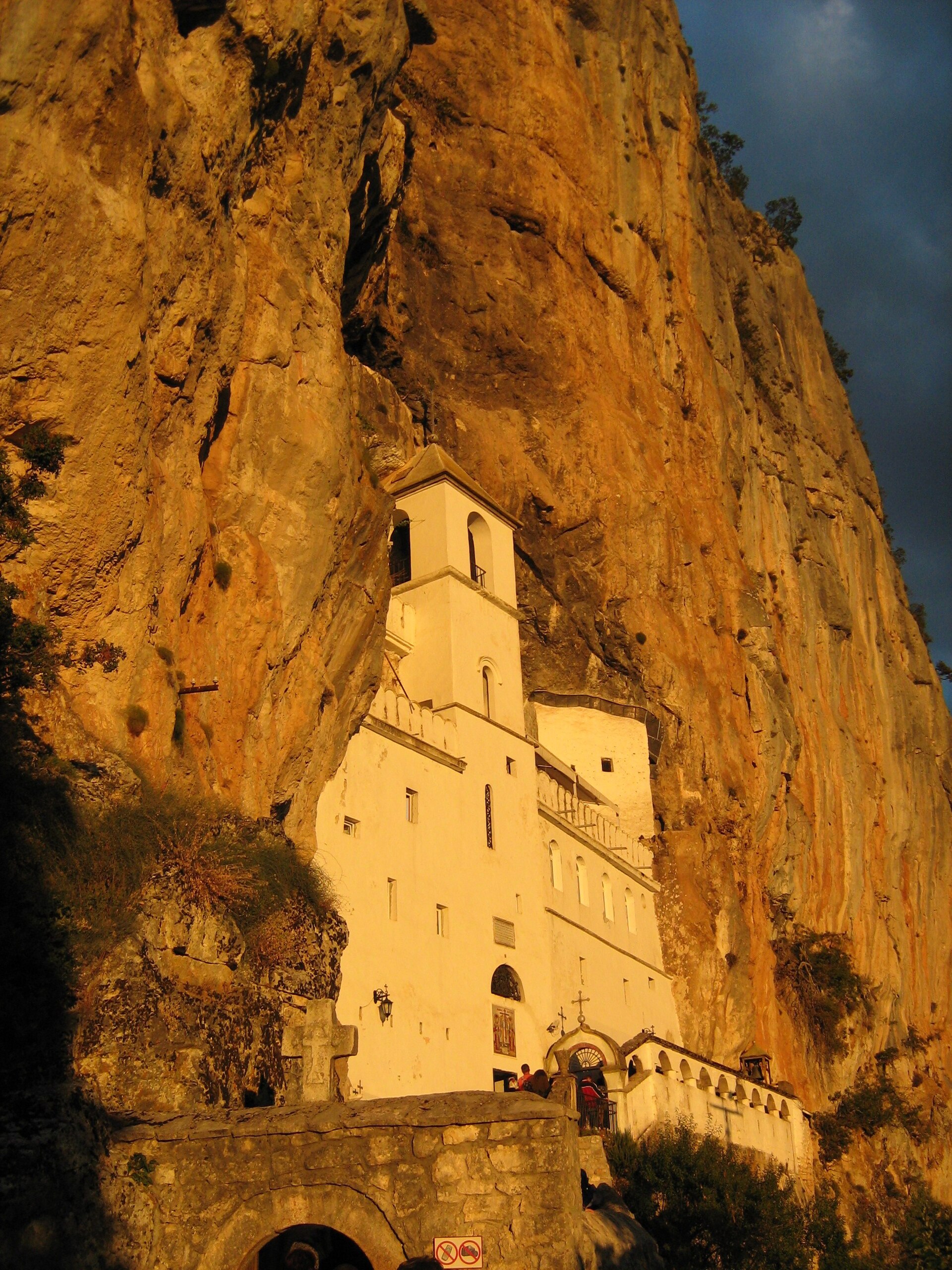
On an almost vertical wall of rock in the mountains of Montenegro, high above the valley of the Zeta River, there stands a monastery carved into stone. In its cave rests the incorrupt body of a bishop who died more than three hundred and fifty years ago. To his reliquary people come without ceasing, year after year – Orthodox Christians, but also Catholics, Protestants, and Muslims – and many of them seek the same thing: healing of the mind. For those tormented by sicknesses of the soul, by despondency, by disturbances of reason, and by unclean spirits, the name of Saint Basil of Ostrog has become, across the centuries, a name of hope.
Who was this saint, and why did his monastery, hidden in a hard-to-reach corner of the Balkans, become one of the most visited places of pilgrimage in all Orthodoxy? The answer lies in an entire life of quiet ascetic struggle, in a faith that endured under heavy pressure, and above all in the uninterrupted witness of his relics, through which God works miracles down to the present day.
A Child from Herzegovina
Saint Basil was born in Herzegovina, in the village of Mrkonjić in the region of Popovo Polje, at the end of the year 1610, into a family of simple and pious peasants, Petar and Ana Jovanović. At baptism he received the name Stojan. It was a difficult time for Orthodox Christians in the Balkans: Serbian lands were under Ottoman rule, while from the West came the constant pressure of union with Rome. In such a world, the faith was not an inheritance taken for granted, but a daily struggle.
From childhood, Stojan was drawn to the Church and to prayer. His parents, wishing to guard him from the sins of youth and to raise him in the fear of God, brought him while still young to Zavala Monastery, where he learned to read the Scriptures under the guidance of a wise teacher, Abbot Seraphim. There the child learned not only letters, but also the beginning of the spiritual life: prayer, fasting, and obedience.
When he reached manhood, he was sent further, to the Monastery of the Dormition of the Mother of God at Tvrdoš, near Trebinje. There he received the monastic tonsure and a new name – Basil, in honor of Saint Basil the Great. This name was not accidental: the young monk would bear in his life something of the spirit of the great hierarch of Caesarea – the same union of episcopal service with severe ascetic labor, the same fearless defense of the right faith.
Ascetic Struggle and the Prayer of the Heart
As a monk, Basil quickly became known for the strictness of his life. He took upon himself one ascetic labor after another, each harder than the one before – long fasting, night vigils, unceasing prayer. He sought nothing of the things of the world; he sought only nearness to God. For the purity of his life, he was raised to the rank of archimandrite.
In search of spiritual wisdom, Basil traveled widely – to the great monasteries of the Orthodox world, to the Holy Places in the Holy Land, and, above all, to Mount Athos. From these journeys he always returned with gifts for the poor churches of Herzegovina – books, sacred vessels, money for the needy. He was a monk who kept nothing for himself, but gave away everything he received.
The heart of his ascetic life was unceasing prayer – the invocation of the name of Jesus, the work that tradition calls the prayer of the heart. This is not a method, but a state to which the monk comes through long labor: the mind gathered from dispersion and brought down into the heart, so that from there, in stillness, it may ceaselessly call upon the name of the Lord. For this reason the Fathers never separate the prayer of the heart from repentance, humility, and obedience, and for the monk, from spiritual guidance. Without these, the invocation of the name of Jesus can be misunderstood as a technique of the mind; with them, it becomes a work of purification and union with God.
Saint Basil learned this work where it was fitting that he should learn it: at its living sources. Mount Athos, where he spent a time, had for centuries been the treasury of the hesychast tradition, the place where the prayer of the heart had been preserved and handed down from ascetic to ascetic, without interruption. He did not take this work from books alone, but from living speech and example, from men who lived it. This is the significance of his spiritual lineage: the saint of Ostrog was not a solitary thinker who imagined a path of his own, but a disciple of the tradition, who received what had been handed down and lived it to the end.
From this came also the measure he kept in all things. His ascetic struggle was severe, but not disorderly. The Fathers require discernment from the struggler: to weary the body, but not to ruin it, for the body is the dwelling place of the Holy Spirit, not an enemy to be destroyed. His ascetic labor was not an end in itself, but a means – the path by which the heart is purified, so that it may call purely upon the name of God. And the fruit of this purification was already visible during his life: the gift of clairvoyance, the power to heal, and the peace he poured out upon those around him.
A Bishop Against His Will
Around the year 1638, upon his return from Mount Athos, Basil was chosen and ordained bishop – Metropolitan of Herzegovina – against his will. He was then under thirty years old. His humility resisted this honor, but he could not flee the burden that the Church placed upon him.
To understand what his steadfastness meant, we must remember the age in which he lived. Seventeenth-century Herzegovina was a land pressed from two sides at once. From the East ruled the Ottoman Empire, under which Orthodox Christians lived like a flock without human defense: heavy taxes, humiliations, the danger of slavery, and the continual attempt to turn them away from their faith. From the West came another pressure, more subtle because it presented itself as friendly: the work of union with Rome, which sought to draw the Orthodox under obedience to the pope, promising relief in exchange for abandoning the right faith.
Between these two millstones stood the Orthodox people of Herzegovina, and with them their shepherd. Saint Basil saw clearly the danger coming from the West. He urged Metropolitan Mardarije of Cetinje to resist the propaganda of union, as a true soldier of the Church; but Mardarije not only remained indifferent, he even came to accept union with Rome in the year 1640, moved also by the hope of Venetian help against the Turks. More than this, he began to spread rumors and false accusations against Basil. The people, however, did not believe them, because they knew and loved the saint for his pure life; and Basil himself took a stand without wavering, remaining known as a fearless defender of the right faith.
He defended Orthodoxy not with weapons, which he did not have, but through the work of a shepherd. His residence was first at Tvrdoš, the place where he had become a monk, but he did not remain shut up there: he continually traveled through the vast and difficult diocese, serving the Divine Liturgy even in hidden places, where danger did not allow a church to stand openly, ordaining priests steadfast in faith, and strengthening the souls of the people. He strengthened what was weak, gathered what was scattered, and kept the people attached to the Church precisely where everything pushed them toward abandoning her. And when persecuted people fled from Turkish fury, they found shelter with him, and he fed them with the help of the surrounding villages.
Here a clarification is needed, lest the saint’s firmness be misunderstood. His resistance did not come from hatred toward people, but from love for Christ and for the flock entrusted to him. The defense of the boundaries of the right faith is not enmity toward those of another confession, but care that those entrusted to you not be torn away from saving truth. Firmness in faith and love for man do not contradict each other; on the contrary, true love itself requires steadfastness in truth.
It was precisely this steadfastness that brought him persecution. The Latins, whose efforts toward union were met by his resistance, continually accused him and attacked his faith. And from the Turks the pressure grew: soldiers plundered villages, robbed churches and monasteries, and took people into slavery, while local rulers sought to destroy the leaders of the people. Under this double pressure, in the year 1649, Tvrdoš Monastery – where the episcopal see was located – was laid waste by the Turks. Left without shelter and surrounded on every side, the ascetic bishop was forced to seek another place. And he found it where no one would have chosen comfort: the wild cliffs of Ostrog.
Ostrog – the Eagle’s Nest
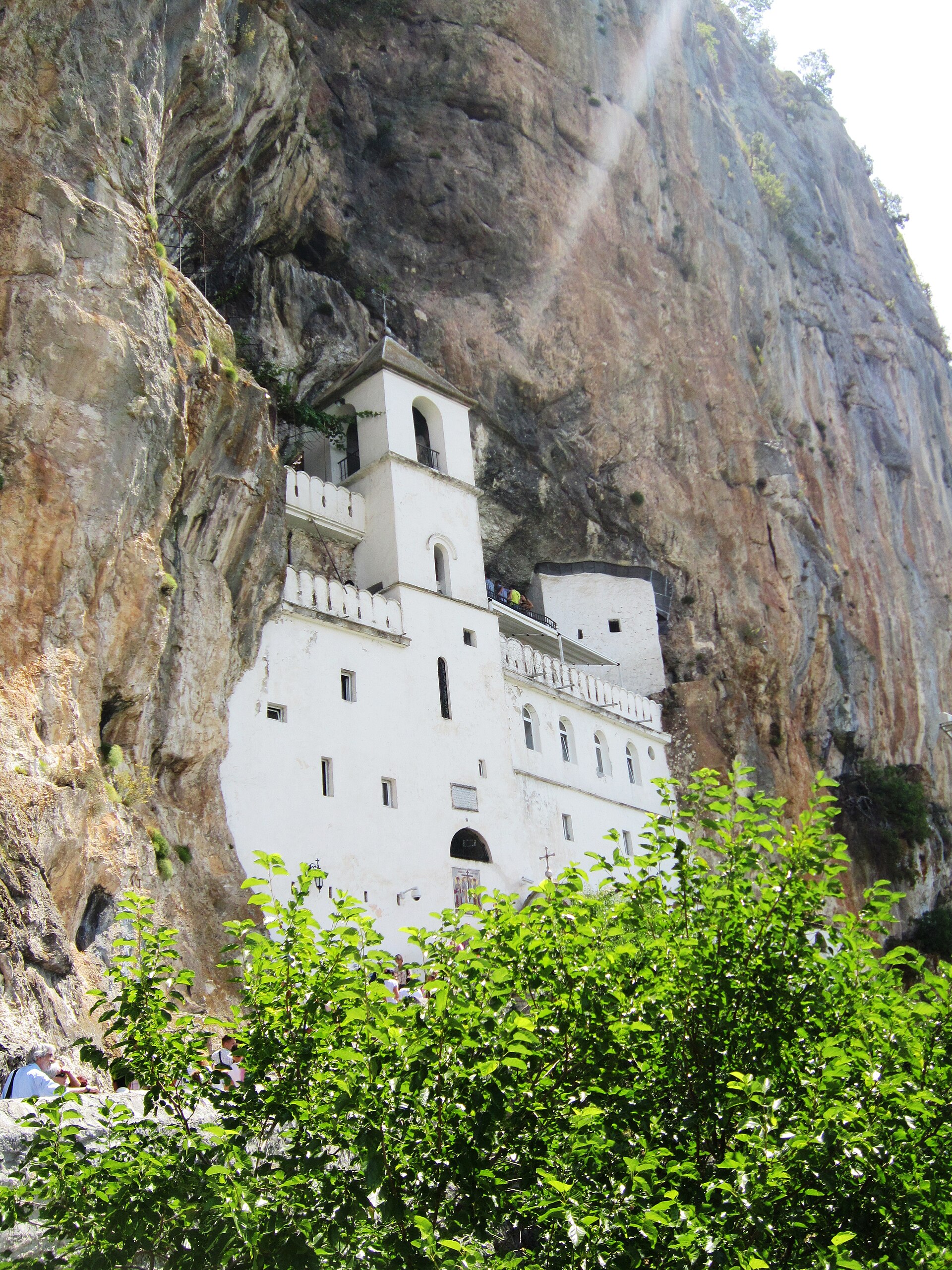
Ostrog is, before all else, a wonder of nature. On a wall of stone rising almost straight above the Bjelopavlići plain, like a great eagle’s nest, a cave opens. There Saint Basil withdrew, accompanied by a group of monks, in order to continue his ascetic life and to defend his flock through unceasing prayer.
According to the local tradition, at Ostrog Basil found the hermit Isaiah, an elder advanced in the spiritual life, who was already laboring in those places. So great was his reputation that, after his death, the Turks burned his body, trying to extinguish the people’s devotion toward him – a sign of the veneration he enjoyed. In this hermit’s cave, Saint Basil himself carried stones and wood and raised the first church on Mount Ostrog. He renewed the settlement, built the Church of the Holy Cross, and gathered around him a brotherhood of monks. For approximately fifteen years he lived there in fasting, vigil, and prayer, shepherding his people and enduring all the hardships of a severe life in bare rock.
Even during his life he was honored by the people as a living saint: many witnessed his gift of clairvoyance and the healings he performed through prayer. He was also knowledgeable in healing herbs, and many sick people sought him for help. This is worth noting, because in it one sees a harmony that will later illumine the whole work of the saint: knowledge of natural remedies and the power of prayer did not oppose each other in his hands, but went together. The saint did not despise the medicine of nature, but neither did he stop at it; he used it as a gift of God, leaving to grace the deepest work.
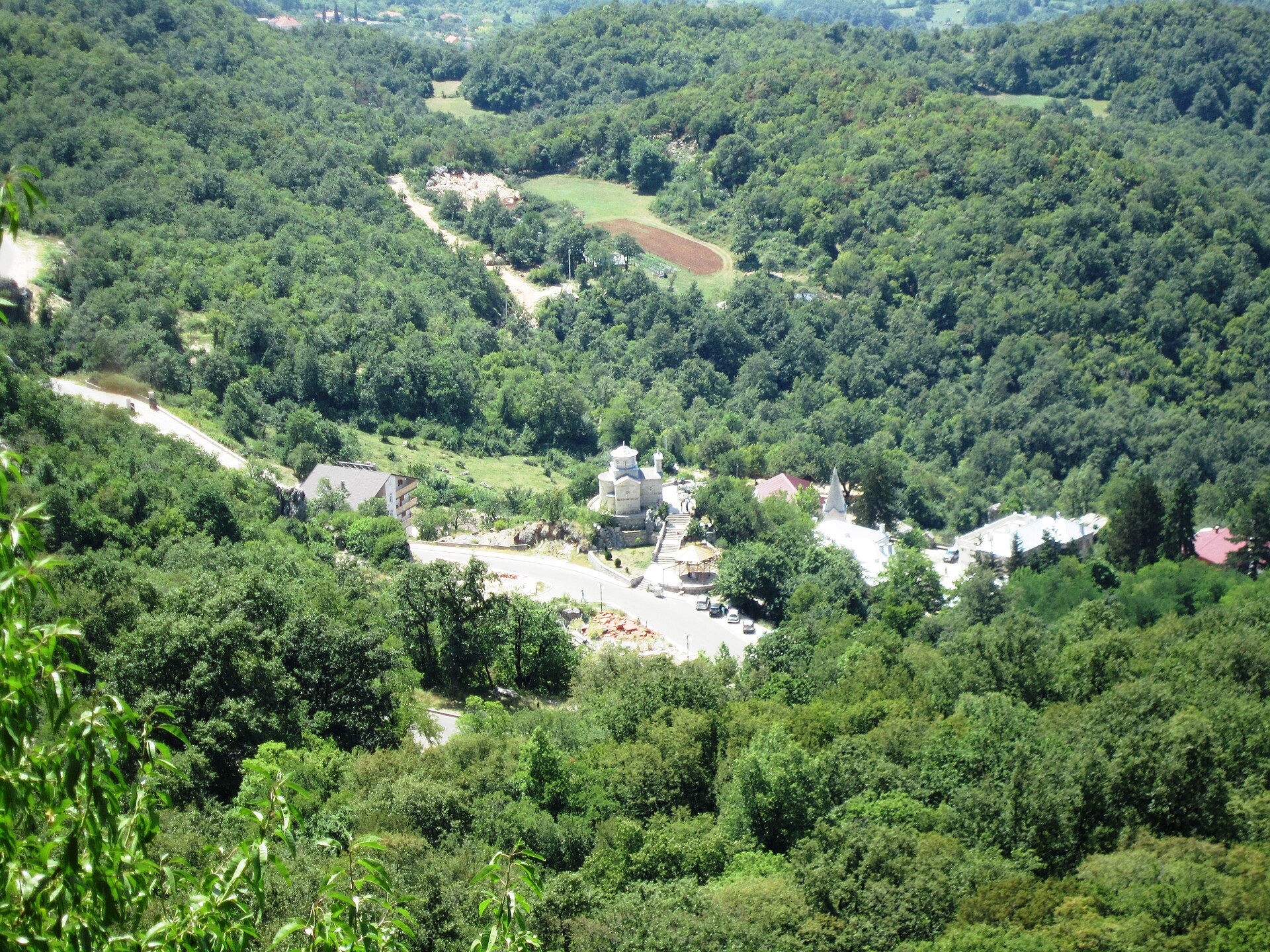
The monastery of today is made up of two settlements: the lower monastery in the valley, and the upper monastery attached to the cliff at a great height. On the plateau above there are only a few small chapels carved into the stone, and several cells for pilgrims. The little church of the Entrance of the Mother of God into the Temple, in which the saint’s body rests, preserves frescoes from the end of the seventeenth century, painted directly upon the stone of the cave. A great fire once consumed almost the entire complex on the cliff, and the monastery’s present appearance was given to it by the restoration of 1923-1926. But neither fire, nor time, nor wars were able to end the spiritual life of the place. Local people still say that it is closer to heaven than to earth.
His Passage to Eternal Life and the Finding of the Relics
Saint Basil passed to the Lord in peace, in his cell at Ostrog Monastery, on April 29, 1671. Tradition says that at the moment of his death an unusual light filled the cell. He was buried in the small church dedicated to the Entrance of the Mother of God into the Temple, carved into the cave of the mountain. And, just as they had done during his life, the people immediately began coming to his grave to pray. At the grave, miracles began to take place, and they have not ceased down to the present day.
Seven years after his repose, in the year 1678, Saint Basil appeared in a dream to Abbot Raphael, the superior of the Monastery of Saint Luke in Župa, near Nikšić, commanding him to go to Ostrog and open his grave. The abbot, fearing that the vision might be a deception, paid no attention to it. When the same vision appeared to him a second time, he again did not obey. Then Saint Basil appeared to him a third time, clothed in episcopal vestments and holding a censer in his hand. The abbot awoke filled with fear and revealed the vision to the brethren.
This care of the abbot not to hurry deserves attention. He did not accept the vision from the first appearance, but by his very resistance asked for stronger assurance that the work was from God and not a deception of the enemy. This is an image of the discernment the Fathers always require before visions: not quick and careless acceptance, but watchful examination. Only after the third appearance, accompanied by the clear sign of episcopal vestments and the censer, did the abbot know that it was the will of God.
Arriving at Ostrog, the brethren began a strict fast, while also performing the daily cycle of services together with the Divine Liturgy, for seven days. On the seventh day, they censed the grave and opened it. Then there appeared before them the glorified body of Saint Basil – whole and incorrupt, like the purest wax, spreading a sweet fragrance of basil. The monks placed the incorrupt body in a reliquary and transferred it to the church of the Entrance of the Mother of God into the Temple, in the upper monastery, where it remains to this day.
Incorruption and the Mystery of the Sanctification of the Whole Person
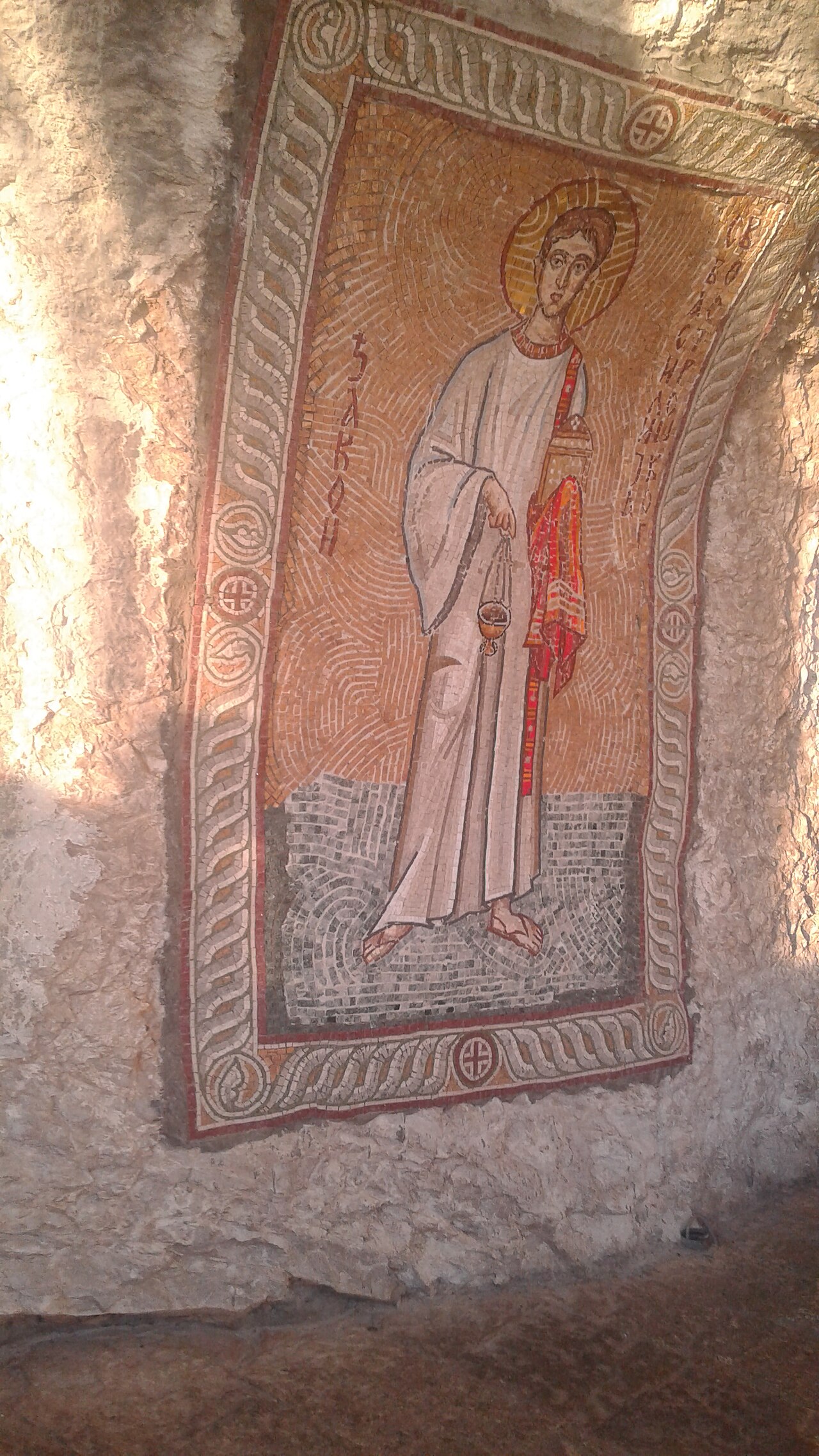
It is worth pausing over what the pilgrim sees when he reaches the reliquary in the cave: a human body preserved whole after more than three hundred and fifty years. For the mind of the Church, this fact has a deep meaning.
The Fathers teach us that man is not a soul shut inside a body as in a prison, but a whole being, in whom body and soul are together called to sanctification. Salvation is not the soul’s escape from the body, but the transfiguration of the whole man by grace. And when the grace of God truly penetrates the entire being of a person – when prayer, ascetic struggle, and participation in God work for years in his depths – this work does not leave the body untouched.
It must be said clearly, however, that the incorruption of relics is not the only criterion of sanctity. Many saints of the Church have not had bodies preserved whole, and they are not less holy because of this. But where God permits this incorruption, it becomes a visible sign of the grace that worked in the whole person and a pledge of the general resurrection. The saint’s body remains as a firstfruits, a tangible witness that the promise of the resurrection is not an empty word, but a truth that has already begun to work in the saints.
This is also why the Church venerates the relics of the saints – not as remains, but as springs of grace. At the reliquary of Saint Basil, one does not venerate a memory, but touches a place where the power of God is still at work.
The Relics Preserved Through the Storms of History
During his life, the saint was not left in peace, but was persecuted by many enemies. And after his passage to the Lord, even his relics were not spared trials. The history of the more than three centuries since their finding bears witness, in itself, to the providence of God.
The first time the monks had to hide the relics was in the year 1714, when Numan Pasha Ćuprilić ravaged Montenegro. The monks buried the reliquary beneath the monastery, near the Zeta River. The river overflowed and flooded the place; but according to the testimony preserved, the water entered neither the reliquary nor the saint’s body. The second time, the relics were hidden in the winter of 1852, during the siege of Ostrog by Omer Pasha, which lasted nine days. After the defenders succeeded in driving away the Turks, they took the saint’s body to Cetinje, near the relics of Saint Peter of Cetinje, and brought it back the following spring. The third time, the relics were moved during the war of 1876-1877, again being taken to Cetinje for almost a year, until they were brought back in a great procession in 1878.
And during the Second World War, in February 1942, when enemy grenades were falling upon Ostrog, the monks carried the relics into a cave behind the monastery, fearing that the little church might be struck. Their fear proved unfounded: grenades fell all around and exploded, but the monastery itself was not hit, and no one was wounded. These removals are not merely events of ecclesiastical history. They show something about the way God works through His saints: not by keeping them away from the storm, but by preserving them in the midst of it.
A Spring of Miracles for All Peoples
The fame of Saint Basil’s glorification spread quickly, and crowds of people began to gather at his relics. And here something altogether unusual appears: not only Orthodox Christians came to the saint’s reliquary, but also Roman Catholics, Protestants, and even Muslims. All sought help, and according to their faith in God’s mercy, they received consolation and healing.
It is worth noting that the saint who, during his life, firmly defended the boundaries of the right faith became, after death, a spring of mercy even for those outside Orthodoxy. There is no contradiction in this. His firmness in defending the truth did not come from hatred, but from love; and the mercy God pours out through him upon all who come with faith is the gentle call of truth toward those who do not yet know it. Tradition says that many non-Christians who received help at Ostrog were also baptized after venerating the relics. This is how a true saint works: not by disfiguring the truth in order to please everyone, but by keeping it whole while receiving with love every person who seeks.
On April 29 according to the old calendar – that is, May 12 according to the new – all Montenegro celebrates. Endless lines of pilgrims climb toward the monastery, many barefoot from the lower settlement to the upper one, saying only this: “toward heaven.” At the saint’s reliquary prayers can be heard in many languages. And the most precious offering brought there is neither money nor a candle, but clean repentance and the person’s will to purify his heart before God.
The Healer of Mind and Soul
Among all the healing gifts of Saint Basil, one has appeared more striking than the others: the help given to those with troubled minds and those oppressed by unclean spirits. The tradition of the monastery preserves countless notes about those brought to Ostrog in severe sufferings of the soul, in despondency, and under demonic oppression – people whom medicine had not succeeded in helping – and who, after prayer and anointing with oil from the lamp at the saint’s reliquary, found healing.
According to the testimonies preserved, in the year 1921 a Bosnian Muslim possessed by an unclean spirit was brought bound to the gates of the monastery, struggling and asking to be taken away from there – a familiar sign of the resistance an unclean spirit shows toward holy things. The next day, those present saw him completely healed. The local tradition also mentions, from the same period, a man who had been mute for almost ten years, brought to the relics after a hard ascent, and a resident of Sarajevo who had spent a long time in an asylum without improvement and who, finally brought to the saint’s reliquary, was freed from the bond of illness. Among the miracles included in the saint’s akathist is also mentioned a young girl who could not sleep at all, concerning whom the doctors had confessed their helplessness; brought with faith by her mother to the relics, after several days sleep was given back to her.
Two more detailed accounts show the two faces of this gift. The first took place in the year 1924, with a man from Kruševac who had lost his mind, no longer knowing who he was or what he was doing. His relatives brought him bound to the monastery and left him overnight beside the holy relics. The next day he returned home sound in mind, and that disturbance never returned until the end of his life, in 1945. The second concerns a young man named Marian, handsome in appearance, but whose face suffering had distorted: when he was seized by the unclean spirit, he roared like a lion. His brother brought him bound in chains to the saint’s reliquary, telling him that if he prayed to God and to the saint, he would be healed. The young man then felt his mind being lightened of its burden, and after he prayed for a long time on his knees and the priest read a prayer of healing over him, he went home free from his torment.
Precisely these two kinds of suffering – the loss of reason and oppression from an unclean spirit – require the greatest attention, so that they not be confused with one another. Saint Porphyrios, one of the great ascetics recently departed to the Lord, drew attention to an error made in both directions: sometimes people who need a doctor are sent to services of exorcism, while others, who need the prayer of the Church, are sent only to doctors. This confusion, he said, has serious consequences. Distinguishing between them requires discernment, humility, and counsel – not haste in one direction or the other.
These events are not a collection of wonders, but testimonies of the same work: the grace of God, called down through the prayers of the saint, touches precisely where human power comes to an end.
Here a clarification is necessary, and the saint himself places it before us through the way he lived. We have seen that he knew healing herbs and cared for the sick with the medicine of nature; the same measure is required of the Christian today. The Church does not despise medicine and does not forbid the Christian to seek medical help. Medicine – the doctor, the remedy, the care of the soul – truly touches the bodily and psychological side of suffering, and it has its gift from God. And the grace of God does not come against these works, but can illumine and strengthen them.
But the other truth must be said just as clearly: man is not only body, and there are depths of the person that human care alone cannot reach – the place where man needs peace, repentance, hope, and strengthening. The Fathers knew these depths well. They spoke of the spirit of despondency and of acedia, of thoughts cast by the enemy into the mind, of sorrow which, if allowed to grow, can drown the soul. Much of what modern man calls depression touches precisely this layer of being – the heavy burden of despondency, the darkness in which life loses its taste and hope seems extinguished. By this we do not say that depression is the same thing as acedia, nor that it is every time the work of the enemy; it often has bodily causes as well, which require a doctor and medicine. We say only that, beyond the part of it that medicine cares for, there remains a depth that only grace can fill with peace and hope. And the Fathers knew that against this darkness the strongest weapon is prayer, the invocation of the name of Jesus, and participation in the holy things. The two works – that of medicine and that of grace – do not exclude one another, but can go together: the doctor cares, grace touches the depth.
For the Christian of today, who lives in a world increasingly weighed down by inner anxiety, despondency, and disturbance, the life and relics of this saint bring a priceless teaching: that none of these darknesses is beyond the mercy of God. Where human power stops, grace still has power. For this reason, across the centuries, Saint Basil of Ostrog has remained the special protector of those troubled in mind and soul. To him run those who no longer know where to go. And from him many depart with the soul made lighter.
A Saint Carried Throughout the World
The veneration of Saint Basil did not remain enclosed among the mountains of Montenegro. The twentieth century was a century of exile for many Orthodox peoples; many were forced to leave their homeland and seek life in foreign countries. Those who left took with them their faith and their love for their saints – and among these, their love for Saint Basil of Ostrog. Today, churches dedicated to him are found in cities scattered throughout the world, and his feast is kept with vigils and Liturgies wherever the faithful gather in the name of Christ.
For Orthodox Christians who live far from their homeland – and there are many in this condition, in countries where Orthodoxy is small and scattered – the life of Saint Basil has a special consolation. He himself was the shepherd of an oppressed flock, who had to move his dwelling more than once without losing his faith. And his relics, carried from place to place through the storms of history and yet never abandoned by grace, are an example that the right faith does not depend on one place, but can be preserved whole wherever there is a faithful heart. The one who calls upon the name of Saint Basil from a foreign country is not farther from him than the pilgrim who climbs the cliff of Ostrog; for the saint, united with God, hears prayer wherever it rises.
What the Life of Saint Basil Teaches Us
From the life of this saint several things emerge that concern every Christian, in every time and every place.
The first is the power of unceasing prayer. Saint Basil did not leave behind books of theology, but a life, whose foundation was the ceaseless invocation of the name of Jesus. This silent work made him a spring of grace from which peoples have been drinking for more than three hundred years.
The second is firmness in faith under pressure. The saint lived in a time when being Orthodox required courage, and he did not waver. He shows us that the right faith is not preserved through compromise, but through steadfastness – and this steadfastness is not harshness without love, but precisely the sign of true love for Christ and for those entrusted to one’s shepherding.
The third is the measure of ascetic struggle. Saint Basil struggled severely, but always kept the wise measure of the Fathers, avoiding the ruin of the body, which is the dwelling place of the Spirit. He is an example of discernment, the virtue the Fathers call the root and crown of all virtues.
And the fourth, the most consoling, is hope for the despondent. Saint Basil of Ostrog remains, across the centuries, a witness that the wounded mind is not lost, the troubled soul is not rejected, and the person whom the world considers without a way out can still be touched by the mercy of God.
Holy Hierarch Basil, wonderworker of Ostrog, pray to God for us.