
Saint Antipas of Calapodești was an Orthodox monk of Romanian birth who labored on Mount Athos, in Moldavia, and at Valaam Monastery in the Russian north, and who is today venerated as a saint alike by the Romanian Orthodox Church, the Russian Orthodox Church, and the Greek monks of the Holy Mountain. His memory is kept on 10 January, the day of his passing to eternal life. The Greeks honor him as “Antipas the Athonite,” the Russians as “Antipas of Valaam,” and the Romanian tradition has named him after the village of his birth. This threefold veneration, across borders and languages, is the clearest sign of a spiritual life that has overflowed the bounds of any single local Church.
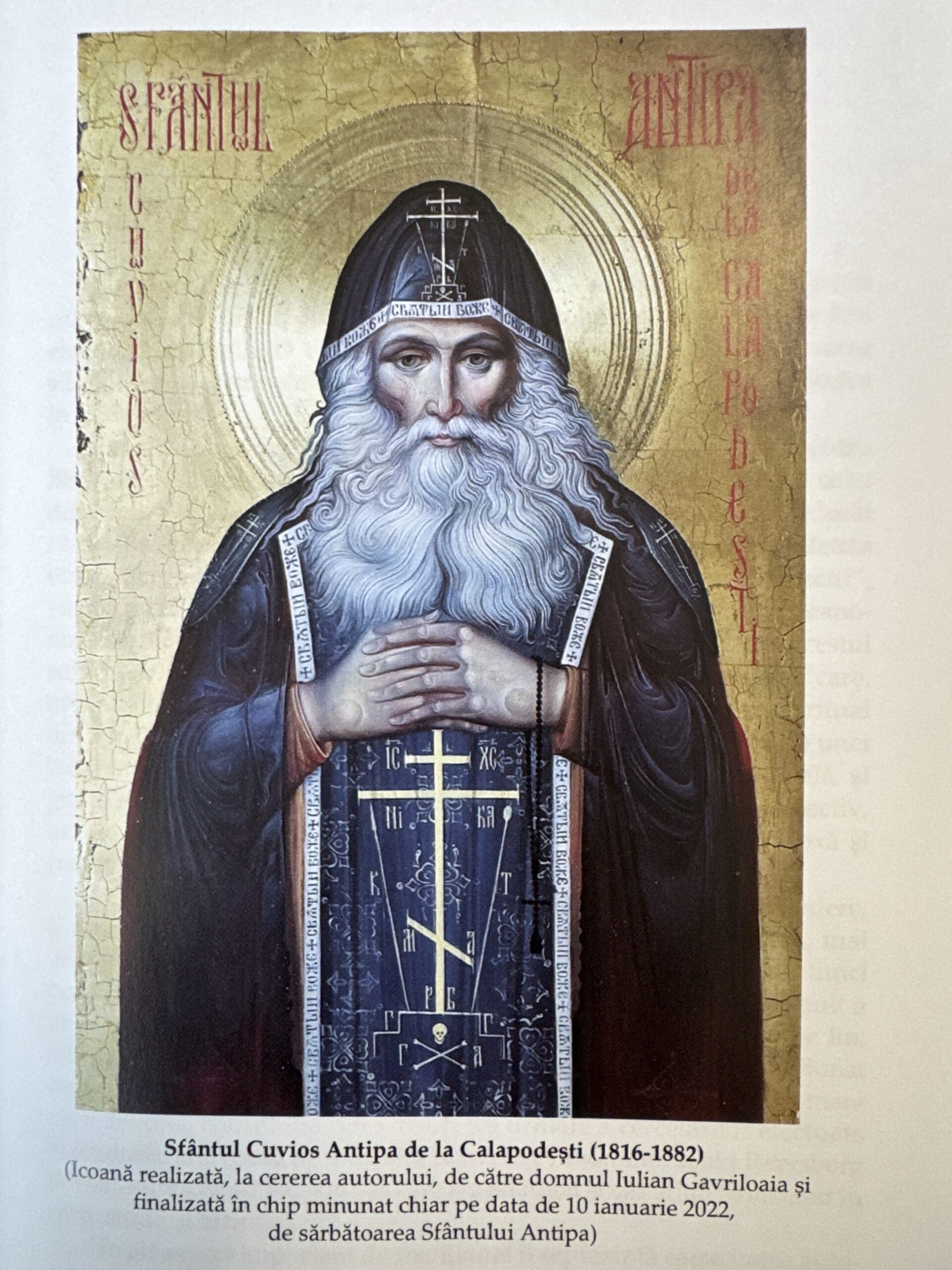
For a long time his life was known mainly in the short, hagiographical form left by his disciple Pimen, with certain uncertainties of dating and place owing to a lack of documents. Recent research in the archives — the correspondence of the Saint and of the abbots of the Prodromos Skete, the documents at Valaam, at the National Archives in Iași, and at the Great State Historical Archive of Russia in Saint Petersburg — has made it possible to clear up these uncertainties and to reconstruct a more secure chronology of his life. It is on this documentary foundation that the present account rests.
The setting
Saint Antipas was born in an age that was hard for the Orthodox world of eastern Europe. The Romanian Principalities still lay under the pressure of the Ottoman Empire and in the path of an expanding Russian Empire, while inwardly seeking the way toward a state of their own, a modern one. Within this setting, monastic life preserved a spiritual continuity older than any political border: the hesychast tradition of the unceasing prayer of the heart, renewed in the eighteenth century by Saint Paisius of Neamț and spread by his disciples through the monasteries of Moldavia, on Athos, and as far as the Russian north. Saint Antipas walks in the footsteps of the great hesychast strugglers of that age — Saints Onuphrius of Vorona, Basil of Poiana Mărului, Paisius of Neamț, and George of Cernica — fathers tried in the prayer of the heart, who carried forward the work of the Fathers of the Paterikon. Valaam Monastery, where Saint Antipas was to end his life, lived precisely according to the Paisian rule, brought there by disciples of the same tradition. The life of Saint Antipas is, in many respects, the history of this tradition, which binds Moldavia, the Holy Mountain, and Valaam into a single spiritual thread.
Childhood and family
He was born on 12 June 1816 in the village of Calapodești — then in the commune of Dealu Morii, Tecuci County, today in Bacău County — the only child of a family of simple believers, granted to his parents after long years in which they had remained childless. His father, Gheorghe, son of Constantin Luchian, was a deacon at the village church; his mother, Ecaterina, daughter of Atanasie, would later become a nun, receiving the great schema with the name Elizabeth. At baptism the child received the name Alexander.
As a child, Alexander stood out by an uncommon simplicity: some of his peers would kneel before him in wonder, while others would beat him for his innocence. For a long while he could not master his lessons, and his teachers advised him to leave school; but he would weep, saying that his one desire was to learn to read, so as to spend his life with spiritual reading. Patience and prayer at last brought him the awaited fruit, and his love for the holy books remained with him for the rest of his life. Left fatherless around the age of ten, about the year 1826, he was sent by his mother to learn the craft of bookbinding — which he learned from a harsh master who accompanied his orders with blows. Having become a skilled binder, he returned home, a support for his widowed mother; yet neither freedom nor a comfortable living bound him to earthly things, for he would often repeat within himself the word of the Psalmist: “Make known to me, O Lord, the way wherein I should walk, for unto Thee have I lifted up my soul.” Toward the age of twenty, around the year 1836, as his biographer testifies, he was suddenly seized by an ineffable light that filled his heart with joy and assured him that he must dedicate his whole life to God.
Entry into monastic life
Resolved to dedicate his life to God, the young Alexander was tried from the very beginning by harsh temptations from the evil one, who appeared to him in fearsome forms; all of these he drove off with the sign of the Holy Cross and with the Jesus Prayer, according to the testimony of his Life. He went first to Neamț Monastery, where he prayed before the wonderworking icon of the Mother of God; it is recounted that the veil of the icon drew aside of itself, as an assurance of his calling, yet because the brotherhood was too numerous and the times were hard, the abbot did not receive him.
In this early span of his struggle, the Life written by his disciples also recounts unusual spiritual visions. It is said that a divine light would often pour over him — not as a sight of the essence of God, which no one can see, but as a partaking of His uncreated grace, in the hesychast language of the Fathers. At one time, during the service, his mind is said to have been caught up to the “third heaven,” according to the word of the holy Apostle Paul (2 Corinthians 12:2), the divine glory being disclosed to him in a hidden manner, in a vision bound up with the mystery of the Most Holy Trinity. Such testimonies belong to the most hidden mysteries of the inner life, and are set down here as those close to him preserved them, without being able to be weighed by the measure of ordinary research.
He then sojourned in two places of ascetic struggle in Wallachia, in the region of Vrancea. The first was Dălhăuți Monastery, where he was guided in the work of the Jesus Prayer by a virtuous hermit named Gedeon, who had struggled for decades in the nearby wilderness; so greatly did Saint Antipas honor him that he would later ask that, wherever his own name was commemorated, the name of Gedeon be commemorated as well. The second was Brazi Monastery. As a beginning brother he endured grave privations there — without a monastic garment and without a cell, often sleeping in a corner on the floor, and once nearly dying of cold — passing, as he himself testified, through many temptations and sorrows.
In the year 1840 he was tonsured a monk at Brazi Monastery by Archimandrite Dimitrie, receiving the name Alipie; from this elder he also inherited the cross that is kept today at Calapodești. In the year 1842, the monk Alipie was present at the uncovering of the relics of the Holy Hieromartyr Theodosius of Brazi, testifying that he venerated them and that they gave forth a sweet fragrance. In that same year, longing for a more austere struggle and for stillness, he received the blessing to depart for Mount Athos.
On Mount Athos
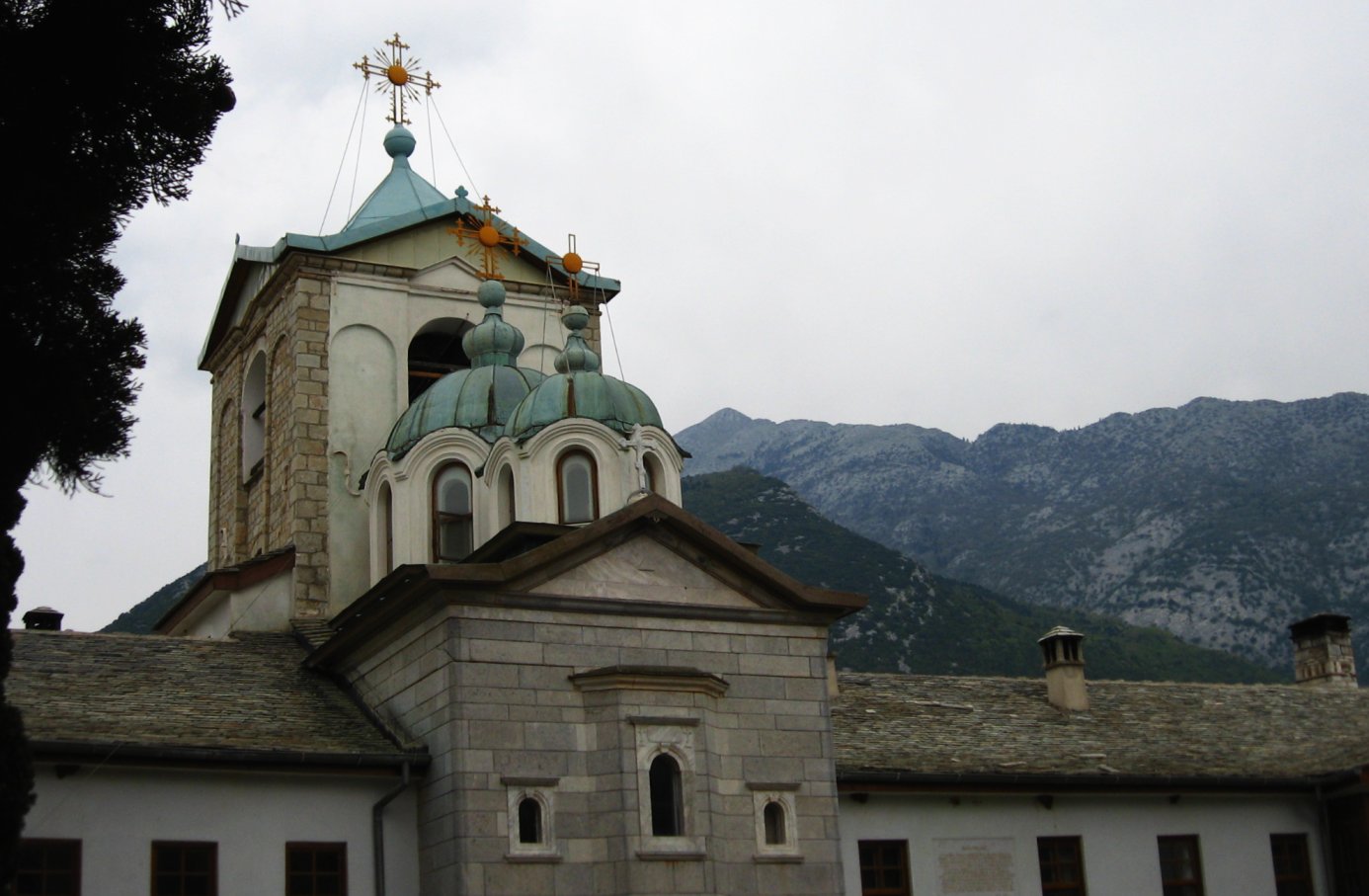
Having reached the Holy Mountain around the year 1842, Alipie wished to become the disciple of the two Moldavian fathers — the hieroschemamonk Nifon Ionescu and his disciple Nectarie — who were struggling in the wilderness of Kerasia. They, however, counseled him to learn first the life of the community and only afterward the stillness of the eremitic life, since he did not yet have the necessary spiritual experience. Heeding them, he entered the brotherhood of Esphigmenou Monastery, one of the oldest of the Athonite monasteries, in which Saint Gregory Palamas, the foremost teacher of hesychast prayer, had once also struggled; here he served in the refectory for four years.
Around the year 1846 he was tonsured into the great schema by the hieroschemamonk Nifon — who was to be the first founder and abbot of the Romanian Prodromos Skete — receiving the name by which he would remain known: Antipas, after the Holy Hieromartyr Antipas, bishop of Pergamum. After this he was permitted to struggle in solitude, withdrawing to an abandoned, half-ruined hermit’s hut, where he spent nearly two and a half years. There he found, blackened by smoke and soot, a small icon of the Mother of God of the “Sweet Kissing” type (Glykophilousa). He took it to be cleaned by a painter named Paisie, and it was returned to him wholly renewed, after a single washing, in an unexpected manner. The icon proved to be wonderworking, and was never again parted from the Saint until the end of his life.
In the years of his eremitic struggle he earned what he needed by the work of his hands, carving wooden spoons that he sold at Karyes, while his unceasing occupation remained the Jesus Prayer. His guide in the work of the prayer of the heart was a hermit of Ukrainian birth, Leontie of the Lacu Skete, without whose blessing he did nothing; this elder fell asleep in the year 1876, six years before him, and Saint Antipas would call upon him insistently in the hour of his own death.
He did not, however, remain in eremitic life. Seeing the need of the Romanian brotherhood that was gathering, Saint Antipas agreed to help the fathers Nifon and Nectarie in the building of the Romanian Prodromos Skete — a foundation dedicated to Saint John the Baptist, “the Forerunner” (Gr. Prodromos). He was ordained a priest and appointed cellarer, often coming to guide the young brotherhood in the absence of its superior. In all, he spent about fourteen years on the Holy Mountain — four at Esphigmenou, two and a half as a hermit, and the rest in the service of Prodromos. Some accounts, among them the Romanian Paterikon, speak of a fifteen-year sojourn at the Lacu Skete — a memory most likely bound up with his guide Leontie; the documentary reconstruction, founded on the foundational manuscript of Prodromos and on the Saint’s correspondence, nevertheless ties his Athonite years to Esphigmenou, to the hermit’s cell, and to the building of Prodromos.
The return to Moldavia
In the year 1856, seeing his capability both in management and in the spiritual life, Abbot Nifon sent him to Moldavia as administrator of the “All Saints” Metochion at Bucium, near Iași, to gather alms toward the completion of the works at Prodromos. He remained there nearly three and a half years, proving a good steward and being sought out by a multitude of the faithful who had heard of his life and came to ask his counsel and guidance. In that same time, in the year 1856, the “Sweet Kissing” icon that he had brought from Athos was clothed in a gilded silver revetment by a faithful woman from Iași; on the revetment an inscription in the Romanian language has been preserved, written in Cyrillic letters and dated 22 August 1856, which attests that the icon belonged to the hieroschemamonk Antipas.
The departure for Russia
In the year 1858, Abbot Nifon sought the blessing of the Metropolitan of Moldavia, Sofronie Miclescu, to travel to Russia, together with other fathers, in order to gather alms for the Romanian foundation on the Holy Mountain. In the year 1859 he decided, unexpectedly, to take Saint Antipas with him. They halted at the Lavra of the Caves in Kiev, then reached Moscow and Saint Petersburg, from where they sent considerable aid to Prodromos.
This work was also arduous. In March 1860, one of the first shipments — bearing the bells cast in Russia for the church of Prodromos — sank in the Black Sea, on the way from Odessa to the Holy Mountain, and the crew lost their lives. The loss did not, however, halt the work: the gathering of aid continued for years more, and the church of the Prodromos Skete was to be consecrated in the year 1866. Precisely because this first fruit had been lost at sea, the labor had to be taken up again from the beginning; and so, when Abbot Nifon returned to the Holy Mountain in June 1860, Saint Antipas remained alone in Russia, carrying on the obedience of gathering alms. In these years, about 1862–1863, his mother also passed to eternal life, the schemanun Elizabeth, who was struggling in the brotherhood of Adam Monastery.
At Valaam Monastery
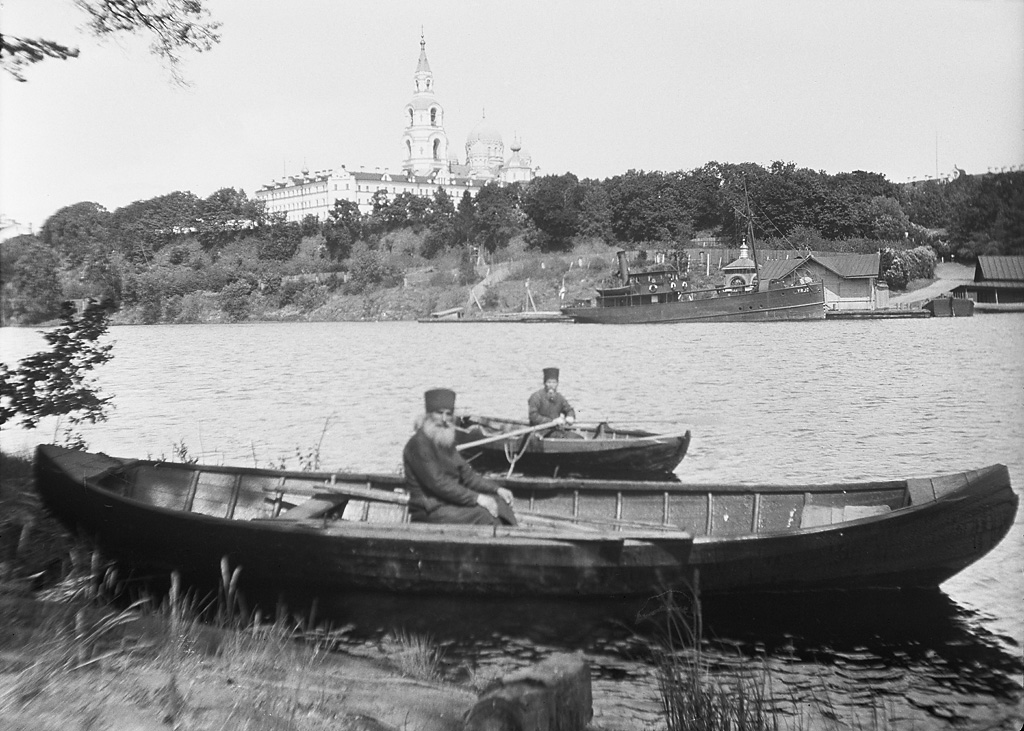
Longing for stillness and solitude, on 6 November 1865 Saint Antipas withdrew to Valaam Monastery, set upon an archipelago in Lake Ladoga, on what was then the border between Russia and Finland. He received the blessing to live in stillness, in the “All Saints” Skete. Here he was to spend the last seventeen years of his life, in austere fasting, in all-night vigils, and in perfect poverty; it is said that in his cell there was neither bed nor chair.
The heart of his life was the unceasing prayer of Jesus, worked in the depth of the heart, by which he kept himself unceasingly before God, drove off the passionate thoughts, and partook of the consolation of the Holy Spirit. Each day he made hundreds of prostrations — the testimony is preserved of the three hundred made daily with the prayer “Lord Jesus Christ,” for the salvation of the living and the repose of the departed. His fasting was in proportion to his prayer: on Mondays, Wednesdays, and Fridays throughout the year, as well as in the first week of Great Lent, he took nothing, and on the other days he was content with the food received on Saturday. To these he added night vigil, the weeping of compunction, and countless prostrations, in a poverty that few would have endured — in his cell there was neither bed nor chair. These labors were for him not a measure of human strength, but a way of self-emptying, through which the heart was made free for prayer. Although he lived in a Russian monastery, he kept his Romanian language and order of service, and his prayer book in the Romanian language is preserved to this day in the archive of the New Valaam Monastery in Finland. For such a manner of life, God granted him the discernment of hidden thoughts, the sight of things to come, and the power to heal sicknesses, so that his name became known throughout Karelia and the Russian north, and many monks and laypeople came from afar to ask his counsel. For all these he was a skilled teacher of the prayer of the heart and a spiritual father honored as a saint even during his lifetime.
The documents preserved at Valaam show his care to settle himself within the order of the community: in November 1871 he submitted a petition to Abbot Damaskin to be lawfully enrolled in the monastery, and in September 1872 he asked the Holy Synod of the Russian Church to hasten this enrollment and to grant him Russian citizenship. Although he lived far from the Holy Mountain, he kept his bond with Prodromos; at his repeated urging, in June 1879 the order of the unceasing reading of the Psalter was begun there.
The passing to eternal life
Saint Antipas knew his end three days beforehand. According to the testimony that has come down, the wonderworking icon of the Mother of God in his cell rose with a noise and settled of itself upon the Saint’s breast, while the other icons fell to the floor. On 10 January 1882, on a Sunday, after receiving the Holy Mysteries and while his disciple was reading to him the Akathist of the Mother of God, the hieroschemamonk Antipas fell asleep in peace, at the age of sixty-six. He was buried in the common burial place of Valaam Monastery.
For his worthiness, known and honored by all, one of his cell disciples, the hieromonk Pimen Gavrilov — who was later to become abbot of the Monastery of Saint Paphnutius of Borovsk — wrote his life. He himself testifies that, even during the Saint’s lifetime, a year before his repose, he asked his blessing to write it. The work, known in Russian under the title “Замечательная жизнь иеросхимонаха Антипы” (“The Memorable Life of the Hieroschemamonk Antipas”), was first printed at Saint Petersburg in the year 1883, and afterward went through several editions, among them those of 1885, 1890, and 1893, a sign of the swift spread of the veneration of Saint Antipas in the Russian, Finnish, and Athonite world.
Saint Antipas also left behind spiritual sons who carried his inheritance further. Among them is the father Agapie of Valaam, tonsured a monk by the Saint himself, who after the Saint’s repose became a disciple of Saint Theophan the Recluse, bishop of Tambov, as well as the hieromonk Ambrozie, his cell disciple, who upon receiving the great schema was named Antipas II, in honor of his guide.
The relics
The grave of Saint Antipas also knew a sorrowful event: in the 1960s, in the time of the communist regime, it was profaned by treasure-seekers who, finding nothing of value, filled the grave back in. In the year 1991, the Saint’s relics were once more disinterred, at the initiative of Abbot Andronik Trubachev, and placed in a new reliquary, in the church of the “Transfiguration” of Valaam Monastery, with the chapel of “Saints Sergius and Herman”; at that same time the icon of the Saint was also painted, after an older portrait of him.
In the following decades, particles of his holy relics were given to several places. In the year 1998, two fragments came, through Abbot Pankraty of Valaam, to the Prodromos Skete on the Holy Mountain. In 1999, the Monastery of “Saint Great Martyr George” at Suruceni, in the Republic of Moldova, received a particle. In the year 2001, through Metropolitan Vladimir of Chișinău and Patriarch Teoctist of the Romanian Orthodox Church, a particle together with the icon of the Saint were given to the Christiana Monastery in Bucharest. Today, portions of the relics of Saint Antipas are found for veneration and worship in numerous churches in Romania, in the Republic of Moldova, in Russia, and on the Holy Mountain.
Veneration in the Church
The numbering of Saint Antipas among the saints was not the fruit of a single decision, but of a veneration that grew up naturally, in several stages and in several local Churches.
The first recognition came from Mount Athos. In the year 1906, twenty-four years after his passing, the Russian fathers of Saint Panteleimon Monastery on the Holy Mountain set down his life in brief in the Menaion for January, on the tenth day, under the name “the Venerable Hieroschemamonk Antipas the Athonite.” This was not a formal synodal act of canonization, but an entry into the liturgical books by which the Athonite brotherhood confessed him as a saint — a spontaneous veneration, springing from the memory of those who had known him and from the spread of his printed life. In the year 1988, his name was also included in the Athonite Synaxarion compiled by the hieromonk Macarius Simonopetrites, printed in Thessaloniki.
The official canonization came from the Romanian Orthodox Church. In the special sessions of the Holy Synod dedicated to the glorification of the Romanian saints, on 19–20 June 1992, Saint Antipas of Calapodești was entered into the calendar, with his day of commemoration on 10 January.
In the year 2000, his veneration was extended also within the Russian Patriarchate: at the request of Abbot Pankraty of Valaam Monastery, the Patriarch of Moscow and All Russia, Alexei II, approved, by a decision of 19 July, the inclusion of Saint Antipas in the Synaxarion of the Russian Orthodox Church. More recently, in the year 2020, the Autonomous Orthodox Church of Finland appointed that the “Sweet Kissing” icon, the one that the Saint found on Athos and left as an inheritance, be honored each year on 11 January, the day after the commemoration of Saint Antipas. Brought to Finland together with the relocation of the Valaam community in the year 1940, in the time of the war, the icon is kept today in the “Transfiguration” cathedral of the New Valaam Monastery, being one of the most honored icons of that foundation.
Thus Saint Antipas of Calapodești remains the only saint of Romanian birth so clearly honored in the Athonite, Russian, and Romanian traditions alike — a testimony that holiness is born in a place and in a people, yet does not remain enclosed within them.
Conclusion
The life of Saint Antipas is, above all, the life of a man of prayer. From the hermit Gedeon of Vrancea, through the Moldavian fathers of Athos, and as far as the stillness of Valaam, he received and bore the same treasure: the unceasing prayer of the heart, handed down along the thread of the hesychast tradition that binds Moldavia, the Holy Mountain, and the Russian north. Precisely because this work knows no borders, his life could bear fruit far from the place of his birth and could be honored by different Churches and peoples. In him, Eastern Orthodoxy recognizes not a saint of a single country, but a teacher of stillness and of prayer, of profit to any Christian who seeks the way of the pure heart. For Saint Antipas does not call us all to the measure of his wilderness, but he calls us all to the same work: to bring the mind down into the heart, to cleanse ourselves of dispersion, and to make of the name of the Lord Jesus Christ the inward breath of our life.